

Galaxy S23 Ultra Vs Xiaomi Redmi Note 13 Pro

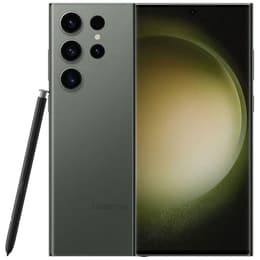
Galaxy S23 Ultra
Galaxy S23 Ultra
Starting at

Refurbished price:430.00

Versus €1,409.00 new

See options
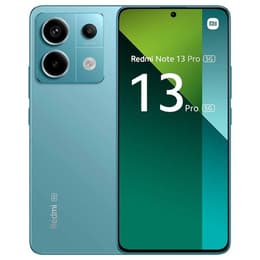
Xiaomi Redmi Note 13 Pro
Starting at

Refurbished price:179.00

Versus €349.00 new

See options

Ratings

The Samsung Galaxy S23 Ultra, released in February 2023, stands as a premium flagship smartphone, while the Xiaomi Redmi Note 13 Pro, launched in January 2024, positions itself as a feature-rich device in a more accessible segment. Both devices operate on the Android platform, offering distinct user experiences tailored to different priorities. The Galaxy S23 Ultra emphasizes advanced camera capabilities, a powerful processing experience, and integrated productivity tools, whereas the Redmi Note 13 Pro focuses on delivering a strong display, a high-resolution main camera, and reliable everyday performance.

Scores

Durability

When considering the long-term usability of these smartphones, their release timelines and software support policies are key factors.

  • Software Longevity: The Samsung Galaxy S23 Ultra, launched with Android 13, is expected to receive four major Android OS updates, extending its support up to Android 17, along with five years of security updates, likely until 2028. The Xiaomi Redmi Note 13 Pro, released with Android 13, is slated for three major Android OS updates, reaching Android 16, and four years of security updates, also extending to January 2028.
  • Physical Durability: The Galaxy S23 Ultra features Gorilla Glass Victus 2 on both its front and back, coupled with an Armor Aluminum frame, providing enhanced resistance against scratches and drops. It also carries an IP68 rating for dust and water resistance. The Redmi Note 13 Pro incorporates Gorilla Glass Victus for screen protection and has an IP54 rating, indicating splash and dust resistance.
  • Repairability: The Galaxy S23 Ultra has been noted for improvements in repairability, particularly with an easier battery replacement process. The Redmi Note 13 Pro generally offers average repairability, with some components like the back cover and battery using adhesive, though pull tabs for the battery are a positive aspect.

Year of Release

2023

2023

Compatible with latest Update

Yes

Yes

OS

Android

Android

Foldable

No

No

Performance

The performance of a smartphone is crucial for daily tasks, multitasking, and demanding applications, with both devices offering different levels of capability.

  • Processing Power: The Galaxy S23 Ultra is equipped with a high-performance processor designed for intensive tasks, ensuring smooth operation across demanding applications, advanced gaming, and seamless multitasking. The Redmi Note 13 Pro features a capable processor that handles everyday applications and casual gaming effectively, providing a responsive user experience for general use.
  • Multitasking and Storage: The Galaxy S23 Ultra offers configurations with 8GB or 12GB of RAM and faster UFS 4.0 storage options ranging from 256GB to 1TB, contributing to quicker app loading and efficient data handling. The Redmi Note 13 Pro comes with 8GB or 12GB of RAM and storage options up to 512GB, utilizing UFS 2.2 technology, which provides ample space and decent speeds for most users.
  • Battery Behavior: Both devices house large batteries, with the Galaxy S23 Ultra featuring a 5000mAh capacity and the Redmi Note 13 Pro a 5100mAh capacity. Users of the Galaxy S23 Ultra generally report strong battery life, often lasting a full day even with heavy use, though some power users might find themselves charging daily. The Redmi Note 13 Pro is reported to comfortably last a full day under casual usage scenarios.

Memory (GB)

8 GB

8 GB

Screen quality

The visual experience is a primary interaction point, and both phones offer vibrant displays with distinct characteristics.

  • Display Technology and Clarity: The Galaxy S23 Ultra features a 6.8-inch Dynamic AMOLED 2X display, offering a high resolution of 3088x1440 pixels, which translates to exceptionally sharp images and text. The Redmi Note 13 Pro comes with a 6.67-inch AMOLED display with a resolution of 2712x1220 pixels, providing clear and detailed visuals suitable for media consumption and daily tasks.
  • Brightness and Smoothness: The Galaxy S23 Ultra's display can reach a peak brightness of 1750 nits, ensuring excellent visibility even in bright outdoor conditions, and features an adaptive refresh rate that scales from 1Hz to 120Hz for fluid scrolling and power efficiency. The Redmi Note 13 Pro offers a peak brightness of 1300 nits, which is sufficient for most outdoor scenarios, and a consistent 120Hz refresh rate for a smooth visual experience.
  • Design and Viewing Experience: The Galaxy S23 Ultra incorporates a subtly curved display, contributing to a premium feel and immersive edge-to-edge viewing. The Redmi Note 13 Pro features a flat display, which some users may prefer for its practicality and ease of screen protector application.

Resolution

1440 x 3088

1220 x 2712

Screen type

Dynamic AMOLED 2X

AMOLED

Audiovisual

For many users, the camera system is a decisive factor, and both devices offer advanced photographic capabilities, albeit with different approaches.

  • Rear Camera Systems: The Galaxy S23 Ultra boasts a versatile quad-camera setup, including a 200-megapixel main sensor with optical image stabilization (OIS), a 12-megapixel ultrawide lens, and two 10-megapixel telephoto lenses offering 3x and 10x optical zoom. The Redmi Note 13 Pro features a triple-camera system with a 200-megapixel main sensor with OIS, an 8-megapixel ultrawide lens, and a 2-megapixel macro lens.
  • Photography Performance: The Galaxy S23 Ultra generally delivers high-quality images with strong detail and dynamic range, though some users have noted occasional inconsistencies in processing. The Redmi Note 13 Pro's main camera captures images with vibrant colors and good detail, performing well in various lighting conditions, but its ultrawide and macro lenses are less capable.
  • Video and Audio: The Galaxy S23 Ultra supports video recording up to 8K resolution at 30 frames per second, offering advanced video capabilities. The Redmi Note 13 Pro can record 4K video at 30 frames per second with its main camera and 1080p at 60 frames per second with its front camera. Both devices provide a decent audio experience for calls and media consumption, with the Galaxy S23 Ultra featuring stereo speakers.

Main camera

200 megapixels

200 megapixels

Front camera

12 megapixels

16 megapixels

Miscellaneous

Beyond core features, several practical elements contribute to the overall user experience and daily convenience.

  • Connectivity and Ports: The Galaxy S23 Ultra supports Wi-Fi 6E and Bluetooth 5.3, along with 5G connectivity and a USB Type-C 3.2 port. The Redmi Note 13 Pro offers Wi-Fi, Bluetooth 5.2, and 5G connectivity, featuring a USB Type-C port. Both devices include NFC for contactless payments.
  • Biometric Security: Both smartphones incorporate in-display fingerprint sensors for secure and convenient unlocking. The Galaxy S23 Ultra utilizes an ultrasonic sensor, while the Redmi Note 13 Pro uses an optical sensor.
  • Design and Handling: The Galaxy S23 Ultra has a larger footprint and a weight of 233 grams, which some users find substantial, though it integrates an S Pen for enhanced productivity. The Redmi Note 13 Pro is lighter at 187 grams, offering a more manageable feel for users who prefer a less bulky device.

Weight

233 g

187 g

Width

0,9 cm

7,42 cm

Height

16,3 cm

16,11 cm

Depth

8,9 cm

0,8 cm

Screen size (in)

6.8

6.67

Network

5G

5G

SIM card

Dual Physical SIM + eSIM

Dual Physical SIM

Carrier compatibility

Unlocked

Unlocked

The Samsung Galaxy S23 Ultra and the Xiaomi Redmi Note 13 Pro cater to different user needs and preferences within the Android smartphone market. Users frequently praise the Galaxy S23 Ultra for its exceptional overall performance, robust software support, and the unique productivity features offered by its integrated S Pen. Its display quality and advanced camera system are also commonly highlighted as strong points. However, some users have noted its considerable size and weight, and a few have reported minor software glitches or occasional camera inconsistencies.

The Redmi Note 13 Pro is often commended for its vibrant display, capable main camera, and solid performance for everyday tasks, especially considering its market segment. Its battery life under casual use is also a positive aspect for many. Conversely, common criticisms include the less impressive performance of its ultrawide and macro cameras, and some users have experienced software-related issues like occasional lag or battery drain after updates, particularly with HyperOS. Heating during prolonged heavy use has also been mentioned.

Users prioritizing a top-tier, feature-rich experience with advanced camera capabilities, a highly responsive interface, and integrated stylus functionality may find the Samsung Galaxy S23 Ultra well-suited to their needs. Conversely, individuals seeking a device that offers a strong display, a high-resolution main camera, and reliable performance for daily use without the need for flagship-level intensity might lean towards the Xiaomi Redmi Note 13 Pro. Both devices are available as quality-assured refurbished options, providing an eco-friendly alternative for consumers.


See all articles

Our recent comparisons







