

Galaxy S10e Vs iPhone 13 mini

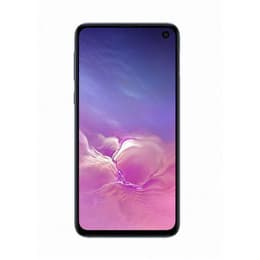
Galaxy S10e
Galaxy S10e
Starting at

Refurbished price:121.00

Versus €759.00 new

See options
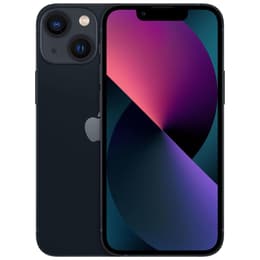
iPhone 13 mini
iPhone 13 mini
Starting at

Refurbished price:228.00

Versus €829.00 new

See options

Ratings

The Samsung Galaxy S10e, released in March 2019, and the Apple iPhone 13 Mini, launched in September 2021, represent two distinct approaches to compact flagship smartphones. While both devices offer a premium experience in a smaller form factor, the iPhone 13 Mini benefits from a significantly newer release, bringing advancements in processing power, camera technology, and software longevity. The Galaxy S10e, running on Android, and the iPhone 13 Mini, on iOS, cater to users within their respective operating system ecosystems.

Scores

Durability

When considering the practical lifespan of these devices, their release timelines and software support play a significant role. The iPhone 13 Mini, being a more recent release, generally offers a longer period of software updates and security patches compared to the Galaxy S10e.

  • Release Timeline: The iPhone 13 Mini was released in September 2021, while the Galaxy S10e was released in March 2019. This two-and-a-half-year difference means the iPhone 13 Mini has a head start in terms of its expected support cycle.
  • OS Support: The iPhone 13 Mini launched with iOS 15 and is expected to receive several more years of major iOS updates, extending its software longevity. The Galaxy S10e launched with Android 9.0 Pie and received updates up to Android 12, meaning its official software support has concluded.
  • Durability Features: The iPhone 13 Mini features a Ceramic Shield front cover, designed for enhanced drop performance. Both devices carry an IP68 rating for dust and water resistance, indicating protection against immersion in water.

Year of Release

2019

2021

Compatible with latest Update

No

Yes

OS

Android

iOS

Foldable

No

No

Performance

The performance capabilities of these two compact smartphones reflect their respective release dates, with the newer iPhone 13 Mini offering a more advanced internal architecture for demanding tasks.

  • Processing Power: The iPhone 13 Mini is equipped with a more recent generation processor, providing substantial improvements in overall speed and efficiency for applications, gaming, and general system responsiveness. The Galaxy S10e features an older, though still capable, processor that handles everyday tasks smoothly but may show limitations with the most intensive applications or future software.
  • Multitasking and Storage: The iPhone 13 Mini comes with 4GB of RAM, while the Galaxy S10e offers configurations with 6GB or 8GB of RAM. Both devices offer various internal storage options, with the iPhone 13 Mini starting at 128GB and going up to 512GB, and the Galaxy S10e offering 128GB or 256GB, with the added flexibility of a microSD card slot for expansion.
  • Battery Behavior: The iPhone 13 Mini, despite its compact size, offers up to 17 hours of video playback and up to 55 hours of audio playback. The Galaxy S10e has a 3100 mAh battery, which provides a full day of typical use for many users.

Memory (GB)

6 GB

4 GB

Screen quality

Both the Galaxy S10e and the iPhone 13 Mini feature high-quality displays, but they differ in technology and specific characteristics that impact the viewing experience.

  • Display Technology and Clarity: The iPhone 13 Mini features a 5.4-inch Super Retina XDR OLED display with a resolution of 2340 x 1080 pixels, resulting in a pixel density of 476 ppi, offering sharp and vibrant visuals. The Galaxy S10e has a slightly larger 5.8-inch Dynamic AMOLED display with a resolution of 2280 x 1080 pixels and a pixel density of 438 ppi, also providing a clear and colorful viewing experience.
  • Brightness and HDR: The iPhone 13 Mini's display offers a typical maximum brightness of 800 nits and can reach up to 1200 nits for HDR content, enhancing visibility in various lighting conditions and for high dynamic range media. The Galaxy S10e's Dynamic AMOLED display also supports HDR10+ and offers good brightness for outdoor use.
  • Refresh Rate and Features: Both devices feature a standard 60Hz refresh rate. The iPhone 13 Mini includes True Tone and Wide Color (P3) support for accurate color representation, along with Haptic Touch. The Galaxy S10e's display is protected by Gorilla Glass 5.

Resolution

1080 x 2280

1080 x 2340

Screen type

Dynamic AMOLED

Super Retina XDR OLED

Audiovisual

Both smartphones offer capable camera systems, but the iPhone 13 Mini, being a newer device, incorporates more advanced computational photography and video features.

  • Rear Camera System: The iPhone 13 Mini features a dual 12MP camera system with a wide (f/1.6) and an ultra-wide (f/2.4) lens, including sensor-shift optical image stabilization on the main sensor for improved low-light performance and stability. The Galaxy S10e also has a dual-camera setup with a 12MP wide-angle lens (with variable aperture f/1.5-f/2.4) and a 16MP ultra-wide lens, offering versatility in capturing different scenes.
  • Photography Features: The iPhone 13 Mini includes features like Night mode, Deep Fusion, Smart HDR 4, and Photographic Styles, enhancing image quality across various scenarios. The Galaxy S10e provides features such as HDR Photo and optical image stabilization on its main lens.
  • Video Recording: The iPhone 13 Mini supports HDR video recording with Dolby Vision up to 4K at 60 fps and introduces Cinematic mode for a shallow depth of field effect in videos. The Galaxy S10e can record video at 4K resolution at 60fps.

Main camera

12 megapixels

12 megapixels

Front camera

10 megapixels

12 megapixels

Miscellaneous

Beyond core performance and display, several practical elements differentiate the user experience between the Galaxy S10e and the iPhone 13 Mini.

  • Connectivity and Ports: The iPhone 13 Mini supports 5G cellular connectivity, Wi-Fi 6, and Bluetooth 5.0, utilizing a Lightning port for charging and data transfer. The Galaxy S10e supports 4G LTE, Wi-Fi 6 (802.11ax), and Bluetooth 5.0, and notably includes a 3.5mm headphone jack and a USB-C port.
  • Biometric Security: The iPhone 13 Mini relies on Face ID for secure facial recognition. The Galaxy S10e features a side-mounted fingerprint sensor integrated into the power button.
  • Physical Characteristics: The iPhone 13 Mini is slightly smaller and lighter, measuring 131.5 x 64.2 x 7.65 mm and weighing 141 grams. The Galaxy S10e measures 142.2 x 69.9 x 7.9 mm and weighs 150 grams. Both devices feature an aluminum frame with glass front and back.

Weight

150 g

140 g

Screen size (in)

5.8

5.4

Network

4G

5G

SIM card

Physical SIM

Physical SIM + eSIM

Carrier compatibility

Unlocked

Unlocked

Connector

USB-C + Jack 3.5mm

Lightning

The Samsung Galaxy S10e and the iPhone 13 Mini cater to users seeking a compact smartphone experience, yet they offer distinct advantages based on their respective ecosystems and release timelines. Users who prioritize a longer software support window, advanced computational photography features, and 5G connectivity will find the iPhone 13 Mini well-suited to their needs. Its newer processor also provides a performance edge for demanding applications and future-proofing.

Conversely, users who value the flexibility of the Android operating system, expandable storage via a microSD card, and the convenience of a traditional 3.5mm headphone jack may lean towards the Galaxy S10e. Its side-mounted fingerprint sensor also offers a different biometric authentication method. Both devices deliver a premium feel with their build materials and offer robust dust and water resistance. For those looking for an eco-friendly alternative, quality-assured refurbished options for both models are available, providing a sustainable choice for acquiring these compact devices.
See all articles

Our recent comparisons