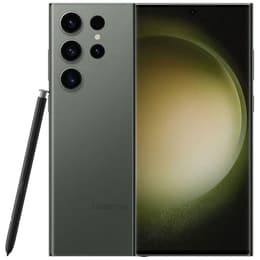



Galaxy S23 Ultra Vs Xiaomi Redmi Note 12 Pro

Galaxy S23 Ultra
Galaxy S23 Ultra
Starting at

Refurbished price:430.00

Versus €1,409.00 new

See options
Xiaomi Redmi Note 12 Pro
Starting at

Refurbished price:112.00

Versus €399.00 new

See options

Ratings

The Samsung Galaxy S23 Ultra and the Xiaomi Redmi Note 12 Pro are smartphones released in early 2023 and late 2022, respectively. While both devices operate on the Android platform, they cater to different user expectations, with the Galaxy S23 Ultra offering a premium experience and the Redmi Note 12 Pro focusing on core functionalities. Key differentiators include their camera systems, processing power, and overall software support timelines.

Scores

Durability

The practical lifespan of a smartphone is influenced by its release timeline, software support, and physical durability.

  • Release Timeline & Software Support: The Samsung Galaxy S23 Ultra, released in February 2023, launched with Android 13 and is promised four major OS updates, extending its software support until Android 17, along with five years of security patches, likely until 2028. In contrast, the Xiaomi Redmi Note 12 Pro (5G version), released in November 2022, typically receives two major Android updates and three years of security patches. This means its software support is expected to conclude around late 2025 or early 2026.
  • Physical Durability: The Galaxy S23 Ultra features Gorilla Glass Victus 2 on both its front and back, offering enhanced scratch and drop resistance, and boasts an IP68 rating for significant dust and water resistance. Its design also incorporates features that make battery replacement easier. The Redmi Note 12 Pro, while having a glass front, often uses a plastic back and frame, and carries an IP53 rating, indicating protection against dust and splashes but not full submersion.
  • Repairability: The Galaxy S23 Ultra has been noted for improved repairability, with internal components designed to be more accessible for servicing. Information on the Redmi Note 12 Pro's repairability is less prominent, but its construction is generally considered standard for its category.

Year of Release

2023

2022

Compatible with latest Update

Yes

No

OS

Android

Android

Foldable

No

No

Performance

Performance in daily use, from app handling to multitasking, is a significant factor for smartphone users.

  • Processing Power: The Galaxy S23 Ultra is equipped with a custom-tuned processor designed for demanding tasks, providing smooth operation for intensive applications, advanced gaming, and seamless multitasking. Users report that it handles graphically intensive games effortlessly and maintains responsiveness even under heavy workloads. The Redmi Note 12 Pro features a processor that capably handles everyday tasks, social media, and moderate gaming. While it offers a fluid experience for general use, it may not match the sustained peak performance of the Galaxy S23 Ultra for the most demanding applications.
  • Battery Behavior: Both devices house a 5000 mAh battery. The Galaxy S23 Ultra is widely praised for its exceptional battery longevity, often lasting more than a full day of heavy use, with some users reporting up to two days on a single charge. The Redmi Note 12 Pro generally provides a full day of battery life for most users, with typical screen-on times ranging from 6 to 7 hours.
  • Storage and Responsiveness: The Galaxy S23 Ultra offers various storage configurations, including options with 8GB or 12GB of RAM, contributing to its robust multitasking capabilities. The Redmi Note 12 Pro also comes with multiple RAM and storage options, providing adequate capacity for typical user needs.

Memory (GB)

8 GB

8 GB

Screen quality

The display is a primary interface for smartphone interaction, influencing everything from media consumption to daily navigation.

  • Display Technology & Clarity: The Samsung Galaxy S23 Ultra features a 6.8-inch Dynamic AMOLED 2X display with a high resolution of 1440 x 3088 pixels, delivering sharp images, deep blacks, and vibrant colors. The Xiaomi Redmi Note 12 Pro has a 6.67-inch AMOLED display with a resolution of 1080 x 2400 pixels, offering good clarity and color reproduction for its category.
  • Brightness & Refresh Rate: The Galaxy S23 Ultra's display can reach a peak brightness of 1750 nits, ensuring excellent visibility even in bright outdoor conditions. It also features an adaptive refresh rate that scales from 1Hz to 120Hz, providing smooth scrolling and animations while optimizing power consumption. The Redmi Note 12 Pro offers a peak brightness of up to 900 nits (or 1100 nits for the 4G version), which is suitable for most outdoor scenarios, and a consistent 120Hz refresh rate for a fluid visual experience.
  • Viewing Experience: The Galaxy S23 Ultra's slightly curved display edges contribute to an immersive viewing experience, though some users note this can impact screen protector application. The Redmi Note 12 Pro typically features a flat display, which some users prefer for its practicality and ease of screen protection.

Resolution

1440 x 3088

1080 x 2400

Screen type

Dynamic AMOLED 2X

AMOLED

Audiovisual

Camera capabilities are a significant consideration for many users, impacting how they capture and share moments.

  • Rear Camera System: The Samsung Galaxy S23 Ultra boasts a versatile quad-camera setup, including a 200 MP main sensor, a 12 MP ultrawide lens, and two 10 MP telephoto lenses offering 3x and 10x optical zoom. This configuration allows for detailed shots and impressive zoom capabilities. The Xiaomi Redmi Note 12 Pro features a triple-camera system with a 50 MP main sensor (often a Sony IMX766), an 8 MP ultrawide lens, and a 2 MP macro lens.
  • Photography Performance: The Galaxy S23 Ultra is recognized for its strong low-light performance and its ability to capture highly detailed images, particularly with its zoom lenses. Some users have noted occasional inconsistencies in shutter speed and software processing. The Redmi Note 12 Pro delivers decent photography for its segment, with its 50 MP main sensor performing well in everyday conditions, though some users observe a tendency towards cooler color tones and occasional processing inconsistencies.
  • Video Recording & Front Camera: The Galaxy S23 Ultra supports video recording up to 8K resolution and features a 12 MP front camera. Its video stabilization is also highly regarded. The Redmi Note 12 Pro offers 4K video recording and includes a 16 MP front camera.

Main camera

200 megapixels

50 megapixels

Front camera

12 megapixels

16 megapixels

Miscellaneous

Beyond core features, several practical elements contribute to the overall user experience and device utility.

  • Connectivity & Ports: Both smartphones support 5G connectivity and modern Wi-Fi standards. The Galaxy S23 Ultra features a USB-C 3.2 port, while the Redmi Note 12 Pro uses a USB-C port. A notable difference is the inclusion of a 3.5mm headphone jack on the Redmi Note 12 Pro, which is absent on the Galaxy S23 Ultra.
  • Biometrics & Special Features: The Galaxy S23 Ultra incorporates an under-display ultrasonic fingerprint sensor and supports facial recognition. It also includes the integrated S Pen stylus, offering enhanced productivity and creative input. The Redmi Note 12 Pro typically uses a side-mounted fingerprint sensor and also supports face unlock.
  • Build & Handling: The Galaxy S23 Ultra has a more substantial feel, weighing around 233-234 grams, and features an aluminum frame with Gorilla Glass Victus 2 on both sides. The Redmi Note 12 Pro is lighter at approximately 187 grams and often utilizes a plastic frame and back, contributing to a different in-hand feel.

Weight

233 g

187 g

Width

0,9 cm

76 cm

Height

16,3 cm

162,9 cm

Depth

8,9 cm

7,9 cm

Screen size (in)

6.8

6.67

Network

5G

5G

SIM card

Dual Physical SIM + eSIM

Dual Physical SIM

Carrier compatibility

Unlocked

Unlocked

Connector

USB-C

USB-C

Users frequently praise the Samsung Galaxy S23 Ultra for its exceptional battery life, vibrant and bright display, powerful performance, and versatile camera system, particularly its impressive zoom capabilities and the utility of the S Pen. Common criticisms sometimes point to its large size and weight, which can affect one-handed use, and the curved screen's potential challenges with screen protectors. Some users also note occasional inconsistencies in camera processing.

The Xiaomi Redmi Note 12 Pro is often lauded for its bright AMOLED display, reliable all-day battery life, and fast wired charging. User feedback sometimes highlights concerns regarding its software update policy, with a shorter commitment to Android version upgrades compared to some competitors, and occasional camera inconsistencies.

Users prioritizing a device with extensive software support, top-tier performance for demanding applications, a highly versatile camera system with advanced zoom, and an integrated stylus for productivity may find the Samsung Galaxy S23 Ultra well-suited to their needs. Conversely, users seeking a smartphone that offers a strong balance of display quality, battery life, and capable performance for everyday tasks, along with a faster charging experience and a traditional headphone jack, might lean towards the Xiaomi Redmi Note 12 Pro. Both devices, when considered as quality-assured refurbished options, present an eco-friendly alternative for consumers.


See all articles

Our recent comparisons