

Galaxy A55 Vs iPhone 15 Plus

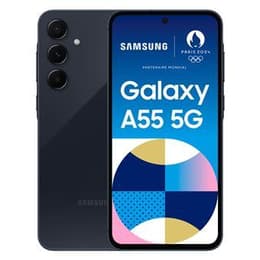
Galaxy A55
Galaxy A55
Starting at

Refurbished price:230.00

Versus €513.35 new

See options
iPhone 15 Plus
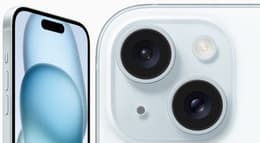
iPhone 15 Plus
Starting at

Refurbished price:421.00

Versus €979.00 new

See options

Ratings

The Samsung Galaxy A55, released in March 2024, and the Apple iPhone 15 Plus, launched in September 2023, represent distinct approaches to the modern smartphone experience. While both devices offer large displays and capable camera systems, they cater to different user preferences through their respective operating systems and hardware philosophies. The Galaxy A55 operates on the Android platform, emphasizing customization and a feature-rich interface, whereas the iPhone 15 Plus runs on Apple's iOS, known for its streamlined user experience and integrated ecosystem.

Scores

Durability

When considering the long-term usability of these devices, their release timelines and software support policies are key factors.

  • Software Longevity: The Samsung Galaxy A55, released in March 2024, is promised to receive up to four major Android OS upgrades and five years of security updates. The iPhone 15 Plus, launched in September 2023, typically benefits from Apple's longer software support, often extending to five to seven years of iOS updates.
  • Physical Durability: The Galaxy A55 features a Gorilla Glass Victus+ front, a glass back, and an aluminum frame, offering IP67 dust and water resistance. The iPhone 15 Plus incorporates a Ceramic Shield front, a color-infused glass back, and an aluminum frame, providing IP68 dust and water resistance.
  • Expected Lifespan: Users prioritizing the absolute longest software update cycle might find the iPhone 15 Plus more appealing due to Apple's historical support. Both devices offer robust physical protection against everyday elements, contributing to their practical lifespan.

Year of Release

2024

2023

Compatible with latest Update

Yes

Yes

OS

Android

iOS

Foldable

No

No

Performance

The performance of a smartphone is crucial for daily tasks, from navigating applications to engaging in demanding games.

  • Processing Power: The Galaxy A55 is equipped with a current-generation mid-range processor, designed to handle everyday applications and moderate gaming smoothly. The iPhone 15 Plus features a powerful current-generation processor, enabling seamless multitasking, rapid app loading, and fluid performance in graphically intensive games.
  • Memory and Storage: The Galaxy A55 offers configurations with 8GB or 12GB of RAM and 128GB or 256GB of internal storage, with the added flexibility of expandable storage via a microSD card. The iPhone 15 Plus comes with 6GB of RAM and storage options of 128GB, 256GB, or 512GB, without expandable storage.
  • System Responsiveness: Both devices provide a responsive user experience, though the iPhone 15 Plus generally offers a higher ceiling for demanding computational tasks and sustained peak performance. The Galaxy A55 delivers consistent performance for typical smartphone usage.

Memory (GB)

8 GB

6 GB

Screen quality

The display is a primary interface for smartphone interaction, influencing everything from content consumption to daily navigation.

  • Display Technology and Clarity: The Galaxy A55 features a 6.6-inch Super AMOLED display with a Full HD+ resolution (1080 x 2340 pixels), offering vibrant colors and deep blacks. The iPhone 15 Plus sports a 6.7-inch Super Retina XDR OLED display with a higher resolution (2796 x 1290 pixels), providing sharp details and excellent contrast.
  • Brightness and Refresh Rate: The Galaxy A55's display boasts a 120Hz refresh rate for smoother scrolling and animations, with a peak brightness of 1000 nits in High Brightness Mode (HBM). The iPhone 15 Plus has a standard 60Hz refresh rate but offers a typical brightness of 1000 nits and a peak outdoor brightness of up to 2000 nits, enhancing visibility in bright conditions.
  • Viewing Experience: Users prioritizing a smoother visual experience for scrolling and gaming may prefer the higher refresh rate of the Galaxy A55. Those who frequently use their phone outdoors or value maximum clarity and brightness in various lighting conditions might find the iPhone 15 Plus's display more suitable.

Resolution

1080 x 2340

1290 x 2796

Screen type

Super AMOLED

Super Retina XDR OLED

Audiovisual

Both smartphones offer capable camera systems designed to capture a variety of moments, though with differing strengths.

  • Rear Camera Systems: The Galaxy A55 features a triple-camera setup with a 50-megapixel main sensor with optical image stabilization (OIS), a 12-megapixel ultrawide lens, and a 5-megapixel macro camera. The iPhone 15 Plus includes a dual-camera system with a 48-megapixel main sensor with sensor-shift OIS and a 12-megapixel ultrawide lens, also offering a 2x telephoto option through the main sensor.
  • Photography Performance: The Galaxy A55 is noted for its improved low-light photography thanks to AI Image Signal Processing, delivering detailed shots in various conditions. The iPhone 15 Plus leverages computational photography for enhanced image processing, producing vibrant and detailed photos across different scenarios.
  • Video and Front Camera: Both devices support 4K video recording, with the iPhone 15 Plus capable of recording at up to 60 frames per second, while the Galaxy A55 records at 30 frames per second. The Galaxy A55 has a 32-megapixel front camera, whereas the iPhone 15 Plus features a 12-megapixel front camera with advanced features like Face ID.

Main camera

50 megapixels

48 megapixels

Front camera

32 megapixels

12 megapixels

Miscellaneous

Beyond core features, several practical elements contribute to the overall user experience and daily convenience.

  • Connectivity and Ports: Both the Galaxy A55 and iPhone 15 Plus support 5G connectivity, Wi-Fi 6, and Bluetooth 5.3 for modern wireless communication. Both devices also feature a USB-C 2.0 port for charging and data transfer.
  • Biometric Security: The Galaxy A55 utilizes an under-display optical fingerprint sensor for secure unlocking. The iPhone 15 Plus employs Face ID, Apple's facial recognition system, for biometric authentication.
  • Design and Handling: The Galaxy A55 weighs 213 grams and measures 161.1 x 77.4 x 8.2 mm. The iPhone 15 Plus is slightly lighter at 201 grams and has dimensions of 160.9 x 77.8 x 7.8 mm. Both devices feature stereo speakers for an enhanced audio experience.

Weight

213 g

171 g

Screen size (in)

6.6

6.7

Network

5G

5G

SIM card

Physical SIM

eSIM

Carrier compatibility

Unlocked

Unlocked

Connector

USB-C

USB-C (USB 2)

User feedback for the Samsung Galaxy A55 often highlights its premium build quality for its segment, vibrant display, and generally strong battery life, with some users reporting up to two days of usage under moderate conditions. Its camera system is frequently praised for delivering solid results for its category, especially with improved low-light performance. However, some users have noted that the battery life can be less consistent for heavy usage, and the processor might experience occasional stutters when many applications are open simultaneously.

The iPhone 15 Plus receives consistent praise for its powerful performance, capable of handling demanding tasks with ease, and its excellent display quality. Users appreciate the improved camera system and the integration of the Dynamic Island for interactive notifications. Common observations include its 60Hz refresh rate, which some users find less fluid compared to higher refresh rate displays on other devices, and a design that, while refined, maintains a familiar aesthetic.

For users prioritizing a customizable Android experience, expandable storage, and a high refresh rate display, the Samsung Galaxy A55 presents a compelling option. Its robust build and strong battery life make it suitable for those seeking a durable device for daily use. Conversely, individuals who value top-tier processing power, a highly integrated ecosystem, and advanced computational photography will likely find the iPhone 15 Plus better suited to their needs. Both devices offer a quality-assured refurbished option, providing an eco-friendly alternative for consumers.

See all articles

Our recent comparisons