

Compare models
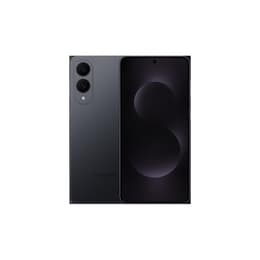
Galaxy S22 5G Vs Galaxy S25 Edge
- 1-year minimum warranty
- Free delivery on all orders
- Free 30-day returns
Differences at a glance
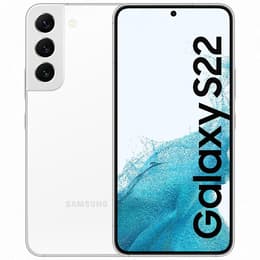
The Samsung Galaxy S22 5G (2022) and the Samsung Galaxy S25 Edge (2025) represent different eras and design philosophies within Samsung's flagship smartphone lineage. While the Galaxy S22 5G focuses on a compact, pocket-friendly form factor, the Galaxy S25 Edge introduces an ultra-slim chassis and a larger, expansive display. Both devices run on the Android operating system with Samsung's custom interface, though they differ significantly in physical dimensions, screen workspace, and internal capability.
Available Models
Colour
Storage
Scores
Durability
When evaluating the long-term viability of these two smartphones, differences in release timelines, software support schedules, and hardware construction play significant roles in determining their expected operational lifespan.
- Software support timeline: The Galaxy S25 Edge benefits from a much longer manufacturer software update commitment, extending several years beyond the lifecycle window of the older Galaxy S22 5G.
- Build durability: The Galaxy S25 Edge incorporates advanced scratch-resistant glass and a titanium frame construction, whereas the Galaxy S22 5G utilizes aluminum framing paired with durable glass panels.
- Repairability and battery aging: Both models feature sealed internal batteries that degrade gradually over years of heavy use, though replacement parts for the newer Galaxy S25 Edge remain more readily accessible through official service channels.
Year of Release
2022
2025
Compatible with latest Update
Yes
Yes
OS
Android
Android
Foldable
No
No
Performance
Daily responsiveness and multitasking capabilities vary between these devices due to differences in memory allocation, thermal management, and internal processing generations.
- Multitasking and memory: The Galaxy S25 Edge offers a larger baseline RAM capacity, allowing background applications to stay active longer without reloading compared to the Galaxy S22 5G.
- Everyday execution: App launching, web browsing, and demanding mobile games run with noticeable fluidity on the Galaxy S25 Edge, while the Galaxy S22 5G handles standard daily tasks efficiently with occasional warmth during extended gaming sessions.
- Battery endurance: Despite its remarkably thin profile, the Galaxy S25 Edge manages power efficiently to last through a typical day of mixed usage, whereas the smaller battery capacity of the Galaxy S22 5G often requires a midday recharge for intensive users.
Screen quality
Visual immersion and panel characteristics distinguish these two displays, offering contrasting viewing experiences for media consumption and daily navigation.
- Display technology and size: The Galaxy S25 Edge features a larger 6.7-inch dynamic AMOLED panel, providing more workspace than the more compact 6.1-inch screen found on the Galaxy S22 5G.
- Clarity and resolution: The Galaxy S25 Edge utilizes a higher resolution panel that delivers sharper text and finer image detail, while the Galaxy S22 5G offers standard high-definition clarity suitable for everyday viewing.
- Outdoor visibility: Both models incorporate high peak brightness levels and smooth adaptive refresh rates up to 120Hz, ensuring legible outdoor visibility under direct sunlight and smooth scrolling mechanics.
Resolution
1080 x 2340
1440 x 3120
Audiovisual
Photography and multimedia output differ notably between the triple-lens configuration of the older model and the high-resolution dual-sensor setup of the newer slim variant.
- Main sensor capability: The Galaxy S25 Edge employs a very high-resolution primary sensor designed to capture fine details and crisp low-light shots, while the Galaxy S22 5G relies on a versatile triple-lens array that includes a dedicated optical zoom lens.
- Video recording: Both devices support stable, high-resolution video capture with digital stabilization, though the newer processing hardware in the Galaxy S25 Edge handles mixed-lighting transitions more effectively.
- Audio and media output: Stereo speaker configurations on both smartphones provide clear dialogue and balanced sound output for casual video viewing and hands-free calls.
Miscellaneous
Physical handling, connectivity standards, and daily ergonomics highlight distinct practical compromises made for each form factor design.
- Dimensions and weight: The Galaxy S22 5G offers a traditional, easily pocketable footprint weighing 167 grams, whereas the Galaxy S25 Edge achieves an ultra-thin 5.8-millimeter profile while maintaining a wider, lighter footprint at 163 grams.
- Connectivity suite: Both smartphones support modern fifth-generation cellular networks, dual-band Wi-Fi standards, and Bluetooth accessories, though the newer model adopts more recent wireless protocols.
- Biometric security: Each device integrates an under-display fingerprint reader alongside facial recognition software for secure, convenient unlocking.
Weight
167 g
163 g
Screen size (in)
6.1
6.7
Network
5G
5G
SIM card
Dual Physical SIM + eSIM
Physical SIM + eSIM
Carrier compatibility
Unlocked
Unlocked
Connector
USB-C
USB-C
What the community thinks
User discussions and community feedback indicate that the Galaxy S22 5G is frequently praised for its comfortable one-handed usability and dedicated optical zoom lens, though critics often point out its shorter battery runtime under heavy loads. Conversely, the Galaxy S25 Edge receives positive remarks for its striking thinness, expansive screen space, and prolonged software lifespan, though some users note that its larger physical footprint makes single-handed navigation more challenging.
Users prioritizing a compact device that fits easily into smaller pockets will find the Galaxy S22 5G well-suited to their preferences. Meanwhile, users who value a larger workspace, extended software longevity, and modern processing capabilities will lean toward the Galaxy S25 Edge. For consumers exploring sustainable technology alternatives, choosing a quality-assured refurbished option provides a reliable way to access these features while supporting eco-friendly electronics consumption.