

Galaxy Z Fold5 Vs Xiaomi Redmi Note 14 4G

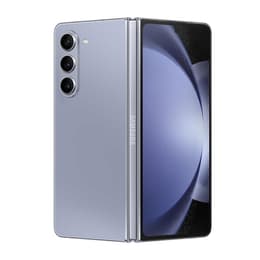
Galaxy Z Fold5
Galaxy Z Fold5
Starting at

Refurbished price:591.00

Versus €1,899.99 new

See options
Xiaomi Redmi Note 14 4G
Starting at

Refurbished price:162.00

Versus €229.99 new

See options

Ratings

The Samsung Galaxy Z Fold5, released in August 2023, is a high-end foldable smartphone that transforms from a compact phone into a larger tablet-like display. In contrast, the Xiaomi Redmi Note 14 4G, launched in March 2025, is a traditional slab smartphone designed for everyday use. The primary distinctions lie in their innovative form factor and overall performance capabilities, with the Z Fold5 running on Android with Samsung's One UI and the Redmi Note 14 4G utilizing Xiaomi HyperOS, also based on Android.

Scores

Durability

When considering the practical lifespan of these devices, several factors come into play, including their release timelines, software support, and physical resilience.

  • Release Timeline & Software Support: The Galaxy Z Fold5, released in August 2023, benefits from Samsung's commitment to providing 4 years of major Android OS updates and 5 years of security updates, extending its software relevance well into the future. The Redmi Note 14 4G, launched in March 2025, runs on a newer Android version out of the box (Android 14 with Xiaomi HyperOS), but Xiaomi's update policy for its Note series typically offers fewer major OS upgrades compared to Samsung's flagship foldable line.
  • Physical Durability: The Galaxy Z Fold5 features an Armor Aluminum frame and Gorilla Glass Victus 2 on its cover screen, along with a shock-dispersion layer on its main foldable display, contributing to its robust build. It also boasts an IPX8 water resistance rating, meaning it can withstand submersion, though it lacks official dust resistance. Its redesigned Flex Hinge is tested for 200,000 folds, equating to an estimated 5.7 years of typical use. The Redmi Note 14 4G offers IP54 dust and splash resistance, protecting it from light rain and dust ingress, and its display is protected by Corning Gorilla Glass 5.
  • Expected Practical Lifespan: While the Z Fold5's foldable nature introduces unique durability considerations, its premium materials and extensive software support suggest a longer overall practical lifespan for users who prioritize cutting-edge features and sustained performance. The Redmi Note 14 4G, with its solid build and display protection, is designed for reliable daily use over a typical smartphone ownership period.

Year of Release

2023

2025

OS

Android

Android

Foldable

Yes

No

Performance

The performance of these two smartphones varies significantly due to their distinct hardware configurations, impacting how they handle demanding applications and multitasking.

  • Processor Capabilities: The Galaxy Z Fold5 is equipped with a high-performance processor, specifically optimized for Samsung devices, which allows it to handle intensive applications, complex multitasking, and graphic-heavy gaming with smooth responsiveness. This processor provides substantial headroom for future software and demanding tasks. The Redmi Note 14 4G features a mid-range processor, which delivers smooth performance for everyday tasks, web browsing, and casual gaming. It is designed for efficiency and reliable operation in typical usage scenarios.
  • Multitasking and Responsiveness: With 12GB of RAM, the Galaxy Z Fold5 excels at running multiple applications simultaneously and switching between them without lag, making it well-suited for productivity and power users. Its large foldable screen further enhances the multitasking experience. The Redmi Note 14 4G typically comes with 6GB or 8GB of RAM, which is sufficient for most users to multitask effectively with common applications, though it may show limitations with a very high number of demanding apps open concurrently.
  • Battery Behavior: The Galaxy Z Fold5 houses a 4400mAh battery, and despite its powerful components and dual displays, it offers improved battery efficiency compared to its predecessors, often lasting a full day of moderate to heavy use. The Redmi Note 14 4G features a larger 5500mAh battery, providing extended usage times that can comfortably last beyond a full day for many users, even with frequent activity.

Memory (GB)

12 GB

6 GB

Screen quality

The display experience on these devices presents a fundamental difference, primarily due to the Z Fold5's innovative foldable design and the Redmi Note 14 4G's focus on a high-quality traditional screen.

  • Display Technology and Size: The Galaxy Z Fold5 offers a dual-screen setup: a 6.2-inch Dynamic AMOLED cover display and a 7.6-inch foldable Dynamic AMOLED 2X main display when unfolded. Both screens feature vibrant colors, deep blacks, and excellent contrast. The Redmi Note 14 4G features a single 6.67-inch AMOLED display, providing a large and immersive viewing area for a traditional smartphone.
  • Resolution and Clarity: The Z Fold5's main display has a resolution of 2176x1812 pixels, resulting in sharp visuals and detailed content, while its cover screen offers 904x2316 pixels. The Redmi Note 14 4G provides a Full HD+ resolution of 2400x1080 pixels, delivering clear and crisp images for everyday viewing.
  • Brightness and Refresh Rate: Both devices feature a 120Hz refresh rate on their main displays, ensuring smooth scrolling and fluid animations. The Redmi Note 14 4G boasts a peak brightness of 1800 nits, offering excellent visibility even in bright outdoor conditions. The Z Fold5's displays also offer high brightness levels suitable for outdoor use.

Resolution

1812 x 2176

1080x2400

Audiovisual

The camera systems on the Galaxy Z Fold5 and the Redmi Note 14 4G cater to different photographic needs, with the Z Fold5 offering a more versatile setup and the Redmi Note 14 4G focusing on its high-resolution main sensor.

  • Rear Camera System: The Galaxy Z Fold5 features a triple rear camera array, including a 50MP main sensor with optical image stabilization (OIS), a 12MP ultrawide lens, and a 10MP telephoto lens with 3x optical zoom and OIS. This configuration provides flexibility for various shooting scenarios, from wide landscapes to zoomed-in subjects. The Redmi Note 14 4G is equipped with a 108MP main camera, which captures detailed images in good lighting conditions. It also includes 2MP macro and 2MP depth sensors, though the practical utility of these secondary lenses is often limited. Notably, it lacks an ultrawide camera.
  • Front Camera Capabilities: The Z Fold5 has a 10MP camera on its cover screen and a 4MP under-display camera on its main foldable screen, with the latter primarily intended for video calls rather than high-quality selfies. The Redmi Note 14 4G features a 20MP front camera, capable of producing decent selfies in well-lit environments.
  • Video Recording Quality: The Galaxy Z Fold5 supports video recording up to 8K resolution at 30 frames per second (fps) with its rear cameras, and 4K at 60fps with its main and cover selfie cameras, offering high-quality video capture. The Redmi Note 14 4G records video at a maximum of 1080p resolution, which is suitable for casual video capture but lacks the detail and flexibility of higher resolutions.

Miscellaneous

Beyond core specifications, several practical elements differentiate these devices, influencing their usability and overall experience.

  • Connectivity and Ports: The Galaxy Z Fold5 supports 5G connectivity, offering faster mobile data speeds, along with Wi-Fi 6E and Bluetooth 5.3. It features a USB-C port for charging and data transfer but omits a 3.5mm headphone jack. The Redmi Note 14 4G supports 4G LTE networks, Wi-Fi 5, and Bluetooth 5.3. It includes a USB-C port and retains a 3.5mm headphone jack, which can be a convenience for users with wired audio accessories.
  • Biometrics and Sensors: Both devices offer secure biometric authentication. The Z Fold5 integrates a side-mounted fingerprint sensor and supports face recognition. The Redmi Note 14 4G features an in-screen fingerprint sensor and AI Face Unlock. The Redmi Note 14 4G also includes an IR blaster, allowing it to function as a universal remote control.
  • Design and Handling: The Galaxy Z Fold5, weighing 253g, is a premium device with a unique folding mechanism, offering a compact phone experience when closed and an expansive tablet experience when open. Its dimensions are 154.9 x 67.1 x 13.4mm when folded and 154.9 x 130.1 x 6.1mm when unfolded. The Redmi Note 14 4G is a lighter device at 196.5g, with a more traditional smartphone form factor measuring 163.25 x 76.55 x 8.16mm. It features dual speakers with Dolby Atmos for an enhanced audio experience.

Weight

253 g

196 g

Screen size (in)

7.6

6.67

Network

5G

4G

SIM card

Dual Physical SIM + eSIM

Physical SIM + eSIM

Carrier compatibility

Unlocked

Unlocked

The Samsung Galaxy Z Fold5 and the Xiaomi Redmi Note 14 4G cater to distinct user preferences and needs. User feedback for the Galaxy Z Fold5 often highlights its innovative foldable design, which provides a versatile large screen for multitasking and media consumption, making it a strong contender for those seeking a tablet-like experience in a portable form factor. Users appreciate its powerful performance and improved battery life compared to previous generations. However, some users note the continued presence of the screen crease and the under-display camera's limited quality for photography.

The Xiaomi Redmi Note 14 4G is frequently praised for its vibrant AMOLED display, long-lasting battery, and solid everyday performance, especially considering its market segment. Users often value the inclusion of a 3.5mm headphone jack and expandable storage. Common criticisms include the absence of an ultrawide camera and average low-light camera performance.

Users prioritizing a cutting-edge, versatile device for productivity, advanced multitasking, and a premium media experience may find the Galaxy Z Fold5 well-suited to their needs. Its robust performance and extensive software support make it a compelling choice for professionals and tech enthusiasts. Conversely, users seeking a reliable, long-lasting smartphone for daily communication, media consumption, and casual photography, without the need for a foldable screen or 5G connectivity, may lean towards the Redmi Note 14 4G. Both devices, whether new or as quality-assured refurbished options, represent informed choices for different user profiles.

See all articles

Our recent comparisons