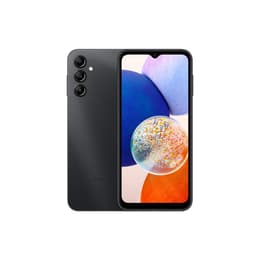
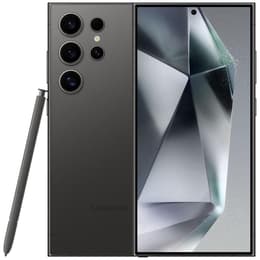


Galaxy A14 Vs Galaxy S24 Ultra

Galaxy A14
Galaxy A14
Starting at

Refurbished price:97.00

Versus €269.00 new

See options
Galaxy S24 Ultra
Galaxy S24 Ultra
Starting at

Refurbished price:542.00

Versus €1,141.93 new

See options

Ratings

The Samsung Galaxy A14, released in early 2023, and the Samsung Galaxy S24 Ultra, launched in early 2024, represent distinct tiers within Samsung's smartphone lineup. While both operate on the Android platform with Samsung's One UI, they cater to different user expectations through their core features and capabilities. The A14 focuses on essential smartphone functionality, whereas the S24 Ultra delivers a premium, feature-rich experience.

Scores

Durability

The longevity of a smartphone is significantly influenced by its release timeline, software support, and physical construction.

  • Release and Software Support: The Galaxy A14, launched in January 2023 (5G model) and February 2023 (4G LTE model), originally ran on Android 13. It is expected to receive two major Android OS upgrades, bringing it up to Android 15, and four years of security updates, with security patches typically delivered quarterly. In contrast, the Galaxy S24 Ultra, released in January 2024 with Android 14, benefits from Samsung's extended software commitment, promising seven generations of OS upgrades (up to Android 21) and seven years of security updates. This means the S24 Ultra offers a significantly longer period of official software support.
  • Build Materials and Durability: The Galaxy A14 features a plastic polycarbonate back and frame, and it does not carry an official IP rating for dust and water resistance. The Galaxy S24 Ultra, on the other hand, boasts a more robust construction with a titanium frame, Corning Gorilla Armor on the front display, and Gorilla Glass Victus 2 on the rear. It also comes with an IP68 rating, indicating strong resistance to dust and water immersion.
  • Expected Lifespan: Users prioritizing extended software updates and enhanced physical durability will find the Galaxy S24 Ultra designed for a longer practical lifespan. The Galaxy A14, while offering reasonable support for its category, is built for a more typical budget smartphone lifecycle.

Year of Release

2023

2024

Compatible with latest Update

No

Yes

OS

Android

Android

Foldable

No

No

Performance

Performance differences between these two devices are substantial, impacting everything from app responsiveness to demanding tasks.

  • Processor Capabilities: The Galaxy A14 is equipped with a processor suitable for everyday tasks, such as browsing, social media, and light applications. Users may experience occasional lags or stutters with animations and when switching between multiple applications. It is not designed for intensive gaming or heavy multitasking. The Galaxy S24 Ultra features a current-generation processor engineered for high performance, ensuring smooth operation even with demanding applications, graphic-intensive games, and extensive multitasking without noticeable slowdowns.
  • RAM and Storage: The Galaxy A14 typically comes with 4GB or 6GB of RAM and 64GB or 128GB of internal storage, with the option for expandable storage via a microSD card. The Galaxy S24 Ultra offers a more generous 12GB of RAM and internal storage options ranging from 256GB to 1TB, providing ample space and memory for advanced users and extensive media libraries.
  • Battery Behavior: Both devices house a 5000 mAh battery. The Galaxy A14, with its less demanding hardware, is noted by users for its strong battery life, often lasting 1.5 to 2 days with moderate usage. The Galaxy S24 Ultra also delivers exceptional battery performance, with many users reporting it comfortably lasts a full day of heavy use, and some even achieving nearly two full days on a single charge.

Memory (GB)

4 GB

12 GB

Screen quality

The visual experience is a key differentiator, with significant variations in display technology and capabilities.

  • Display Technology and Resolution: The Galaxy A14 features a 6.6-inch PLS LCD display with a resolution of 1080 x 2408 pixels (FHD+), resulting in a pixel density of approximately 400 pixels per inch (ppi). The Galaxy S24 Ultra sports a larger 6.8-inch Dynamic LTPO AMOLED 2X display with a higher resolution of 1440 x 3120 pixels (QHD+), offering a sharper visual experience with around 500 ppi. The AMOLED technology on the S24 Ultra provides deeper blacks and more vibrant colors compared to the LCD panel on the A14.
  • Brightness and Refresh Rate: The Galaxy A14's display has a peak brightness of around 480-500 nits, which can make outdoor visibility challenging in bright sunlight. Its refresh rate is either 60Hz (4G model) or 90Hz (5G model), offering a reasonably smooth scrolling experience. The Galaxy S24 Ultra's display is significantly brighter, with an advertised peak brightness of up to 2600 nits and an outdoor peak brightness of up to 2000 nits, ensuring excellent readability even in direct sunlight. It also features an adaptive refresh rate that dynamically adjusts from 1Hz to 120Hz, providing exceptionally smooth visuals and responsive interactions while optimizing power consumption.
  • Viewing Experience: The S24 Ultra's advanced display technology and higher specifications translate to a more immersive and comfortable viewing experience, particularly for media consumption and outdoor use.

Resolution

1080 x 2408

1440 x 3120

Screen type

PLS LCD

Dynamic LTPO AMOLED 2X

Audiovisual

The camera systems on these two devices are designed for different photographic needs and expectations.

  • Rear Camera Systems: The Galaxy A14 features a triple rear camera setup, typically including a 50-megapixel main sensor, a 5-megapixel ultrawide sensor (on some 4G models), a 2-megapixel macro lens, and a 2-megapixel depth sensor. The Galaxy S24 Ultra offers a more comprehensive quad-camera system, comprising a 200-megapixel main sensor, a 12-megapixel ultrawide lens, a 10-megapixel telephoto lens with 3x optical zoom, and a 50-megapixel periscope telephoto lens with 5x optical zoom.
  • Photography Performance: In daylight, the Galaxy A14's main camera can capture decent details, but it tends to over-process colors, and its performance significantly diminishes in low-light conditions due to the absence of a dedicated night mode on some variants. The Galaxy S24 Ultra delivers top-tier photography across various conditions, offering incredible clarity, accurate colors, and a wide dynamic range. Its advanced night mode and versatile zoom capabilities contribute to its strong performance in diverse lighting scenarios.
  • Video Recording and Front Camera: The Galaxy A14 is capable of recording video at 1080p resolution at 30 frames per second, with limited stabilization. It has a 13-megapixel front camera. The Galaxy S24 Ultra supports up to 8K video recording at 30 frames per second and offers advanced features like 4K at 120 frames per second in Pro mode, along with Super Steady video stabilization. Its 12-megapixel front camera also provides high-quality selfies and video calls. The A14 features a single loudspeaker, providing mono audio, while the S24 Ultra offers a more immersive audio experience with stereo speakers.

Main camera

50 megapixels

200 megapixels

Front camera

13 megapixels

12 megapixels

Miscellaneous

Beyond core performance and display, several practical elements distinguish these two Samsung smartphones.

  • Connectivity and Ports: The Galaxy A14 (5G model) supports 5G connectivity, Wi-Fi 5 (802.11ac), and Bluetooth 5.1 or 5.2. It includes a USB-C 2.0 port for charging and data transfer, and notably, retains a 3.5mm headphone jack. The Galaxy S24 Ultra offers advanced 5G capabilities, Wi-Fi 7 (802.11be), and Bluetooth 5.3 for faster and more efficient wireless connections. It features a USB-C 3.2 port, but does not include a 3.5mm headphone jack.
  • Sensors and Unique Features: The Galaxy A14 incorporates a side-mounted fingerprint sensor for biometric authentication. The Galaxy S24 Ultra features an in-display fingerprint sensor and integrates the S Pen, offering enhanced productivity and creative input capabilities directly within the device.
  • Physical Design and Handling: The Galaxy A14 measures approximately 167.7 x 78 x 9.1 mm and weighs around 201-202 grams. Its plastic construction contributes to a lighter feel. The Galaxy S24 Ultra, with its premium build materials, measures 162.3 x 79 x 8.6 mm and weighs between 232-233 grams. While slightly heavier, its dimensions are designed for a comfortable grip despite its large screen.

Weight

201 g

232 g

Screen size (in)

6.6

6.8

Network

4G

5G

SIM card

Dual Physical SIM

Physical SIM + eSIM

Carrier compatibility

Unlocked

Unlocked

User feedback for the Galaxy A14 often highlights its commendable battery life and its capability to handle everyday smartphone functions reliably for its segment. Common criticisms include its performance sometimes feeling sluggish with heavier use, the display's limited brightness in direct sunlight, and the absence of an ultrawide camera on some models. Users generally appreciate its value as an entry-level device.

The Galaxy S24 Ultra consistently receives praise for its exceptional battery longevity, its versatile and high-quality camera system, and its consistently smooth performance across all tasks. Its vibrant display and the integrated S Pen are also frequently cited as major advantages. Some users note the complexity of its software interface and, in some instances, camera overexposure.

Users prioritizing a long-lasting device with extensive software support, top-tier camera capabilities, and powerful performance for demanding applications and multitasking may find the Galaxy S24 Ultra well-suited to their needs. Its advanced display and integrated S Pen also cater to those seeking a premium and productive mobile experience. Conversely, users who primarily need a reliable smartphone for essential communication, social media, and light content consumption, and who value extended battery life, may find the Galaxy A14 to be a practical choice. For those considering a more sustainable option, both models are available as quality-assured refurbished alternatives, offering an eco-friendly way to acquire these devices.


See all articles

Our recent comparisons






