

Compare models

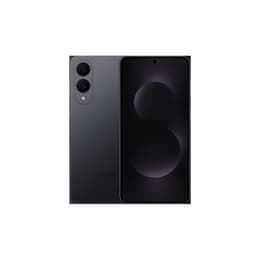
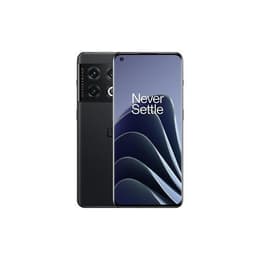
Galaxy S25 Edge Vs OnePlus 10 Pro

  • 1-year minimum warranty
  • Free delivery on all orders
  • Free 30-day returns
Galaxy S25 Edge
Starting at

Refurbished price:€490.00

Versus €1,275.21 new

See options
OnePlus 10 Pro
Starting at

Refurbished price:€342.00

Versus €899.00 new

See options

Differences at a glance

The Samsung Galaxy S25 Edge (2025) and the OnePlus 10 Pro (2022) are high-end Android smartphones representing distinct eras of mobile design and engineering. While the Galaxy S25 Edge prioritizes an ultra-slim profile and modern internal hardware, the OnePlus 10 Pro focuses on a balanced multimedia layout with a curved glass aesthetic. Both devices run the Android operating system paired with their respective brand interfaces, offering contrasting approaches to daily mobile computing.

Available Models

Colour

Storage

Scores

Durability

When comparing longevity and durability, these two devices reflect different stages in the product lifecycle, with software support timelines varying significantly by release year.

  • Release timeline and software support: The Galaxy S25 Edge arrived in 2025 with Android 15, securing extended software update longevity, whereas the OnePlus 10 Pro debuted in 2022 with Android 12 and operates on an older update schedule.
  • Build and repairability: The Galaxy S25 Edge utilizes a lightweight titanium chassis and reinforced glass protection, while the OnePlus 10 Pro features an aluminum frame with curved glass panels, both offering standard structural durability for daily handling.
  • Expected lifespan: Users looking for maximum software longevity and security updates over an extended duration will find the newer Samsung model aligns better with long-term ownership goals.

Year of Release

2025

2022

Compatible with latest Update

Yes

Yes

OS

Android

Android

Foldable

No

No

Performance

Performance capabilities differ notably due to the generation gap between their internal components, influencing how each phone handles resource-intensive tasks.

  • System responsiveness: The Galaxy S25 Edge handles demanding apps, complex multitasking, and fast graphic rendering smoothly thanks to its current-generation processor and ample memory configuration.
  • Everyday multitasking: The OnePlus 10 Pro manages routine web browsing, media streaming, and standard app switching reliably, though heavy multitasking and intensive gaming may run slightly cooler and faster on the newer hardware.
  • Battery behavior: The OnePlus 10 Pro features a larger physical battery capacity paired with high-wattage wired charging support, whereas the slimmer profile of the Galaxy S25 Edge houses a more compact battery designed for standard daily use cycles.

Screen quality

Both smartphones offer large, high-resolution viewing spaces, though their display panel implementations and physical form factors create distinct visual experiences.

  • Display technology and clarity: Both models utilize advanced OLED panel technology with sharp resolutions, delivering deep black levels, vibrant colors, and crisp text reproduction for reading and media consumption.
  • Outdoor visibility: The Galaxy S25 Edge features high peak brightness capabilities that maintain screen legibility under direct sunlight, while the OnePlus 10 Pro also offers a bright panel suitable for outdoor viewing.
  • Refresh rate and smoothness: Both devices support high refresh rates, ensuring fluid scrolling through web pages, social media feeds, and responsive touch feedback during navigation.

Resolution

1440 x 3120

1440 x 3216

Audiovisual

Photography and media recording capabilities vary across the two devices, reflecting different camera hardware philosophies and sensor layouts.

  • Camera systems: The Galaxy S25 Edge utilizes a high-resolution main sensor paired with an ultra-wide lens, focusing on detailed everyday capture, whereas the OnePlus 10 Pro features a versatile triple-lens setup with specialized ultra-wide perspectives and telephoto optical zoom.
  • Video and low-light output: Both smartphones record stable high-resolution video and handle low-light environments effectively using built-in image stabilization and automated night processing modes.
  • Audio and media consumption: Built-in stereo speakers on both models deliver clear sound output for casual video playback and hands-free calls, though neither includes a traditional headphone jack.

Miscellaneous

Practical daily usability elements, physical dimensions, and connectivity standards highlight further practical differences between the two models.

  • Handling and dimensions: The Galaxy S25 Edge emphasizes a remarkably thin and lightweight profile that rests easily in one hand, while the OnePlus 10 Pro features a slightly heavier and thicker build with curved edges.
  • Connectivity and sensors: Both devices support 5G network connectivity, modern Wi-Fi standards, Bluetooth pairing, and secure under-display fingerprint scanners for biometric authentication.
  • Port standards: Both smartphones rely on reversible USB-C ports for charging and data transfer, aligning with current industry standards.

Weight

163 g

201 g

Screen size (in)

6.7

6.7

Network

5G

5G

SIM card

Physical SIM + eSIM

Dual Physical SIM

Carrier compatibility

Unlocked

Unlocked

What the community thinks

User feedback and community discussions indicate that the OnePlus 10 Pro is frequently praised for its rapid charging speeds, curved display ergonomics, and versatile zoom camera capabilities, though some users note that battery degradation can occur over extended years of heavy use. Meanwhile, the Galaxy S25 Edge receives positive recognition for its exceptionally slim titanium build, current-generation system speed, and modern software support lifecycle, though users looking for extended battery endurance or a dedicated optical zoom lens may find its compact footprint requires more frequent charging.

Users prioritizing a featherlight physical profile, long-term software updates, and current-generation system performance may prefer the Galaxy S25 Edge, while users seeking fast charging speeds and a traditional multi-lens zoom setup may lean toward the OnePlus 10 Pro. For those considering a sustainable purchase, a quality-assured refurbished option provides an eco-friendly alternative that extends device life cycles. Selecting between these two models ultimately depends on whether physical slimness and software longevity or traditional ergonomics and charging speed take priority in daily use.








