

Galaxy S20 FE Vs Galaxy S23 Ultra

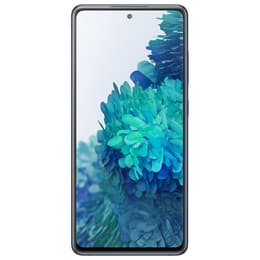
Galaxy S20 FE
Galaxy S20 FE
Starting at

Refurbished price:151.00

Versus €779.00 new

See options
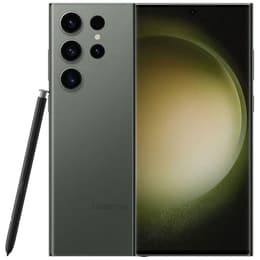
Galaxy S23 Ultra
Galaxy S23 Ultra
Starting at

Refurbished price:430.00

Versus €1,409.00 new

See options

Ratings

The Samsung Galaxy S20 FE, released in October 2020, and the Samsung Galaxy S23 Ultra, launched in February 2023, represent different generations within Samsung's smartphone lineup. While both operate on the Android platform, the S23 Ultra introduces significant advancements in processing power, camera technology, and overall user experience compared to its predecessor.

Scores

Durability

The expected practical lifespan and software support differ between these two devices due to their respective release dates.

  • Release Timeline: The Galaxy S20 FE, being an older model, has received fewer major Android operating system updates and is nearing the end of its official software support cycle. The Galaxy S23 Ultra, as a more recent release, benefits from a longer guaranteed period of software and security updates, extending its functional life.
  • Repairability: The Galaxy S20 FE has a repairability score of 7.5 out of 10, indicating it can be repaired with some effort, though the battery might be challenging to remove without heating. The Galaxy S23 Ultra generally offers improved repairability, with some reports noting easier battery replacement due to pull tabs and clearly labeled internal components, earning it a high repairability score of 9 out of 10 from PBKReviews.
  • Physical Durability: Both devices feature an IP68 rating for dust and water resistance, meaning they can withstand submersion in up to 1.5 meters of fresh water for up to 30 minutes. However, the Galaxy S23 Ultra incorporates Corning Gorilla Glass Victus 2 on both its front and back, offering enhanced scratch and drop resistance compared to the Gorilla Glass 3 found on the S20 FE's display.

Year of Release

2020

2023

Compatible with latest Update

No

Yes

OS

Android

Android

Foldable

No

No

Performance

Performance capabilities show a notable difference, primarily driven by the generational gap in their internal components.

  • Processing Power: The Galaxy S20 FE is equipped with a capable processor from its release year, allowing it to handle everyday applications and multitasking smoothly. The Galaxy S23 Ultra features a significantly more advanced current-generation processor, specifically optimized for its ecosystem, which provides substantially faster CPU and GPU speeds. This translates to quicker app loading, smoother transitions, and superior performance in demanding applications and graphics-intensive games.
  • Multitasking and Storage: The S20 FE typically comes with 6GB or 8GB of RAM and offers 128GB or 256GB of internal storage, with the added benefit of expandable storage via a microSD card. The S23 Ultra offers higher RAM configurations, starting from 8GB and going up to 12GB, alongside larger internal storage options of 256GB, 512GB, or 1TB, utilizing faster storage technology. However, the S23 Ultra does not support expandable storage.
  • Battery Behavior: The Galaxy S20 FE houses a 4500 mAh battery, generally providing sufficient power for a full day of moderate use. The Galaxy S23 Ultra is equipped with a larger 5000 mAh battery. Combined with its more efficient processor, the S23 Ultra often delivers extended battery life, with users reporting it can last longer even under heavy usage.

Memory (GB)

6 GB

8 GB

Screen quality

The display experience varies between the two models, with the S23 Ultra offering a more refined visual output.

  • Display Technology and Size: The Galaxy S20 FE features a 6.5-inch Super AMOLED display with a Full HD+ resolution (1080 x 2400 pixels). The Galaxy S23 Ultra boasts a larger 6.8-inch Dynamic AMOLED 2X display with a Quad HD+ resolution (1440 x 3088 pixels), resulting in a higher pixel density for sharper visuals.
  • Refresh Rate and Brightness: Both devices offer a 120Hz refresh rate, contributing to smoother scrolling and more fluid animations. However, the S23 Ultra's refresh rate is adaptive, scaling from 1Hz to 120Hz to optimize power consumption. The S23 Ultra also achieves significantly higher peak brightness levels, reaching up to 1750 nits, which enhances outdoor visibility and HDR content viewing compared to the S20 FE.
  • Viewing Experience: The S23 Ultra's display is slightly curved at the edges, while the S20 FE has a flat display. The S23 Ultra's higher resolution and superior brightness contribute to a more immersive and detailed viewing experience, particularly for high-quality media.

Resolution

1080 x 2400

1440 x 3088

Screen type

Super AMOLED

Dynamic AMOLED 2X

Audiovisual

The camera systems represent one of the most significant areas of advancement in the S23 Ultra.

  • Rear Camera System: The Galaxy S20 FE features a triple-camera setup on the rear, including a 12MP main sensor, a 12MP ultrawide lens, and an 8MP telephoto lens capable of 3x optical zoom. The Galaxy S23 Ultra comes with a quad-camera system, highlighted by a 200MP main sensor, a 12MP ultrawide lens, and two 10MP telephoto lenses offering 3x and 10x optical zoom, respectively.
  • Photography Performance: The S20 FE delivers good image quality in well-lit conditions, with its main camera producing vibrant and detailed photos. The S23 Ultra, with its high-resolution main sensor and advanced processing, captures exceptional detail and offers superior low-light performance, often referred to as 'Nightography'. Its zoom capabilities are also significantly more versatile, allowing for clear images at much greater distances.
  • Video Recording and Front Camera: Both devices support 4K video recording, with the S20 FE capable of 4K at 60fps. The S23 Ultra elevates video capabilities with support for 8K recording at 30fps and improved stabilization. For selfies, the S20 FE has a 32MP front camera, while the S23 Ultra features a 12MP front camera that offers improved clarity and better low-light performance.

Main camera

12 megapixels

200 megapixels

Front camera

32 megapixels

12 megapixels

Miscellaneous

Beyond core features, several practical elements distinguish these two Samsung smartphones.

  • Connectivity and Ports: Both devices support 5G connectivity, Wi-Fi, and Bluetooth. The S23 Ultra features newer standards, including Wi-Fi 6E and Bluetooth 5.3, compared to the S20 FE's Wi-Fi 6 and Bluetooth 5.0, offering potentially faster and more stable wireless connections. Both utilize a USB-C port for charging and data transfer, but neither includes a traditional 3.5mm headphone jack.
  • Biometrics and Special Features: Both phones incorporate in-display fingerprint sensors for secure unlocking. The S20 FE uses an optical sensor, while the S23 Ultra employs a more advanced ultrasonic sensor. A key differentiator for the S23 Ultra is the integrated S Pen stylus, offering enhanced productivity for note-taking, drawing, and remote controls.
  • Design and Build: The Galaxy S20 FE has dimensions of 159.8 x 74.5 x 8.4 mm and weighs 190g, featuring a plastic back. The Galaxy S23 Ultra is a larger and heavier device at 163.4 x 78.1 x 8.9 mm and 234g, constructed with an aluminum frame and glass on both the front and back.

Weight

190 g

233 g

Screen size (in)

6.5

6.8

Network

4G

5G

SIM card

Dual Physical SIM

Dual Physical SIM + eSIM

Carrier compatibility

Unlocked

Unlocked

The Samsung Galaxy S20 FE and Galaxy S23 Ultra cater to different user needs and expectations, largely due to the three-year gap in their release.

User feedback for the Galaxy S20 FE often praises its balanced feature set, including a good display, capable cameras for its time, and solid performance for everyday use. Many users appreciated the inclusion of expandable storage, which is absent in newer flagship models. Common criticisms sometimes pointed to its plastic back and the regional variations in processors.

The Galaxy S23 Ultra, on the other hand, receives widespread acclaim for its exceptional camera system, particularly its zoom capabilities and low-light performance, often being cited as a top contender for mobile photography. Its powerful processor and long battery life are also frequently highlighted as major strengths, alongside the versatility offered by the integrated S Pen. Some users, however, note its large size and weight.

Users prioritizing a device for general daily tasks, media consumption, and the flexibility of expandable storage may find the Galaxy S20 FE well-suited to their needs. It remains a capable smartphone for those who do not require the absolute latest in performance or camera technology. Conversely, users who demand the highest levels of performance for demanding applications, advanced photography and videography features, and the productivity tools offered by a stylus will lean towards the Galaxy S23 Ultra. Its superior display and extended software support also make it a compelling choice for those seeking a longer-term investment. Both models are available as quality-assured refurbished options, providing an eco-friendly alternative for consumers.


See all articles

Our recent comparisons






