

Galaxy S21 5G Vs Huawei P30 Pro

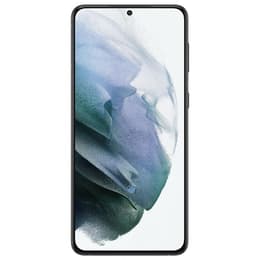
Galaxy S21 5G
Galaxy S21 5G
Starting at

Refurbished price:165.00

Versus €1,026.00 new

See options
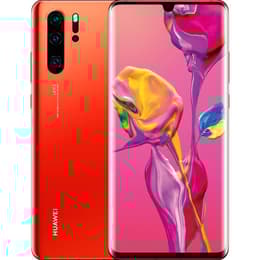
Huawei P30 Pro
Huawei P30 Pro
Starting at

Refurbished price:186.00

Versus €849.00 new

See options

Ratings

The Samsung Galaxy S21 5G, released in January 2021, and the Huawei P30 Pro, launched in March 2019, represent flagship smartphones from their respective eras. While both devices offer premium experiences, they differ significantly in their core camera capabilities, display technology, and connectivity options. Both operate on the Android platform, though with distinct user interfaces and software update trajectories.

Scores

Durability

When considering the longevity of these devices, their release timelines and software support play a crucial role.

  • Release Timeline: The Galaxy S21 5G is a newer device, released nearly two years after the Huawei P30 Pro. This difference in launch date inherently provides the S21 5G with a longer potential period of software updates and security patches from its manufacturer.
  • Software Support: The Galaxy S21 5G launched with Android 11 and typically receives several years of major Android updates and security patches, extending its practical usability into the future. The Huawei P30 Pro, originally on Android 9.0 Pie, has received updates to Android 10 with EMUI 12 (or HarmonyOS 4 in some regions), but its future major Android version updates may be less consistent compared to the S21 5G.
  • Repairability: The Huawei P30 Pro received an iFixit repairability score of 4 out of 10, indicating that it is relatively difficult to repair due to heavy use of adhesive and compact internal components. While a specific iFixit score for the Galaxy S21 5G is not readily available, modern smartphone designs often present similar challenges for repair.

Year of Release

2021

2019

Compatible with latest Update

Yes

No

OS

Android

Android

Foldable

No

No

Performance

The performance of a smartphone is crucial for daily tasks, from navigating apps to demanding gaming sessions.

  • Processing Power: The Galaxy S21 5G features a more recent generation processor, which translates to faster app loading times, smoother multitasking, and enhanced performance in graphically intensive games. This newer hardware provides more headroom for future software advancements and demanding applications.
  • Multitasking and Storage: Both devices offer ample RAM, typically 8GB, which supports efficient multitasking and keeps multiple applications running in the background without significant slowdowns. The Galaxy S21 5G comes with 128GB or 256GB of internal storage, but lacks a microSD card slot for expansion. The Huawei P30 Pro offers 128GB, 256GB, or 512GB storage options and supports Huawei's proprietary Nano Memory cards for expandable storage, which are less common than standard microSD cards.
  • Battery Behavior: The Huawei P30 Pro, with its 4200mAh battery, is noted for its strong battery life, often lasting up to two days with moderate use and over 11 hours of video streaming. The Galaxy S21 5G, equipped with a 4000mAh battery, typically provides about 1.5 days of use and around 10 hours of Wi-Fi streaming, with 5G usage impacting endurance.

Memory (GB)

8 GB

8 GB

Screen quality

The visual experience is a key aspect of smartphone usage, and both devices offer high-quality displays with distinct characteristics.

  • Display Technology and Resolution: The Galaxy S21 5G features a 6.2-inch Dynamic AMOLED 2X display with a resolution of 2400 x 1080 pixels (FHD+), offering vibrant colors and deep blacks. The Huawei P30 Pro has a slightly larger 6.47-inch OLED display, also with a 2340 x 1080 pixel resolution, known for its rich colors and good contrast.
  • Refresh Rate and Brightness: A significant difference lies in the refresh rate; the Galaxy S21 5G boasts an adaptive 120Hz refresh rate, providing a noticeably smoother scrolling and animation experience. The Huawei P30 Pro features a standard 60Hz refresh rate. In terms of brightness, the S21 5G can reach a peak of 1300 nits, ensuring good visibility even in bright outdoor conditions. The P30 Pro also offers excellent sunlight visibility.
  • Design and Protection: The Galaxy S21 5G's display is protected by Corning Gorilla Glass Victus, offering enhanced durability against drops and scratches. The P30 Pro features a curved display design, which some users find aesthetically pleasing and comfortable to hold.

Resolution

1080 x 2400

1080 x 2340

Screen type

Dynamic AMOLED 2X

OLED

Audiovisual

Both smartphones are recognized for their advanced camera systems, though they excel in different areas of photography and videography.

  • Rear Camera Systems: The Huawei P30 Pro features a versatile quad-camera setup, including a 40MP main sensor, a 20MP ultra-wide lens, an 8MP periscope telephoto lens capable of 5x optical zoom, and a Time-of-Flight (ToF) sensor for depth sensing. This configuration is particularly noted for its exceptional low-light performance and impressive zoom capabilities, including up to 50x digital zoom. The Samsung Galaxy S21 5G offers a triple-camera system with a 12MP wide lens, a 64MP telephoto lens providing 3x hybrid optical zoom, and a 12MP ultra-wide lens.
  • Photography Performance: The P30 Pro is widely praised for its ability to capture detailed and vibrant images in various conditions, especially in very low light, often turning night scenes into day-like images. The S21 5G delivers sharp photos with good color saturation and dynamic range, with improvements in processing and low-light performance compared to its predecessors.
  • Video Recording and Front Camera: The Galaxy S21 5G supports up to 8K video recording and offers features like Director's View, allowing users to switch between multiple cameras while filming. Its 10MP front camera provides good quality selfies. The P30 Pro records video at up to 4K resolution at 30fps and features a 32MP front-facing camera known for detailed selfies.

Main camera

12 megapixels

40 megapixels

Front camera

10 megapixels

32 megapixels

Miscellaneous

Beyond the core features, several practical elements differentiate these two devices in terms of connectivity, design, and user interaction.

  • Connectivity and Ports: A key distinction is network support; the Galaxy S21 5G offers 5G connectivity, Wi-Fi 6, and Bluetooth 5.0, providing access to the latest high-speed networks. The Huawei P30 Pro supports 4G LTE, Wi-Fi 5, and Bluetooth 5.0. Both devices utilize a USB-C port for charging and data transfer and notably lack a traditional 3.5mm headphone jack.
  • Biometric Security and Audio: Both smartphones incorporate in-display fingerprint sensors for secure unlocking. The Galaxy S21 5G features stereo speakers, offering a more immersive audio experience for media consumption. The Huawei P30 Pro uses an innovative acoustic display technology for its earpiece, where the screen vibrates to produce call audio, but relies on a single bottom-firing speaker for general audio output.
  • Build Materials and Handling: The Galaxy S21 5G features a plastic back, contributing to a lighter feel, while its camera array is integrated into the metal frame. The Huawei P30 Pro has a glass back and a metal frame, giving it a premium feel, though the glass can be slippery. The P30 Pro is slightly heavier than the S21 5G.

Weight

171 g

192 g

Screen size (in)

6.2

6.47

Network

5G

4G

SIM card

Physical SIM + eSIM

Dual Physical SIM

Carrier compatibility

Unlocked

Unlocked

The Samsung Galaxy S21 5G and the Huawei P30 Pro, while both capable smartphones, cater to slightly different user priorities due to their respective strengths and release timelines.

Users frequently praise the Huawei P30 Pro for its exceptional camera system, particularly its groundbreaking low-light performance and impressive optical zoom capabilities, which were ahead of its time. Its long-lasting battery life is also a consistent highlight among users. However, some users note the use of proprietary Nano Memory cards for storage expansion as a limitation, and its single bottom-firing speaker for media playback is a frequent criticism.

The Samsung Galaxy S21 5G is often lauded for its vibrant and smooth 120Hz display, its robust performance for demanding applications, and its modern 5G connectivity. Its camera system is also well-regarded for its versatility and video recording features. Common concerns for the S21 5G include its battery life, which some users find to be merely adequate compared to other flagships, and the absence of a microSD card slot.

Users prioritizing cutting-edge display smoothness, faster overall performance, and future-proof 5G connectivity may find the Galaxy S21 5G to be a more suitable choice. Conversely, those who place a premium on photographic innovation, especially in low-light conditions and with significant optical zoom, alongside extended battery endurance, might lean towards the Huawei P30 Pro. Both devices, when considered as quality-assured refurbished options, offer an eco-friendly alternative for consumers seeking high-performance smartphones.


See all articles

Our recent comparisons