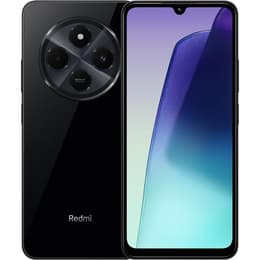



Xiaomi Redmi 14C Vs Xiaomi Redmi Note 12 Pro

Xiaomi Redmi 14C
Xiaomi Redmi 14C
Starting at

Refurbished price:128.20

Versus €189.00 new

See options
Xiaomi Redmi Note 12 Pro
Starting at

Refurbished price:110.00

Versus €399.00 new

See options

Ratings

The Xiaomi Redmi 14C (released in August 2024) and the Xiaomi Redmi Note 12 Pro (released in November 2022) are both smartphones from Xiaomi, offering distinct experiences for different user needs. While the Redmi 14C focuses on a large display and a more recent software experience, the Redmi Note 12 Pro emphasizes a superior display technology and more advanced camera capabilities. Both devices operate on Android, with the Redmi 14C launching with a newer version of the operating system.

Scores

Durability

The longevity of a smartphone is influenced by its release timeline, software support, and physical durability.

  • Release Timeline: The Redmi 14C, launched in August 2024, benefits from a more recent release compared to the Redmi Note 12 Pro, which debuted in November 2022. This difference in launch dates typically translates to a longer period of official software support for the newer device.
  • Software Support: The Redmi 14C runs on Xiaomi HyperOS based on Android 14 and is expected to receive up to two major Android updates and three years of security patches. The Redmi Note 12 Pro launched with MIUI 13 based on Android 12, with an expectation of two years of software updates and four years of security updates. Users prioritizing the latest software versions for an extended period may find the Redmi 14C more aligned with their needs due to its newer starting point.
  • Physical Durability: The Redmi Note 12 Pro features Corning Gorilla Glass 5 protection on its display and boasts an IP53 rating for dust and splash resistance, offering a degree of protection against everyday elements. The Redmi 14C's display is an IPS LCD with TÜV Rheinland certifications for eye comfort, but specific glass protection details are less prominent. Both devices feature plastic frames, with the Redmi 14C offering various back finishes including glass or eco-leather.

Year of Release

2024

2022

Compatible with latest Update

Yes

No

OS

Android

Android

Foldable

No

No

Performance

Performance in smartphones is crucial for smooth daily operation, from app usage to multitasking and gaming.

  • Processor Capabilities: The Redmi 14C is equipped with a MediaTek Helio G81-Ultra processor, designed for essential daily tasks such as messaging, light gaming, and media consumption. It handles these activities adequately but is not built for heavy multitasking or demanding 3D games. The Redmi Note 12 Pro features a MediaTek Dimensity 1080 processor, which offers a more robust performance, suitable for good overall daily use and decent gaming experiences without significant heating issues.
  • RAM and Storage: Both devices offer multiple RAM configurations, with the Redmi 14C available in 4GB, 6GB, and 8GB LPDDR4X options, supporting memory extension for smoother system performance. The Redmi Note 12 Pro also comes with 6GB or 8GB LPDDR4X RAM. For internal storage, the Redmi 14C uses eMMC 5.1 storage (64GB, 128GB, 256GB) and supports microSD expansion up to 1TB, providing ample space for media and apps. The Redmi Note 12 Pro utilizes faster UFS 2.2 storage (128GB, 256GB) but does not offer expandable storage in its 5G variant.
  • Overall Responsiveness: Users of the Redmi 14C can expect smooth navigation and app loading for typical usage, though some minor stutters might occur during heavy multitasking. The Redmi Note 12 Pro, with its more capable processor and faster storage, generally provides a more fluid and responsive user experience, especially when switching between demanding applications or engaging in more intensive tasks.

Memory (GB)

4 GB

8 GB

Screen quality

The display is a primary interaction point, and its quality significantly impacts the user experience.

  • Display Technology and Resolution: The Redmi 14C features a large 6.88-inch IPS LCD display with an HD+ resolution (1640 x 720 pixels). This provides a spacious viewing area, suitable for casual browsing and video streaming. In contrast, the Redmi Note 12 Pro boasts a 6.67-inch FHD+ Flow AMOLED display with a higher resolution of 2400 x 1080 pixels. The AMOLED technology offers deeper blacks, higher contrast, and more vibrant colors compared to the IPS LCD of the Redmi 14C.
  • Brightness and Clarity: The Redmi 14C offers a typical brightness of 450 nits, peaking at 600 nits in High Brightness Mode, which is generally sufficient for indoor use but can be challenging in bright outdoor conditions. The Redmi Note 12 Pro provides a higher peak brightness of 900 nits (HBM), reaching up to 1100 nits in some variants, ensuring better visibility under direct sunlight. The higher pixel density of the Redmi Note 12 Pro also results in sharper text and images.
  • Refresh Rate and Smoothness: Both devices feature a 120Hz refresh rate, contributing to smoother scrolling and more fluid animations. The Redmi Note 12 Pro's display also supports an adaptive refresh rate, adjusting between 30Hz, 60Hz, 90Hz, and 120Hz depending on the content to optimize power consumption. The Redmi 14C maintains a consistent 120Hz refresh rate. Both have a 240Hz touch sampling rate for improved responsiveness.

Resolution

720 x 1640

1080 x 2400

Screen type

IPS LCD

AMOLED

Audiovisual

Camera performance is a key consideration for many users, impacting the quality of photos and videos captured.

  • Rear Camera System: The Redmi 14C features a dual rear camera setup with a 50MP main sensor and an auxiliary depth lens. It is capable of capturing bright and detailed photos in well-lit conditions. The Redmi Note 12 Pro offers a more versatile triple camera system, including a 50MP main sensor (Sony IMX766 with Optical Image Stabilization), an 8MP ultra-wide-angle lens, and a 2MP macro lens. The inclusion of OIS on the main sensor of the Redmi Note 12 Pro significantly enhances low-light performance and video stability.
  • Photography Performance: In daylight, both phones can produce appealing pictures. However, the Redmi Note 12 Pro's main camera, with its larger sensor and OIS, generally delivers better detail, dynamic range, and improved performance in challenging lighting conditions. The Redmi Note 12 Pro also offers an ultra-wide lens for capturing broader scenes, a feature not present on the Redmi 14C.
  • Video Recording and Audio: The Redmi 14C supports video recording up to 1080p at 30 frames per second (fps) for both its front and rear cameras. The Redmi Note 12 Pro elevates video capabilities with support for 4K recording at 30fps and 1080p at 60fps on its rear camera, providing more detailed and smoother video capture. Both devices include a 3.5mm headphone jack. The Redmi 14C has a mono bottom-firing speaker, while the Redmi Note 12 Pro features dual speakers with Dolby Atmos support, offering a more immersive audio experience for media consumption.

Main camera

50 megapixels

50 megapixels

Front camera

13 megapixels

16 megapixels

Miscellaneous

Beyond core specifications, several practical features contribute to the overall user experience.

  • Connectivity and Ports: The Redmi 14C supports Dual SIM 4G LTE, Wi-Fi 5, and Bluetooth 5.4. It includes a USB Type-C port for charging and data transfer. The Redmi Note 12 Pro offers more advanced connectivity with Dual 5G support, Wi-Fi 6, and Bluetooth 5.2, providing faster network speeds and more efficient wireless connections. Both devices retain a 3.5mm headphone jack.
  • Security and Sensors: Both smartphones feature a side-mounted fingerprint sensor and AI face unlock for convenient and secure access. The Redmi Note 12 Pro also includes an IR blaster, allowing it to function as a universal remote control for various home appliances, a feature not typically found on the Redmi 14C.
  • Design and Handling: The Redmi 14C has dimensions of 171.88 x 77.8 x 8.22 mm and weighs between 204g and 211g, offering a larger form factor. The Redmi Note 12 Pro is slightly more compact and lighter, measuring 162.9 x 76 x 7.9 mm and weighing 187g. The Redmi Note 12 Pro's design includes Corning Gorilla Glass 5 protection and an IP53 rating for dust and splash resistance, contributing to its overall durability.

Weight

207 g

187 g

Screen size (in)

6.88

6.67

Network

4G

5G

SIM card

Dual Physical SIM

Dual Physical SIM

Carrier compatibility

Unlocked

Unlocked

Connector

USB-C

USB-C

The Xiaomi Redmi 14C and Redmi Note 12 Pro cater to different priorities, offering distinct advantages based on user needs.

Users frequently praise the Redmi 14C for its large display, recent Android version with HyperOS, and expandable storage options, making it a suitable choice for those who prioritize screen real estate and long-term software relevance. However, some users note its HD+ display resolution and less powerful processor as areas where it could be improved for more demanding tasks. The battery life, while substantial at 5160mAh, has been reported to be average for its segment in some real-world tests.

The Redmi Note 12 Pro is often lauded for its vibrant AMOLED display with higher resolution and brightness, its more capable processor for smoother performance, and its optically stabilized main camera, which excels in various lighting conditions and video recording. Common criticisms sometimes point to its older Android version at launch and the lack of expandable storage.

Users prioritizing a more immersive visual experience, superior camera performance, and faster overall system responsiveness, especially for gaming or demanding applications, may find the Redmi Note 12 Pro better suited to their needs. Its 5G connectivity and faster charging also appeal to those who value speed and efficiency. Conversely, users who prioritize a larger display, the latest Android version out of the box, and the flexibility of expandable storage, and whose usage primarily involves everyday tasks and media consumption, might lean towards the Redmi 14C. Both devices represent solid options in their respective segments, and considering a quality-assured refurbished option for either model can be an eco-friendly alternative to purchasing new.


See all articles

Our recent comparisons