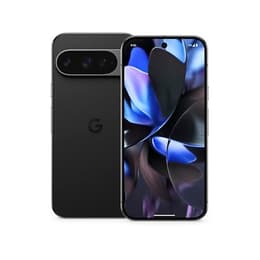


Galaxy S21 5G Vs Google Pixel 9 Pro

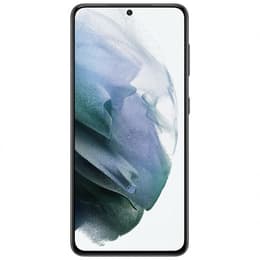
Galaxy S21 5G
Galaxy S21 5G
Starting at

Refurbished price:171.00

Versus €859.00 new

See options
Google Pixel 9 Pro
Google Pixel 9 Pro
Starting at

Refurbished price:484.00

Versus €1,099.00 new

See options

Ratings

The Samsung Galaxy S21 5G, released in January 2021, and the Google Pixel 9 Pro, launched in September 2024, represent different generations of flagship smartphones. While both devices offer a premium Android experience, the Pixel 9 Pro benefits from several years of technological advancements, particularly in its camera system, display technology, and software longevity. Both run on the Android operating system, but they offer distinct user interfaces and approaches to software features.

Scores

Durability

When considering the long-term usability of these devices, their respective release timelines and software support policies are key differentiators.

  • Software Updates: The Galaxy S21 5G, released in early 2021, launched with Android 11 and typically receives three major OS updates and four years of security updates, meaning its official software support concluded around early 2025. In contrast, the Pixel 9 Pro, released in late 2024 with Android 14, is designed to receive up to seven years of OS and security updates, offering significantly extended software longevity.
  • Durability and Build: Both phones feature an IP68 rating for dust and water resistance, indicating a similar level of protection against environmental elements. The Galaxy S21 5G uses Gorilla Glass Victus on the front and a plastic back, while the Pixel 9 Pro features Gorilla Glass Victus 2 on both the front and back, potentially offering enhanced scratch and drop resistance.
  • Practical Lifespan: Users prioritizing the latest software features and security patches for an extended period will find the Pixel 9 Pro's longer update commitment more appealing. The Galaxy S21 5G remains a capable device, but its software support window is now closed, which might influence its practical lifespan for some users.

Year of Release

2021

2024

Compatible with latest Update

Yes

Yes

OS

Android

Android

Foldable

No

No

Performance

The performance of a smartphone is largely dictated by its internal components and how efficiently the software utilizes them for daily tasks and demanding applications.

  • Processing Power: The Galaxy S21 5G is powered by an octa-core processor, either the Exynos 2100 or Snapdragon 888, depending on the region. This hardware capably handles everyday applications, multitasking, and moderate gaming. The Pixel 9 Pro, featuring the Google Tensor G4 chip, offers a more recent and optimized processing unit. This newer processor is designed for enhanced machine learning capabilities and overall system responsiveness, leading to smoother performance in demanding applications and more efficient handling of AI-driven features.
  • Multitasking and Storage: The Galaxy S21 5G typically comes with 8GB of RAM, sufficient for most multitasking scenarios. The Pixel 9 Pro, with 16GB of RAM, provides greater headroom for intensive multitasking and running multiple applications simultaneously without slowdowns. Both devices offer various internal storage options, with the Pixel 9 Pro extending up to 1TB, catering to users with extensive media libraries or large app collections.
  • Battery Behavior: The Galaxy S21 5G houses a 4000 mAh battery. The Pixel 9 Pro features a larger 4700 mAh battery, and user reports suggest it offers improved battery longevity, with some users experiencing extended usage times on a single charge. This difference can translate to more consistent all-day use for the Pixel 9 Pro, particularly for heavy users.

Memory (GB)

8 GB

16 GB

Screen quality

The visual experience on a smartphone is primarily defined by its display technology, resolution, and brightness capabilities.

  • Display Technology and Size: The Galaxy S21 5G features a 6.2-inch Dynamic AMOLED 2X display, known for its vibrant colors and deep blacks. The Pixel 9 Pro comes with a slightly larger 6.3-inch LTPO OLED display. The LTPO technology allows for a more dynamic refresh rate, contributing to better power efficiency.
  • Resolution and Brightness: The Galaxy S21 5G offers a 1080 x 2400 pixel resolution with a pixel density of 421 ppi and a peak brightness of 1300 nits. The Pixel 9 Pro boasts a higher resolution of 1280 x 2856 pixels, resulting in a sharper 495 ppi, and significantly higher peak brightness levels of up to 3000 nits. This higher brightness makes the Pixel 9 Pro's screen more visible in bright outdoor conditions.
  • Refresh Rate: Both devices offer a 120Hz refresh rate for smooth scrolling and animations. However, the Pixel 9 Pro's LTPO panel can dynamically adjust its refresh rate from 1Hz to 120Hz, optimizing power consumption based on content.

Resolution

1080 x 2400

1280 x 2856

Screen type

Dynamic AMOLED 2X

LTPO OLED

Audiovisual

Camera capabilities are a significant factor for many smartphone users, and both devices offer distinct photographic strengths.

  • Rear Camera Systems: The Galaxy S21 5G features a versatile triple-camera setup with a 12 MP main, 64 MP telephoto (3x hybrid optical zoom), and 12 MP ultrawide lens. The Pixel 9 Pro also has a triple-camera system, but with higher resolution sensors: a 50 MP main, 48 MP ultrawide with macro focus, and a 48 MP telephoto lens offering 5x optical zoom. The Pixel 9 Pro's larger sensors and advanced optical zoom provide greater detail and flexibility.
  • Photography Performance: The Galaxy S21 5G delivers strong performance in good lighting conditions and offers decent low-light capabilities. The Pixel 9 Pro, with its newer hardware and Google's computational photography, generally excels in challenging lighting and offers advanced features like improved Super Res Zoom and AI-driven enhancements for photography.
  • Video and Front Camera: Both phones are capable of recording high-quality video, with the Pixel 9 Pro supporting 8K video recording (via cloud-based upscaling) and offering a higher resolution 42 MP front camera compared to the S21 5G's 10 MP front camera. The Pixel 9 Pro's front camera also offers a wider field of view.

Main camera

12 megapixels

50 megapixels

Front camera

10 megapixels

42 megapixels

Miscellaneous

Beyond core features, several practical elements contribute to the overall user experience and device utility.

  • Connectivity and Ports: Both smartphones support 5G connectivity for fast mobile data. The Galaxy S21 5G includes Wi-Fi 6 and Bluetooth 5.1. The Pixel 9 Pro, being a newer device, supports the more advanced Wi-Fi 7 and Bluetooth 5.3 standards, offering potentially faster and more stable wireless connections. Both devices utilize a USB-C port for charging and data transfer.
  • Biometric Security: Both phones incorporate under-display fingerprint sensors for secure unlocking. The Pixel 9 Pro also includes additional sensors like a barometer and a skin temperature thermometer, along with Ultra Wideband (UWB) support for enhanced spatial awareness and device finding.
  • Physical Characteristics: The Galaxy S21 5G is slightly more compact and lighter, measuring 151.7 x 71.2 x 7.9 mm and weighing around 169-171g. The Pixel 9 Pro is marginally larger and heavier at 152.8 x 72 x 8.5 mm and 199g, which is typical for devices with larger batteries and more advanced internal components.

Weight

169 g

199 g

Screen size (in)

6.2

6.3

Network

5G

5G

SIM card

Dual Physical SIM + eSIM

Physical SIM + eSIM

Carrier compatibility

Unlocked

Unlocked

Connector

USB-C

USB-C

The Samsung Galaxy S21 5G and Google Pixel 9 Pro cater to users with different priorities, largely due to their generational gap. Users often praise the Galaxy S21 5G for its compact design and still-capable performance for everyday tasks, even several years after its release. Some common criticisms for the S21 5G might revolve around its battery life for heavy users and the conclusion of its major software update cycle. The Pixel 9 Pro, on the other hand, frequently receives acclaim for its advanced camera system, extended software support, and improved battery performance. Some users might find its slightly larger size and weight less ideal for one-handed use compared to the S21 5G.

Users prioritizing a device with the longest possible software support, cutting-edge camera technology, and strong battery life will find the Google Pixel 9 Pro well-suited to their needs. Its advanced processor and higher RAM also make it a strong contender for those who engage in demanding applications or extensive multitasking. Conversely, individuals seeking a more compact form factor and a still-reliable Android experience for general use, and who are comfortable with an older software generation, may find the Galaxy S21 5G to be a suitable option. For those looking for a quality-assured refurbished option, both models can be found, offering a sustainable choice for acquiring capable technology.


See all articles

Our recent comparisons