

Compare models
Google Pixel 7A Vs iPhone 15 Pro Max
- 1-year minimum warranty
- Free delivery on all orders
- Free 30-day returns
Differences at a glance
The Google Pixel 7A, released in May 2023, and the iPhone 15 Pro Max, launched in September 2023, represent distinct approaches to the modern smartphone. While both devices offer advanced features, they cater to different user preferences through their respective Android and iOS operating systems. Key differentiators include their overall size, camera capabilities, and performance tiers, reflecting their intended market segments.
Available Models
Colour
Storage (GB)
Scores
Durability
When considering the longevity of these devices, both offer substantial software support and robust physical designs, though with some differences.
- Software Longevity: The Google Pixel 7A is expected to receive three years of Android OS updates and five years of security updates from its release date. The iPhone 15 Pro Max is guaranteed a minimum of five years of software support, encompassing both OS and security updates, from its September 2023 launch. Historically, Apple has often provided updates beyond this minimum period.
- Physical Durability: The Pixel 7A features Corning Gorilla Glass 3 for screen protection and carries an IP67 rating for dust and water resistance, indicating it can withstand immersion in up to 1 meter of water for 30 minutes. The iPhone 15 Pro Max boasts a Ceramic Shield front cover, a textured matte glass back, and a titanium frame, contributing to a strong and lightweight build. It also has an IP68 rating, allowing for submersion in up to 6 meters of water for 30 minutes.
- Expected Lifespan: Both phones are built to last, with their respective manufacturers providing several years of software support. The iPhone 15 Pro Max's titanium construction and higher IP rating suggest a slightly more resilient physical design, while its longer guaranteed software update period offers extended functional longevity.
Year of Release
2023
2023
Compatible with latest Update
Yes
Yes
OS
Android
iOS
Foldable
No
No
Performance
Performance is a critical aspect for any smartphone, and these two devices offer different levels of processing power and battery endurance.
- Processing Power: The Google Pixel 7A is powered by the Google Tensor G2 chip, which enables smooth operation for everyday applications and efficient handling of AI-driven tasks. Users generally find it responsive for daily use, though some reports mention heating during intensive tasks. The iPhone 15 Pro Max incorporates the A17 Pro chip, which delivers very fast performance for demanding applications, complex multitasking, and high-fidelity gaming experiences.
- Memory and Storage: The Pixel 7A comes with 8GB of RAM and 128GB of internal storage. The iPhone 15 Pro Max also features 8GB of RAM but offers more storage options, including 256GB, 512GB, and 1TB. Neither device supports expandable storage.
- Battery Behavior: The Pixel 7A has a 4385 mAh battery, which, in testing, has shown to last around 10 hours of continuous web browsing. Some users have expressed concerns about its battery life, particularly with heavy usage or certain applications. The iPhone 15 Pro Max is equipped with an estimated 4441 mAh battery, providing excellent endurance, with some tests indicating over 14 hours of web surfing. However, some users have noted battery health degradation over time.
Screen quality
The visual experience is a significant factor, and both phones offer high-quality displays with distinct characteristics.
- Display Technology and Size: The Google Pixel 7A features a 6.1-inch OLED display with a 1080p Full HD+ resolution, providing vibrant colors and deep blacks. The iPhone 15 Pro Max has a larger 6.7-inch Super Retina XDR OLED display, offering an expansive viewing area.
- Refresh Rate and Brightness: The Pixel 7A's screen supports a 90Hz refresh rate, contributing to smoother scrolling and animations. Its brightness levels are suitable for indoor use, though some users report challenges with visibility in bright sunlight. The iPhone 15 Pro Max features ProMotion technology, enabling an adaptive refresh rate up to 120Hz for exceptionally fluid visuals. It also offers high brightness, with a peak of 2000 nits for outdoor viewing, ensuring excellent visibility even in direct sunlight.
- Clarity and Protection: The Pixel 7A's display has a pixel density of approximately 429 pixels per inch (ppi), delivering sharp images and text. It is protected by Corning Gorilla Glass 3. The iPhone 15 Pro Max boasts a resolution of 2796 by 1290 pixels at 460 ppi, resulting in incredibly detailed visuals. Its display is protected by Ceramic Shield glass.
Resolution
1080 x 2400
1290 x 2796
Screen type
OLED
LTPO Super Retina XDR OLED
Audiovisual
Both smartphones offer advanced camera systems, but they excel in different areas, catering to varied photographic needs.
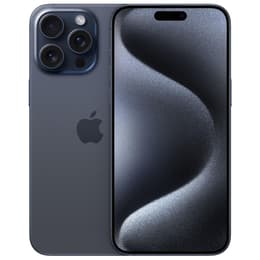
- Rear Camera System: The Google Pixel 7A is equipped with a 64MP main camera and a 13MP ultrawide lens. It is known for its strong computational photography, producing clear and color-accurate images, often comparable to more expensive phones in well-lit conditions. The iPhone 15 Pro Max features a versatile triple camera system, including a 48MP main sensor, a 12MP ultrawide lens, and a 12MP telephoto lens with 5x optical zoom. This provides a broad optical zoom range and excellent detail.
- Low-Light and Video Performance: The Pixel 7A offers good low-light performance with its Night Sight mode, though video quality in low light can sometimes show noise. It supports 4K video recording at up to 60fps for the main camera and 30fps for the ultrawide and front cameras. The iPhone 15 Pro Max delivers excellent low-light photography and video recording, including features like ProRes video and Cinematic mode, with strong image stabilization. It records 4K video at various frame rates up to 60fps.
- Front Camera: The Pixel 7A has a 13MP front camera capable of 4K video recording. The iPhone 15 Pro Max features a 12MP front camera with autofocus and 4K video capabilities.
Main camera
64 megapixels
48 megapixels
Front camera
13 megapixels
12 megapixels
Miscellaneous
Beyond core features, several practical elements contribute to the overall user experience and differentiate these two devices.
- Connectivity and Ports: The Google Pixel 7A supports 5G connectivity, Wi-Fi 6E, and Bluetooth 5.3. It uses a USB-C 3.2 port for charging and data transfer. The iPhone 15 Pro Max also offers 5G, Wi-Fi 6E, and Bluetooth 5.3. A notable change for the iPhone 15 Pro Max is the inclusion of a USB-C port with USB 3 speeds, allowing for faster data transfer.
- Biometrics and User Interface: The Pixel 7A includes a fingerprint sensor for biometric authentication, though some users have reported inconsistencies with its performance. It runs on Android, offering a customizable and open ecosystem. The iPhone 15 Pro Max relies on Face ID for secure facial recognition. It operates on iOS, known for its intuitive interface and strong ecosystem integration. The iPhone 15 Pro Max also introduces a customizable Action Button.
- Design and Handling: The Pixel 7A measures 152 mm in height, 72.9 mm in width, and 9 mm in depth, weighing 193.5 grams. It features a design similar to other Pixel phones with a prominent camera bar. The iPhone 15 Pro Max is larger and slightly heavier, with dimensions of 159.9 mm in height, 76.7 mm in width, and 8.3 mm in depth, and a weight of 221 grams. Its titanium frame contributes to a premium feel and reduced weight compared to previous Pro Max models.
Weight
193 g
221 g
Screen size (in)
6.1
6.7
Network
5G
5G
SIM card
Physical SIM + eSIM
Physical SIM + eSIM
Carrier compatibility
Unlocked
Unlocked
What the community thinks
The Google Pixel 7A and the iPhone 15 Pro Max cater to different user needs and preferences, each with its own set of strengths and considerations. User feedback for the Pixel 7A often praises its camera capabilities, which are considered strong for its category, and its smooth user interface. However, common criticisms include concerns about battery life, particularly with heavy use, and occasional inconsistencies with the fingerprint sensor. Some users also report the device can experience heating.
For the iPhone 15 Pro Max, users frequently highlight its exceptional battery life, powerful performance for demanding tasks, and its versatile camera system, especially the optical zoom capabilities. The premium build quality with a titanium frame is also a noted positive. A recurring concern among some users is the rate of battery health degradation over time.
Users prioritizing a compact device with a strong computational photography experience and the Android ecosystem may find the Google Pixel 7A well-suited to their needs. It offers a capable smartphone experience for everyday tasks. Conversely, users who prioritize a larger display, top-tier performance for gaming and demanding applications, extended battery life, and a highly versatile camera system with significant optical zoom will likely lean towards the iPhone 15 Pro Max. Its premium build and the iOS ecosystem also appeal to those seeking a cohesive experience. Both devices are available as quality-assured refurbished options, providing an eco-friendly alternative for consumers.