

Galaxy S20+ 5G Vs iPhone SE (2022)

Galaxy S20+ 5G
Galaxy S20+ 5G
Starting at

Refurbished price:191.00

Versus €590.00 new

See options
iPhone SE (2022)
iPhone SE (2022)
Starting at

Refurbished price:127.00

Versus €549.00 new

See options

Ratings

The Samsung Galaxy S20 Plus 5G, a flagship Android smartphone released in March 2020, and the Apple iPhone SE (2022), an entry-level iOS device launched in March 2022, offer distinct mobile experiences. While the Galaxy S20 Plus 5G emphasizes a large, high-resolution display and a versatile multi-camera system, the iPhone SE (2022) prioritizes a compact form factor and a powerful, current-generation processor. Both devices provide 5G connectivity, but they cater to different user preferences in terms of operating system, design, and feature set. Evaluating these devices as quality-assured refurbished options allows consumers to make an eco-friendly choice while still accessing advanced technology.

Scores

Durability

When considering the longevity of these smartphones, their release timelines and software support are key factors.

  • Release Timeline: The Samsung Galaxy S20 Plus 5G was released in March 2020, making it approximately two years older than the iPhone SE (2022), which launched in March 2022. This age difference impacts their remaining software support and overall practical lifespan.
  • OS Support Duration: The Galaxy S20 Plus 5G launched with Android 10 and received major OS updates up to Android 13, with security updates continuing for a period thereafter. The iPhone SE (2022) launched with iOS 15 and is expected to receive iOS updates for a longer duration, typically 5-7 years from its release, potentially extending its software relevance further into the future.
  • Repairability and Build: Both devices feature glass front and back panels with aluminum frames, offering a premium feel. The Galaxy S20 Plus 5G has Gorilla Glass 6 on both sides and an IP68 rating for dust and water resistance. The iPhone SE (2022) uses a durable glass, similar to the iPhone 13 series, and has an IP67 rating. Repairability scores for both can vary, but their glass constructions generally mean repairs involving external components can be more complex than devices with plastic builds.

Year of Release

2020

2022

Compatible with latest Update

No

Yes

OS

Android

iOS

Foldable

No

No

Performance

The performance of these two smartphones is influenced by their respective processors and system optimizations.

  • Processor Capabilities: The Galaxy S20 Plus 5G is equipped with a high-end processor from its release year, capable of handling demanding applications and multitasking smoothly. The iPhone SE (2022) features a more recent, powerful processor, which provides exceptional speed and efficiency for everyday tasks, gaming, and complex computations, matching the performance of Apple's flagship models from its release year.
  • Multitasking and Responsiveness: The Galaxy S20 Plus 5G typically comes with 8GB or 12GB of RAM, allowing for robust multitasking and quick app switching. The iPhone SE (2022) has 4GB of RAM, but its optimized iOS ecosystem ensures smooth performance and responsiveness even with multiple applications running.
  • Storage and Battery Behavior: The Galaxy S20 Plus 5G offers storage options up to 512GB and includes a microSD card slot for expandable storage up to 1TB, providing ample space for media and applications. Its 4500 mAh battery generally provides a full day of moderate use, with users reporting around six hours of screen-on time. The iPhone SE (2022) comes with storage options up to 256GB, without expandable storage. Its 2018 mAh battery, combined with the efficient processor and iOS optimization, can last a full day for light to moderate users, though heavy usage may require more frequent charging.

Memory (GB)

8 GB

4 GB

Screen quality

The visual experience on these devices differs significantly due to their display technologies and sizes.

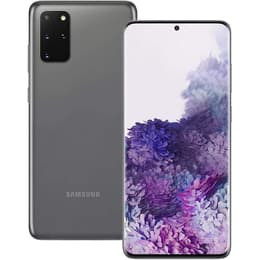
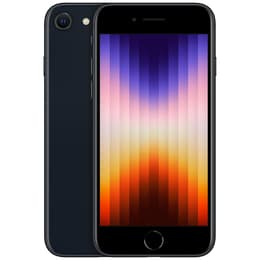
  • Display Technology and Size: The Samsung Galaxy S20 Plus 5G features a large 6.7-inch Dynamic AMOLED 2X display. This technology delivers deep blacks, high contrast, and vibrant colors, contributing to an immersive viewing experience. In contrast, the iPhone SE (2022) has a more compact 4.7-inch Retina IPS LCD. While it offers accurate colors and good viewing angles, it does not achieve the same level of contrast or black levels as an AMOLED panel.
  • Resolution and Clarity: The Galaxy S20 Plus 5G boasts a high resolution of 1440 x 3200 pixels, resulting in exceptional sharpness and detail for text and images. The iPhone SE (2022) has a resolution of 750 x 1334 pixels, which, while lower, still provides a clear and crisp image on its smaller screen due to its pixel density.
  • Refresh Rate and Brightness: The Galaxy S20 Plus 5G offers a 120Hz refresh rate (at 1080p resolution), providing noticeably smoother scrolling and animations. It also supports HDR10+ for enhanced dynamic range in compatible content. The iPhone SE (2022) maintains a standard 60Hz refresh rate. Both devices offer good brightness levels for outdoor visibility, with the iPhone SE (2022) featuring True Tone technology for adaptive white balance.

Resolution

1440 x 3200

750 x 1334

Screen type

Dynamic AMOLED 2X

Retina IPS LCD

Audiovisual

The camera systems on the Galaxy S20 Plus 5G and iPhone SE (2022) are designed with different approaches to photography.

  • Rear Camera System: The Galaxy S20 Plus 5G features a versatile quad-camera setup, including a 12 MP wide-angle lens, a 64 MP telephoto lens with 3x hybrid optical zoom, a 12 MP ultrawide lens, and a DepthVision camera. This array allows for a wide range of photographic styles, from expansive landscapes to detailed zoomed-in shots. The iPhone SE (2022) opts for a single 12 MP wide-angle camera on the rear. While it lacks the versatility of multiple lenses, it benefits from advanced computational photography features enabled by its powerful processor.
  • Photography Performance: The Galaxy S20 Plus 5G excels in capturing detailed images across various focal lengths and includes features like Night Mode and Single Take for enhanced shooting in different scenarios. The iPhone SE (2022) delivers consistent and high-quality photos in good lighting conditions, with features like Smart HDR 4, Deep Fusion, and Photographic Styles improving image processing. However, it notably lacks a dedicated Night Mode, which can impact low-light performance.
  • Video Recording and Front Camera: Both phones are capable of recording 4K video at up to 60 frames per second. The Galaxy S20 Plus 5G also offers 8K video recording at 24fps. For selfies, the Galaxy S20 Plus 5G has a 10 MP front camera, while the iPhone SE (2022) features a 7 MP front camera, both capable of capturing clear images and supporting portrait modes.

Main camera

12 megapixels

12 megapixels

Front camera

10 megapixels

7 megapixels

Miscellaneous

Beyond core features, several practical elements differentiate these two devices.

  • Connectivity and Ports: Both smartphones support 5G connectivity and Wi-Fi 6, ensuring fast wireless data speeds. However, the iPhone SE (2022) supports sub-6 GHz 5G but not the faster mmWave 5G. The Galaxy S20 Plus 5G uses a USB Type-C port for charging and data transfer, while the iPhone SE (2022) utilizes Apple's proprietary Lightning port. Neither device includes a traditional 3.5mm headphone jack.
  • Biometric Security: The Galaxy S20 Plus 5G features an ultrasonic in-display fingerprint sensor for secure unlocking and authentication, alongside facial recognition. The iPhone SE (2022) retains the physical Home button with Touch ID, a familiar and reliable fingerprint sensor, and also offers software-based facial recognition.
  • Design and Handling: The Galaxy S20 Plus 5G is a larger device, measuring 161.9 x 73.7 x 7.8 mm and weighing around 186-188 grams, offering a more expansive screen but requiring a larger hand grip. The iPhone SE (2022) is significantly more compact and lighter at 138.4 x 67.3 x 7.3 mm and 144-148 grams, making it easier for one-handed use and pocketability. Its design, however, features larger bezels compared to modern full-screen smartphones.

Weight

188 g

144 g

Screen size (in)

6.7

4.7

Network

5G

5G

SIM card

Physical SIM + eSIM

Physical SIM + eSIM

Carrier compatibility

Unlocked

Unlocked

Connector

USB-C

Lightning

User feedback for the Samsung Galaxy S20 Plus 5G often highlights its impressive display, versatile camera system, and the benefit of expandable storage as key strengths. Some common criticisms include its battery life, which can be inconsistent for heavy users, and the fact that its major software updates have concluded. For the iPhone SE (2022), users frequently praise its powerful processor, compact size, and the continued presence of Touch ID. Conversely, common concerns revolve around its dated design with large bezels, the use of an LCD screen instead of OLED, the single rear camera's limitations (especially the lack of Night Mode), and battery life that may not satisfy power users.

Users prioritizing a large, vibrant display, a comprehensive multi-lens camera system, and expandable storage may find the Samsung Galaxy S20 Plus 5G better suited to their needs. Its larger form factor and Android ecosystem offer a different user experience. Conversely, individuals who value a compact, easily pocketable device, top-tier processing power for smooth performance, and long-term software support within the iOS ecosystem may lean towards the iPhone SE (2022). Its traditional design with Touch ID also appeals to those who prefer it over facial recognition. Both devices, available as quality-assured refurbished options, present a sustainable choice for consumers seeking reliable technology.


See all articles

Our recent comparisons






