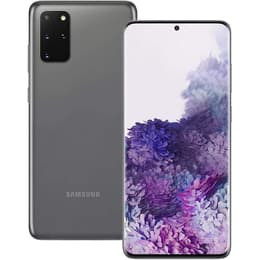
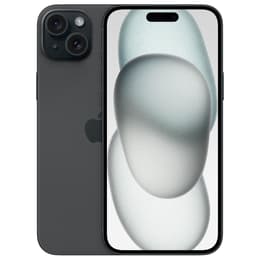


Galaxy S20+ 5G Vs iPhone 15 Plus

Galaxy S20+ 5G
Galaxy S20+ 5G
Starting at

Refurbished price:191.00

Versus €590.00 new

See options
iPhone 15 Plus
iPhone 15 Plus
Starting at

Refurbished price:420.00

Versus €979.00 new

See options

Ratings

The Samsung Galaxy S20 Plus 5G, released in early 2020, and the Apple iPhone 15 Plus, launched in late 2023, represent different generations within the premium smartphone market. While both offer large displays and robust feature sets, the iPhone 15 Plus benefits from more recent technological advancements, particularly in its processing power and camera capabilities. The Galaxy S20 Plus 5G operates on the Android platform, offering a customizable user experience, whereas the iPhone 15 Plus runs on Apple's iOS, known for its integrated ecosystem and consistent performance.

Scores

Durability

The practical lifespan of a smartphone is significantly influenced by its release date and the manufacturer's software support policies.

  • Release Timeline: The Galaxy S20 Plus 5G was released in February/March 2020, making it several years older than the iPhone 15 Plus, which debuted in September 2023. This age difference directly impacts the remaining period of official software and security updates.
  • Software Longevity: Apple typically provides iOS updates for 5-7 years from a device's release, suggesting the iPhone 15 Plus will receive support for a considerable time. Android devices, like the Galaxy S20 Plus 5G, generally receive 3-4 major Android version updates and longer security updates, meaning its update cycle is nearing its end or has concluded for major OS versions.
  • Build Quality: Both devices feature durable constructions. The Galaxy S20 Plus 5G utilizes Corning Gorilla Glass 6 on both its front and back, complemented by an aluminum frame. The iPhone 15 Plus incorporates a Ceramic Shield front, a color-infused glass back, and an aluminum frame, with Apple highlighting the Ceramic Shield as a strong display glass. Both models carry an IP68 rating for dust and water resistance, indicating protection against immersion in water up to 6 meters for 30 minutes.

Year of Release

2020

2023

Compatible with latest Update

No

Yes

OS

Android

iOS

Foldable

No

No

Performance

Performance is a key differentiator, with the newer iPhone 15 Plus offering a more advanced and efficient experience due to its more recent internal components.

  • Processing Power: The Galaxy S20 Plus 5G is powered by an octa-core processor, either the Exynos 990 or Snapdragon 865, depending on the region. The iPhone 15 Plus features the A16 Bionic chip, which was previously used in Apple's Pro models. This newer chip in the iPhone 15 Plus provides a significant advantage in raw processing speed and graphical performance, leading to smoother operation for demanding applications and games.
  • System Responsiveness: Users will likely experience faster app loading times, more fluid multitasking, and generally snappier interactions on the iPhone 15 Plus. While the Galaxy S20 Plus 5G still handles everyday tasks competently, the iPhone 15 Plus offers a more immediate and responsive user experience, especially with newer software and more intensive applications.
  • Battery Behavior: The Galaxy S20 Plus 5G is equipped with a 4500 mAh battery. The iPhone 15 Plus has a 4383 mAh battery. Despite the slightly smaller capacity, the iPhone 15 Plus is frequently praised for its excellent battery longevity, with many users reporting it can comfortably last through a full day of heavy use, and often longer with moderate usage. This is attributed to the efficiency of its processor and iOS optimization.

Memory (GB)

8 GB

6 GB

Screen quality

Both devices offer large, vibrant displays, but they differ in technology and refresh rate capabilities.

  • Display Technology and Size: Both smartphones feature a 6.7-inch display. The Galaxy S20 Plus 5G uses a Dynamic AMOLED 2X panel, while the iPhone 15 Plus features a Super Retina XDR OLED display. Both technologies deliver deep blacks and rich colors, providing an immersive viewing experience.
  • Resolution and Clarity: The Galaxy S20 Plus 5G offers a resolution of 1440x3200 pixels, resulting in a pixel density of approximately 525 pixels per inch (ppi). The iPhone 15 Plus has a resolution of 2796x1290 pixels, with a pixel density of around 460 ppi. Both displays offer sharp visuals for text and images.
  • Brightness and Smoothness: The iPhone 15 Plus boasts a higher peak outdoor brightness of up to 2000 nits, making it easier to view content in direct sunlight. The Galaxy S20 Plus 5G supports a 120Hz refresh rate when set to Full HD+ resolution, offering smoother scrolling and animations. The iPhone 15 Plus maintains a standard 60Hz refresh rate. The iPhone 15 Plus also integrates the Dynamic Island, a feature that dynamically displays alerts and activities around the front camera cutout.

Resolution

1440 x 3200

1290 x 2796

Screen type

Dynamic AMOLED 2X

Super Retina XDR OLED

Audiovisual

Both smartphones offer capable camera systems, but the iPhone 15 Plus benefits from newer sensor technology and computational photography advancements.

  • Rear Camera Systems: The Galaxy S20 Plus 5G features a versatile quad-camera setup, including a 12MP wide-angle lens, a 64MP telephoto lens with 3x hybrid optical zoom, a 12MP ultra-wide lens, and a DepthVision camera. The iPhone 15 Plus comes with a dual-camera system, featuring a 48MP main sensor and a 12MP ultra-wide lens. It also offers a 2x telephoto option achieved through a sensor crop from the high-resolution main sensor.
  • Photography Performance: The iPhone 15 Plus leverages its larger main sensor and advanced computational photography to deliver improved image quality, particularly in everyday scenarios and low-light conditions. The Galaxy S20 Plus 5G's dedicated telephoto lens provides optical zoom capabilities, while the iPhone 15 Plus's 2x telephoto is a high-quality digital zoom.
  • Video Capabilities: The Galaxy S20 Plus 5G is capable of recording video at up to 8K resolution. The iPhone 15 Plus offers 4K video recording with Dolby Vision HDR, along with features like Cinematic mode for depth-of-field effects and Action mode for stabilized video. The iPhone 15 Plus also features improved microphone quality with a Voice Isolation feature for clearer calls.

Main camera

12 megapixels

48 megapixels

Front camera

10 megapixels

12 megapixels

Miscellaneous

Beyond core features, several practical elements contribute to the overall user experience of these devices.

  • Connectivity and Ports: Both devices support 5G connectivity and Wi-Fi 6. The iPhone 15 Plus features Bluetooth 5.3, a newer standard than the Galaxy S20 Plus 5G's Bluetooth 5.0. A notable change for the iPhone 15 Plus is the adoption of a USB-C port for charging and data transfer, aligning with many other modern electronic devices. The Galaxy S20 Plus 5G also uses a USB-C port. Neither device includes a traditional 3.5mm headphone jack.
  • Biometric Security: The Galaxy S20 Plus 5G features an in-display fingerprint sensor for secure unlocking. The iPhone 15 Plus relies on Face ID, Apple's facial recognition system.
  • Physical Characteristics: The Galaxy S20 Plus 5G measures 161.9 x 73.7 x 7.8 mm and weighs 186 grams (188g for the 5G mmWave version). The iPhone 15 Plus has dimensions of 160.9 x 77.8 x 7.8 mm and weighs 201 grams. The iPhone 15 Plus also features a color-infused glass back with a textured matte finish and contoured edges for a comfortable grip.

Weight

188 g

201 g

Screen size (in)

6.7

6.7

Network

5G

5G

SIM card

Physical SIM + eSIM

Physical SIM + eSIM

Carrier compatibility

Unlocked

Unlocked

Connector

USB-C

USB-C

User feedback for the iPhone 15 Plus frequently highlights its exceptional battery life, often cited as one of its strongest attributes, capable of lasting well over a day for many users. The large, bright display and significant camera upgrades are also commonly praised. Some common criticisms include the display's 60Hz refresh rate, which is lower than many Android counterparts, and the absence of a dedicated telephoto lens, with its 2x zoom being a digital crop. The USB-C port is generally welcomed for its universality, though its data transfer speeds are noted to be slower than the Pro models.

For the Galaxy S20 Plus 5G, users at its release appreciated its high-resolution display with a 120Hz refresh rate option and its versatile camera system. However, as an older device, its software support window is more limited compared to newer phones, and its battery performance may not match more recent models.

Users prioritizing extended battery life, a large and vibrant display, and a consistent, long-supported software experience with strong everyday camera performance will find the iPhone 15 Plus well-suited to their needs. It offers a modern user interface with features like the Dynamic Island and robust video capabilities. Conversely, users who prefer the Android ecosystem, value a higher display refresh rate for smoother scrolling, or are looking for a device that may offer expandable storage (depending on the specific S20 Plus 5G variant) might lean towards the Galaxy S20 Plus 5G. Considering a quality-assured refurbished option for either device can be an eco-friendly alternative for those seeking to extend the life cycle of electronic products.

See all articles

Our recent comparisons






