

Galaxy S20 FE Vs iPhone X

Galaxy S20 FE
Galaxy S20 FE
Starting at

Refurbished price:151.00

Versus €779.00 new

See options
iPhone X
iPhone X
Starting at

Refurbished price:113.00

Versus €439.00 new

See options

Ratings

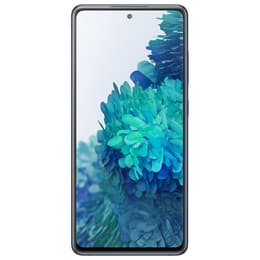
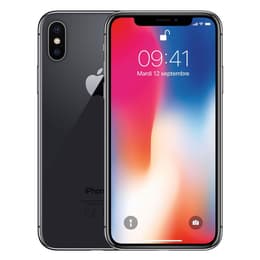
The Samsung Galaxy S20 FE (Fan Edition), released in October 2020, and the Apple iPhone X, launched in November 2017, represent different generations and operating systems within the smartphone market. While the Galaxy S20 FE operates on Android, the iPhone X runs on Apple's iOS. Key differentiators between these two devices include their respective release years, display technologies, camera system versatility, and biometric authentication methods.

Scores

Durability

The expected practical lifespan of a smartphone is influenced by its release date, software support, and physical resilience.

  • Release Timeline: The iPhone X, released in 2017, is an older device compared to the Galaxy S20 FE, which launched in 2020. This age difference directly impacts the duration of software and security updates each device can expect to receive.
  • Software Longevity: The iPhone X, having been released earlier, is likely nearing the end of its major iOS update cycle, with its latest supported version being iOS 16.7.15 as of March 2026. The Galaxy S20 FE, initially running Android 10, has received updates up to Android 13 and continues to receive security patches, offering a more extended period of software relevance.
  • Physical Durability: The Galaxy S20 FE features an IP68 rating, indicating robust resistance to dust and the ability to withstand submersion in up to 1.5 meters of water for 30 minutes. The iPhone X carries an IP67 rating, providing dust resistance and protection against submersion in up to 1 meter of water for 30 minutes. In terms of build, the S20 FE has a plastic back with Gorilla Glass 3 on the front, while the iPhone X utilizes a glass front and back with a stainless steel frame.

Year of Release

2020

2017

Compatible with latest Update

No

No

OS

Android

iOS

Foldable

No

No

Performance

Performance aspects such as processing power, memory, and battery capacity significantly influence a device's responsiveness and user experience.

  • Processing Capabilities: The Galaxy S20 FE is equipped with a more recent generation processor (either the Snapdragon 865 or Exynos 990, depending on the region), providing a modern architecture that handles demanding applications and multitasking efficiently. The iPhone X uses the A11 Bionic chip, which, while capable for its time, represents an older generation of mobile processing technology.
  • Multitasking and Responsiveness: The Galaxy S20 FE typically comes with 6GB or 8GB of RAM, allowing for smoother transitions between multiple open applications and more fluid background processes. The iPhone X has 3GB of RAM, which may lead to more frequent app reloads when switching between many applications.
  • Battery Performance: The Galaxy S20 FE houses a larger 4500 mAh battery, generally translating to longer usage times throughout the day for most users. The iPhone X has a 2716 mAh battery, which, combined with its older processor, may require more frequent charging, especially for heavy users. Both devices offer various storage options, but the Galaxy S20 FE provides the added flexibility of expandable storage via a microSD card.

Memory (GB)

6 GB

3 GB

Screen quality

The visual experience on a smartphone is largely defined by its display technology, size, and refresh rate.

  • Display Technology and Clarity: Both devices feature OLED display technology, which delivers deep black levels and vibrant colors. The Galaxy S20 FE specifically uses a Super AMOLED panel, known for its vividness and contrast. The iPhone X's Super Retina OLED display offers a high pixel density for sharp visuals.
  • Refresh Rate and Smoothness: A notable difference is the refresh rate; the Galaxy S20 FE boasts a 120Hz refresh rate, which provides a noticeably smoother experience when scrolling through content and interacting with the interface. The iPhone X features a standard 60Hz refresh rate.
  • Screen Size and Viewing Experience: The Galaxy S20 FE offers a larger 6.5-inch display, providing more screen real estate for media consumption and productivity. The iPhone X has a more compact 5.8-inch display. Both displays offer good brightness levels for visibility in various lighting conditions.

Resolution

1080 x 2400

1125 x 2436

Screen type

Super AMOLED

Super Retina OLED

Audiovisual

Camera capabilities are a significant factor for many users, encompassing both still photography and video recording.

  • Camera System Configuration: The Galaxy S20 FE features a versatile triple-lens rear camera system, including a 12-megapixel wide lens, a 12-megapixel ultrawide lens, and an 8-megapixel telephoto lens with 3x optical zoom. For selfies and video calls, it has a 32-megapixel front camera. The iPhone X comes with a dual-lens rear camera system, consisting of two 12-megapixel lenses (wide and telephoto with 2x optical zoom), and a 7-megapixel front camera.
  • Photography Performance: The inclusion of an ultrawide lens on the S20 FE offers greater flexibility for capturing broader scenes. Both devices benefit from optical image stabilization on their main lenses, which helps in reducing blur in photos and videos, particularly in challenging lighting. The S20 FE's newer sensor and image processing can contribute to improved low-light performance.
  • Video Recording Quality: Both smartphones are capable of recording 4K video. The Galaxy S20 FE supports 4K recording at 60 frames per second for both its front and rear cameras. The iPhone X also supports 4K video recording at various frame rates, including 24, 30, or 60 frames per second.

Main camera

12 megapixels

12 megapixels

Front camera

32 megapixels

7 megapixels

Miscellaneous

Beyond core features, several practical elements contribute to the overall user experience and device utility.

  • Connectivity Standards: The Galaxy S20 FE supports modern connectivity standards, including 5G cellular networks and Wi-Fi 6, offering faster data speeds and improved network efficiency where available. The iPhone X supports 4G LTE for cellular data and Wi-Fi 5 (802.11ac).
  • Charging and Data Ports: The Galaxy S20 FE utilizes a USB-C port for charging and data transfer, a widely adopted standard. The iPhone X features Apple's proprietary Lightning port.
  • Biometric Authentication and Design: For security and convenience, the Galaxy S20 FE incorporates an in-display fingerprint sensor. The iPhone X introduced Face ID, Apple's facial recognition system, as its primary biometric authentication method. In terms of physical characteristics, the Galaxy S20 FE is slightly larger and heavier, measuring 159.8 x 74.5 x 8.4 mm and weighing 190 grams. The iPhone X offers a more compact form factor at 143.6 x 70.9 x 7.7 mm and 174 grams.

Weight

190 g

174 g

Screen size (in)

6.5

5.8

Network

4G

4G

SIM card

Dual Physical SIM

Physical SIM

Carrier compatibility

Unlocked

Unlocked

User feedback often highlights the Galaxy S20 FE's strengths in its vibrant, high-refresh-rate display and its versatile camera system, particularly the inclusion of an ultrawide lens. Its larger battery capacity is also frequently praised for providing extended usage. Some users have noted its plastic back as a less premium material compared to glass. The iPhone X is often lauded for its pioneering Face ID technology and the intuitive iOS ecosystem. Its compact size and premium build materials are also common points of appreciation. However, its older battery technology and the eventual cessation of major iOS updates are frequent concerns for long-term users.

Users prioritizing a modern Android experience with a large, smooth display, a comprehensive camera setup, and longer software support may find the Galaxy S20 FE better suited to their needs. Conversely, individuals who prefer the iOS ecosystem, a more compact device, and the convenience of Face ID might lean towards the iPhone X. Both devices offer distinct advantages depending on individual preferences and usage patterns. For those considering either of these models, exploring quality-assured refurbished options can provide a sustainable choice for acquiring a capable smartphone.


See all articles

Our recent comparisons






