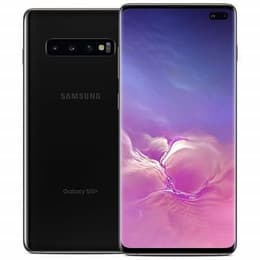



Galaxy S10+ Vs Huawei P30 Pro

Galaxy S10+
Galaxy S10+
Starting at

Refurbished price:135.00

Versus €1,009.00 new

See options
Huawei P30 Pro
Huawei P30 Pro
Starting at

Refurbished price:188.00

Versus €849.00 new

See options

Ratings

The Samsung Galaxy S10 Plus and the Huawei P30 Pro, both released in March 2019, were prominent flagship smartphones of their time. While they share a similar launch era and Android operating system foundation, they offer distinct approaches to display technology, camera capabilities, and software support. The Galaxy S10 Plus emphasizes a high-resolution display and a more consistent software update path for global users, whereas the Huawei P30 Pro stands out for its advanced camera system, particularly its zoom functionality.

Scores

Durability

Evaluating the long-term usability of these devices involves considering their release timeline, software support, and physical resilience.

  • Software Longevity: The Galaxy S10 Plus, launched with Android 9.0 Pie, received official Android updates up to Android 12, with One UI 4.1 being its last major version, extending its software support into late 2021 or early 2022. The Huawei P30 Pro, also starting with Android 9.0 Pie and EMUI 9.1, saw its global Android updates conclude with Android 10, though Huawei continued to provide EMUI updates (e.g., EMUI 12) which are based on older Android versions outside of China. This difference means the Galaxy S10 Plus offers a more recent core Android experience for users outside of China.
  • Physical Durability: Both devices feature an IP68 rating for dust and water resistance, indicating protection against immersion in up to 1.5 meters of water for 30 minutes. The Galaxy S10 Plus incorporates Corning Gorilla Glass 6 on its front display and Gorilla Glass 5 on its back for enhanced scratch and drop resistance. The Huawei P30 Pro also uses Corning Gorilla Glass for screen protection.
  • Practical Lifespan: Given their release in 2019, both phones have passed their primary software update cycles. However, the Galaxy S10 Plus's access to a more recent Android version generally provides a slightly longer period of compatibility with newer applications and security features for global users.

Year of Release

2019

2019

Compatible with latest Update

No

No

OS

Android

Android

Foldable

No

No

Performance

Both smartphones were equipped with high-end processors at their launch, designed to deliver smooth performance for a variety of tasks.

  • Processing Power: The Galaxy S10 Plus handles demanding applications and multitasking efficiently, providing a responsive user experience for gaming, video editing, and heavy browsing. Similarly, the Huawei P30 Pro offers robust performance, ensuring smooth operation across applications and capable handling of graphically intensive games.
  • Multitasking and Storage: The Galaxy S10 Plus was available with 8GB or 12GB of RAM, alongside storage options up to 1TB, allowing for extensive multitasking and ample space for files and applications. The Huawei P30 Pro came with 6GB or 8GB of RAM and storage up to 512GB, providing sufficient capacity for most users' needs.
  • Battery Behavior: The Galaxy S10 Plus features a 4100 mAh battery, which users generally found capable of lasting through a full day of typical use. The Huawei P30 Pro is equipped with a slightly larger 4200 mAh battery and was widely recognized for its stellar battery life, often extending beyond a single day for many users.

Memory (GB)

8 GB

8 GB

Screen quality

The visual experience on these devices is shaped by their display technologies and specifications.

  • Display Technology and Resolution: The Galaxy S10 Plus features a 6.4-inch Dynamic AMOLED display with a Quad HD+ resolution of 1440 x 3040 pixels, resulting in a high pixel density of 522 pixels per inch (ppi). This display offers deep blacks, vibrant colors, and sharp detail. The Huawei P30 Pro has a 6.47-inch OLED display with a Full HD+ resolution of 1080 x 2340 pixels, yielding approximately 398 ppi. Its OLED panel also provides strong contrast and color reproduction.
  • Brightness and Clarity: Both phones support HDR10, with the Galaxy S10 Plus specifically featuring HDR10+, contributing to enhanced contrast and brightness for compatible content. This makes both screens suitable for outdoor visibility, though the S10 Plus's higher peak brightness can offer a slight advantage in direct sunlight.
  • Refresh Rate and Viewing Experience: Both devices feature a standard 60Hz refresh rate, providing a smooth visual experience for everyday interactions. The Galaxy S10 Plus's slightly smaller bezels and punch-hole camera design offer a more expansive viewing area compared to the P30 Pro's dewdrop notch.

Resolution

1440 x 3040

1080 x 2340

Screen type

Dynamic AMOLED

OLED

Audiovisual

Both smartphones were celebrated for their camera systems at launch, though they excelled in different aspects of mobile photography.

  • Rear Camera Systems: The Galaxy S10 Plus features a versatile triple-camera setup on the rear, including a 12 MP wide-angle lens with variable aperture, a 12 MP telephoto lens offering 2x optical zoom, and a 16 MP ultrawide lens. The Huawei P30 Pro boasts a quad-camera system, highlighted by a 40 MP wide-angle lens, a 20 MP ultrawide lens, and an 8 MP periscope telephoto lens that delivers an impressive 5x optical zoom, extending to 50x digital zoom. It also includes a Time-of-Flight (ToF) sensor for enhanced depth sensing.
  • Photography Performance: The P30 Pro was particularly acclaimed for its exceptional low-light performance and its groundbreaking zoom capabilities, allowing users to capture distant subjects with clarity. The S10 Plus provides consistent image quality across its lenses, with strong dynamic range and color accuracy in various conditions.
  • Front Camera and Video: For selfies, the Galaxy S10 Plus includes a dual front camera with a 10 MP main sensor and an 8 MP depth sensor. The P30 Pro features a single 32 MP front camera. In terms of video, the S10 Plus can record 4K video at 60 frames per second, while the P30 Pro records 4K at 30 frames per second.

Main camera

12 megapixels

40 megapixels

Front camera

10 megapixels

32 megapixels

Miscellaneous

Beyond core features, several practical elements differentiate these two devices, impacting daily usability.

  • Connectivity and Ports: The Galaxy S10 Plus supports Wi-Fi 6, offering faster wireless internet speeds where available, and includes a 3.5mm headphone jack, a feature absent on the Huawei P30 Pro. Both devices feature USB-C ports for charging and data transfer and support Bluetooth 5.0. The P30 Pro also includes an infrared (IR) blaster, allowing it to function as a universal remote control.
  • Biometric Security: Both phones utilize in-display fingerprint sensors for secure unlocking. The Galaxy S10 Plus employs an ultrasonic sensor, while the P30 Pro uses an optical sensor.
  • Design and Handling: The Galaxy S10 Plus weighs around 175g (or 198g for the ceramic model) and has dimensions of 157.6 x 74.1 x 7.8 mm. The Huawei P30 Pro weighs 192g and measures 158 x 73.4 x 8.4 mm. The S10 Plus is slightly thinner and lighter, potentially offering a more comfortable grip for some users, while the P30 Pro's slightly thicker build accommodates its advanced camera hardware.

Weight

175 g

192 g

Width

7,41 cm

7,34 cm

Height

15.76 cm

15,8 cm

Depth

0,78 cm

0,84 cm

Screen size (in)

6.4

6.47

Network

4G

4G

SIM card

Physical SIM

Dual Physical SIM

Carrier compatibility

Unlocked

Unlocked

Connector

USB-C + Jack 3.5mm

USB-C

When considering the Samsung Galaxy S10 Plus and the Huawei P30 Pro, user feedback often highlights distinct strengths for each device. The Galaxy S10 Plus is frequently praised for its vibrant, high-resolution Dynamic AMOLED display, the inclusion of a 3.5mm headphone jack, and its generally balanced performance across all features. Users appreciate its consistent software experience, particularly for those outside of China who benefited from more extensive Android version updates. Some common criticisms might include battery degradation over time, a natural occurrence for any older device, and the fact that its camera, while capable, doesn't reach the extreme zoom levels of its competitor.

The Huawei P30 Pro, on the other hand, garners significant acclaim for its exceptional camera system, especially its impressive 5x optical zoom and strong low-light photography capabilities, which were considered groundbreaking at its release. Its long-lasting battery life is another frequently lauded aspect. However, a notable concern for users outside of China has been the impact of geopolitical factors on its software update trajectory, leading to a less current core Android version compared to the S10 Plus. The absence of a 3.5mm headphone jack is also a point of contention for some.

Users prioritizing a superior display resolution, a traditional headphone jack, and a more up-to-date core Android operating system for global use may find the Samsung Galaxy S10 Plus better suited to their needs. Conversely, individuals who place a premium on advanced camera zoom capabilities, outstanding low-light photography, and extended battery endurance might lean towards the Huawei P30 Pro. Both devices, as quality-assured refurbished options, offer a sustainable choice for consumers looking for capable smartphones without the environmental impact of new manufacturing.


See all articles

Our recent comparisons




