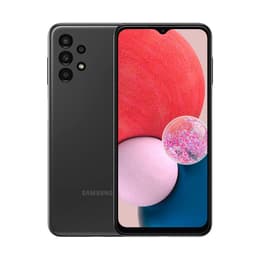



Galaxy A13 Vs Google Pixel 9 Pro

Galaxy A13
Galaxy A13
Starting at

Refurbished price:97.00

Versus €249.00 new

See options
Google Pixel 9 Pro
Google Pixel 9 Pro
Starting at

Refurbished price:484.00

Versus €1,099.00 new

See options

Ratings

The Samsung Galaxy A13 (released March 2022) and the Google Pixel 9 Pro (released August/September 2024) represent distinct tiers within the Android smartphone market. While both operate on the Android platform, the Galaxy A13 is positioned as an entry-level device, focusing on core smartphone functionalities, whereas the Pixel 9 Pro is a flagship offering, emphasizing advanced performance, camera capabilities, and a premium user experience. The primary differentiators lie in their processing power, display technology, and camera systems.

Scores

Durability

The longevity of a smartphone is influenced by its physical durability and software support. These two devices offer different timelines for both.

  • Release Timeline and Age: The Galaxy A13 was released in March 2022, making it an older device compared to the Pixel 9 Pro, which launched in August/September 2024. This age difference significantly impacts their remaining software support and overall practical lifespan.
  • OS Support Duration: The Galaxy A13 typically received two major Android OS upgrades and four years of security updates, meaning its major OS updates have likely concluded, with security updates extending into early 2026. In contrast, the Pixel 9 Pro is guaranteed seven years of OS and security updates from its release date, extending its support well into 2031.
  • Physical Durability: The Galaxy A13 features a glass front with Gorilla Glass 5 and a plastic frame and back. The Pixel 9 Pro boasts a more robust construction with an aluminum frame and Gorilla Glass Victus 2 on both the front and back, along with IP68 water and dust resistance, offering enhanced protection against environmental elements.

Year of Release

2022

2024

Compatible with latest Update

No

Yes

OS

Android

Android

Foldable

No

No

Performance

Performance is a key area where these two smartphones diverge significantly, catering to different user demands.

  • Processor Capabilities: The Galaxy A13 is equipped with an Exynos 850 or MediaTek Helio G80 processor, designed for everyday tasks such as browsing, social media, and light applications. Users may experience slower app loading times and occasional stutters during multitasking or more demanding operations. The Pixel 9 Pro, powered by Google's Tensor G4 processor, delivers flagship-level performance, ensuring smooth operation for intensive applications, advanced AI features, and high-fidelity gaming.
  • Multitasking and Responsiveness: With RAM options typically ranging from 3GB to 6GB, the Galaxy A13 is suited for basic multitasking. The Pixel 9 Pro comes with a substantial 16GB of RAM, allowing for seamless switching between numerous applications and handling complex tasks without slowdowns.
  • Storage Options: The Galaxy A13 offers internal storage from 32GB to 128GB, with the added flexibility of microSD card expansion up to 1TB. The Pixel 9 Pro provides larger internal storage options, ranging from 128GB up to 1TB, though it lacks expandable storage.

Memory (GB)

4 GB

16 GB

Screen quality

The visual experience offered by these devices differs substantially due to their display technologies and specifications.

  • Display Technology and Clarity: The Galaxy A13 features a 6.6-inch PLS LCD display with a resolution of 1080 x 2408 pixels, providing clear visuals for general content consumption. The Pixel 9 Pro sports a 6.3-inch LTPO OLED display with a higher resolution of 2856 x 1280 pixels, delivering deep blacks, vibrant colors, and exceptional clarity.
  • Brightness and Refresh Rate: The Galaxy A13 has a standard 60Hz refresh rate and decent brightness for its class, though it may struggle with visibility in bright outdoor conditions. The Pixel 9 Pro offers an adaptive 120Hz refresh rate for smoother scrolling and animations, along with a peak brightness of up to 3000 nits, ensuring excellent readability even under direct sunlight.
  • Viewing Experience: The larger screen of the Galaxy A13 provides ample space for media viewing, while the Pixel 9 Pro's OLED technology and higher resolution offer a more immersive and detailed visual experience, particularly for high-quality video content and gaming.

Resolution

1080 x 2408

1280 x 2856

Screen type

PLS LCD

LTPO OLED

Audiovisual

Camera capabilities are a major distinguishing factor, with the Pixel 9 Pro offering a significantly more advanced system.

  • Rear Camera System: The Galaxy A13 includes a quad-camera setup with a 50 MP main sensor, a 5 MP ultrawide, and two 2 MP sensors for macro and depth. The main camera performs well in good lighting, but the auxiliary lenses offer limited utility, and low-light performance is a challenge. The Pixel 9 Pro features a triple-camera system with a 50 MP wide lens, a 48 MP ultrawide lens with Macro Focus, and a 48 MP 5x telephoto lens, known for its computational photography and excellent image quality across various conditions.
  • Low-Light and Everyday Photography: Pixel phones are renowned for their low-light photography, and the Pixel 9 Pro continues this trend, capturing detailed and well-exposed images even in challenging lighting. The Galaxy A13's low-light performance is less capable, often resulting in softer images with more noise.
  • Video Recording: The Galaxy A13 records video at 1080p at 30 frames per second, without optical image stabilization. The Pixel 9 Pro supports up to 8K video recording at 30 frames per second (via Video Boost) and 4K at 60 frames per second, with advanced stabilization for smooth and high-quality video capture.

Main camera

50 megapixels

50 megapixels

Front camera

8 megapixels

42 megapixels

Miscellaneous

Beyond core features, several practical elements contribute to the overall user experience and differentiate these devices.

  • Connectivity: The Galaxy A13 supports 4G LTE and Wi-Fi 5, suitable for standard internet usage. The Pixel 9 Pro offers advanced connectivity with 5G, Wi-Fi 7, and Ultra Wideband (UWB) support, providing faster data speeds and more reliable wireless connections.
  • Ports and Biometrics: The Galaxy A13 includes a USB-C port and a 3.5mm headphone jack, along with a side-mounted fingerprint sensor. The Pixel 9 Pro features a USB-C port for charging and data transfer but omits the headphone jack. It incorporates an under-display ultrasonic fingerprint sensor and face recognition for secure unlocking.
  • Build Materials and Handling: Constructed with a plastic back and frame, the Galaxy A13 weighs 195 grams. The Pixel 9 Pro, with its aluminum frame and glass back, weighs 199 grams and offers a more premium in-hand feel. Both devices are designed for comfortable handling, though the Pixel 9 Pro's compact size for a flagship is often praised.

Weight

195 g

199 g

Screen size (in)

6.6

6.3

Network

4G

5G

SIM card

Dual Physical SIM

Physical SIM + eSIM

Carrier compatibility

Unlocked

Unlocked

The Samsung Galaxy A13 and Google Pixel 9 Pro cater to distinct user needs and expectations. The Galaxy A13, released in 2022, is a practical choice for users seeking a straightforward smartphone experience for essential tasks like communication, basic browsing, and casual photography. Its strengths lie in its long-lasting battery and the inclusion of a headphone jack, which can be a significant advantage for some users. However, its performance for demanding applications and its limited software update longevity are notable considerations. Users often praise its battery life and the adequacy of its main camera in good lighting conditions.

The Google Pixel 9 Pro, a 2024 flagship, is designed for users who prioritize cutting-edge technology, superior camera performance, and extended software support. Its advanced processor, vibrant OLED display, and sophisticated camera system make it suitable for photography enthusiasts, power users, and those who value a smooth, responsive experience with the latest Android features. Users frequently highlight its exceptional screen quality, impressive battery life, and the capabilities of its camera, particularly in challenging lighting.

Users prioritizing a device for everyday communication, social media, and media consumption without heavy gaming or intensive multitasking may find the Galaxy A13 sufficient. For students or professionals who need a reliable device for basic functions, or as an eco-friendly, quality-assured refurbished option, the Galaxy A13 can be a suitable choice. Conversely, users who demand top-tier performance, advanced photography features, a premium display, and long-term software updates will find the Pixel 9 Pro better aligned with their requirements. This includes content creators, mobile gamers, or individuals who rely on their smartphone for productivity and advanced AI functionalities.


See all articles

Our recent comparisons






