

Galaxy S10 Vs iPhone XS

Galaxy S10
Galaxy S10
Starting at

Refurbished price:142.00

Versus €909.00 new

See options
iPhone XS
iPhone XS
Starting at

Refurbished price:131.00

Versus €489.00 new

See options

Ratings

The Samsung Galaxy S10 (released March 2019) and the Apple iPhone Xs (released September 2018) represent flagship smartphones from their respective manufacturers. While both devices offer a premium experience with advanced displays and capable camera systems, they differ in their operating systems, design philosophies, and specific hardware features. The Galaxy S10 operates on Android, offering more customization, while the iPhone Xs runs on iOS, known for its integrated ecosystem.

Scores

Durability

When considering the practical lifespan of these devices, several factors related to their release and software support are relevant.

  • Release Timeline: The iPhone Xs was released in September 2018, preceding the Galaxy S10, which launched in March 2019. This six-month difference impacts their respective support cycles.
  • OS Support Duration: The iPhone Xs received major iOS updates up to iOS 17 (released in 2023) and iOS 18 (released in 2024), with security updates expected to continue into late 2026. The Galaxy S10 received major Android OS updates up to Android 12 (One UI 4), with security updates for most models concluding around March 2023. This means the iPhone Xs generally offers a longer period of active software support.
  • Repairability: Both devices present challenges for repair. The Galaxy S10 received a low repairability score of 3 out of 10 from iFixit, largely due to extensive adhesive and a soldered charging port. While a specific iFixit score for the iPhone Xs isn't readily available, iPhones from this era were generally not designed for easy user repair.

Year of Release

2019

2018

Compatible with latest Update

No

Yes

OS

Android

iOS

Foldable

No

No

Performance

Both the Galaxy S10 and iPhone Xs were powerful devices at their launch, capable of handling demanding applications and multitasking. Their performance characteristics reflect their respective ecosystems.

  • Storage Options: Both devices offered various internal storage configurations, allowing users to choose based on their needs for apps, photos, and media. The Galaxy S10 also includes a microSD card slot for expandable storage, a feature not present on the iPhone Xs.
  • Battery Behavior: The Galaxy S10 features a 3400 mAh battery, while the iPhone Xs has a 2658 mAh battery. In typical use, the Galaxy S10's larger capacity often translates to longer usage times between charges for many users, though actual battery life varies with usage patterns and software optimization.
  • System Responsiveness: Both phones deliver smooth performance for everyday tasks, app loading, and navigation. The iPhone Xs benefits from Apple's optimized hardware-software integration, providing a fluid user experience. The Galaxy S10, with its capable processor, also handles multitasking and graphically intensive applications effectively.

Memory

8 GB

4 GB

Screen quality

The visual experience on both the Galaxy S10 and iPhone Xs is a highlight, though they approach display design differently.

  • Display Technology: Both phones feature OLED displays, known for their deep blacks and vibrant colors. The Galaxy S10 utilizes a Dynamic AMOLED panel, while the iPhone Xs features a Super Retina OLED.
  • Resolution and Clarity: The Galaxy S10 offers a 6.1-inch display with a resolution of 3040 x 1440 pixels, resulting in high pixel density. The iPhone Xs has a 5.8-inch display with a resolution of 2436 x 1125 pixels. The Galaxy S10's display is slightly larger and offers a higher resolution, providing a very sharp viewing experience.
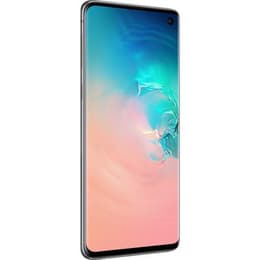
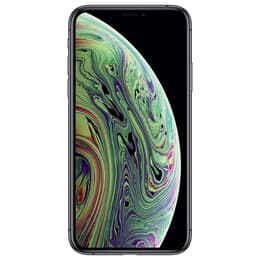
  • Brightness and Features: The Galaxy S10's display can reach higher peak brightness levels, which can be beneficial for outdoor visibility. Both support HDR content, enhancing contrast and color range for compatible media. The Galaxy S10 features a punch-hole cutout for the front camera, maximizing screen real estate, while the iPhone Xs incorporates a notch at the top of its display.

Resolution

1440 x 3040

1125 x 2436

Screen type

Dynamic AMOLED

Super Retina OLED

Audiovisual

Both devices offer capable camera systems, designed to capture high-quality images and videos, though with different configurations and processing characteristics.

  • Camera System Capabilities: The Galaxy S10 features a versatile triple-lens rear camera setup, including a 12MP main lens, a 12MP telephoto lens, and a 16MP ultrawide lens. The iPhone Xs has a dual-lens rear camera system, consisting of a 12MP wide-angle lens and a 12MP telephoto lens. The inclusion of an ultrawide lens on the Galaxy S10 provides a broader field of view for landscape and architectural photography.
  • Photography Performance: In good lighting, both phones produce detailed images with good color reproduction. The Galaxy S10 is noted for its balanced and vibrant colors, with strong dynamic range. The iPhone Xs also delivers impressive detail and color accuracy, with its Smart HDR feature improving shadow and highlight detail. For low-light conditions, both perform well for their generation, though dedicated night modes found in later phones offer more advanced capabilities.
  • Video Recording Quality: Both devices are capable of recording high-quality video. The iPhone Xs is particularly praised for its video capabilities, offering sharp, detailed footage with good color and dynamic range, including 4K recording at up to 60 frames per second. The Galaxy S10 also supports 4K 60fps video recording and offers the flexibility of using its ultrawide lens for video.

Main camera

12 megapixels

12 megapixels

Front camera

10 megapixels

7 megapixels

Miscellaneous

Beyond core performance and display, several practical features differentiate these two smartphones.

  • Connectivity Options: The Galaxy S10 supports Wi-Fi 6, offering potentially faster and more efficient wireless connections, especially in crowded networks. The iPhone Xs supports Wi-Fi 5 (802.11ac). Both include Bluetooth 5.0 for wireless accessory connections.
  • Port Types: The Galaxy S10 features a USB-C port for charging and data transfer, and notably retains a 3.5mm headphone jack. The iPhone Xs uses Apple's proprietary Lightning port and does not include a headphone jack.
  • Biometric Security: The Galaxy S10 introduced an in-display ultrasonic fingerprint sensor for secure unlocking. The iPhone Xs relies solely on Face ID, Apple's facial recognition system.
  • Physical Characteristics: The Galaxy S10 measures 149.9 x 70.4 x 7.8mm and weighs 157g. The iPhone Xs is slightly more compact at 143.6 x 70.9 x 7.7mm and weighs 177g. Both devices feature premium build materials, with glass on the front and back, and metal frames. Both also carry an IP68 rating for water and dust resistance.

Weight

157 g

177 g

Screen size (in)

6.1

5.8

Network

4G

4G

SIM card

Dual Physical SIM

Physical SIM + eSIM

Carrier compatibility

Unlocked

Unlocked

The Samsung Galaxy S10 and iPhone Xs, while both premium devices from their era, cater to slightly different user preferences. Users often praise the Galaxy S10 for its vibrant, expansive display with minimal bezels, the versatility of its triple-camera system including an ultrawide lens, and the continued inclusion of a headphone jack and expandable storage. Some common criticisms for the S10, particularly in retrospect, include its relatively shorter software update lifespan compared to its Apple counterpart and its lower repairability score.

The iPhone Xs is frequently lauded for its consistent performance, the intuitive and integrated iOS ecosystem, and its strong video recording capabilities. User feedback sometimes points to the notch design as a visual interruption and the absence of a headphone jack as a minor inconvenience. Its software longevity has been a notable advantage, with major updates extending further than the S10.

Users prioritizing a larger, more customizable display with an ultrawide camera and the flexibility of a headphone jack and expandable storage may find the Galaxy S10 well-suited to their needs. Conversely, users who value a longer software support timeline, a highly optimized operating system, and robust video performance might lean towards the iPhone Xs. Both devices, available as quality-assured refurbished options, offer a sustainable choice for consumers looking to extend the life cycle of electronic products.


See all articles

Our recent comparisons






