

Galaxy S10 Vs iPhone 12 Pro Max

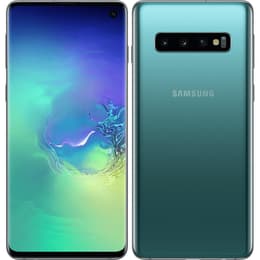
Galaxy S10
Galaxy S10
Starting at

Refurbished price:114.00

Versus €549.00 new

See options
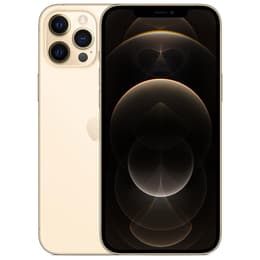
iPhone 12 Pro Max
iPhone 12 Pro Max
Starting at

Refurbished price:244.00

Versus €1,139.00 new

See options

Ratings

The Samsung Galaxy S10, released in March 2019, and the iPhone 12 Pro Max, launched in November 2020, represent flagship smartphones from their respective manufacturers. While both devices offer premium experiences, they differ significantly in their operating systems, design philosophies, and core capabilities. The Galaxy S10 runs on Android, providing a customizable user experience, whereas the iPhone 12 Pro Max operates on iOS, known for its integrated ecosystem and streamlined interface. These differences cater to distinct user preferences, influencing aspects from software longevity to camera performance.

Scores

Durability

When considering the practical lifespan of these devices, several factors come into play, including their release timelines, software support, and repairability.

  • Release Timeline and OS Support: The Galaxy S10, released in early 2019, has reached the end of its major Android OS updates, concluding with Android 12, and security updates for most models ended in March 2023. The iPhone 12 Pro Max, launched in late 2020, benefits from Apple's typically longer software support, generally receiving 5-6 years of major iOS updates from its release. This means the iPhone 12 Pro Max will continue to receive critical security patches and new features for a longer period.
  • Repairability: The Galaxy S10 received a lower repairability score of 3 out of 10 from iFixit, primarily due to extensive adhesive, a soldered charging port, and a fused ultrasonic fingerprint sensor that complicates screen replacements. In contrast, the iPhone 12 Pro Max scored 6 out of 10, indicating a more modular design in some areas, though proprietary screws and the need for Apple's specialized software for certain component replacements still present challenges for independent repairs.
  • Expected Practical Lifespan: Users prioritizing extended software support and security updates will find the iPhone 12 Pro Max offers a longer practical lifespan. For those considering an eco-friendly alternative, both devices are available as quality-assured refurbished options, extending their utility.

Year of Release

2019

2020

Compatible with latest Update

No

Yes

OS

Android

iOS

Foldable

No

No

Performance

The performance of a smartphone is crucial for daily tasks, from app usage to multitasking and gaming. Both the Galaxy S10 and iPhone 12 Pro Max offer capable performance, but with differences reflecting their respective generations and architectures.

  • Processor Capabilities: The Galaxy S10 is powered by an octa-core chipset, which provides smooth performance for everyday applications and moderate multitasking. The iPhone 12 Pro Max features a more advanced processor, enabling faster app loading, smoother graphics for demanding games, and more efficient handling of complex tasks. This difference is particularly noticeable in processor-intensive applications and augmented reality experiences.
  • System Responsiveness and Multitasking: The iPhone 12 Pro Max generally offers a highly responsive user experience, with quick transitions and efficient background app management, supported by its 6GB of RAM. The Galaxy S10, with 8GB of RAM, also handles multitasking effectively, allowing users to switch between multiple applications without significant slowdowns.
  • Storage Options: Both devices offer various internal storage configurations, with the Galaxy S10 typically available in 128GB and 512GB options, and the iPhone 12 Pro Max offering 128GB, 256GB, and 512GB.
  • Battery Behavior: The iPhone 12 Pro Max is noted for its extended battery life, often lasting more than 48 hours between charges with moderate use, making it suitable for heavy users. The Galaxy S10, with a 3400 mAh battery, provides a full day of typical use but may require more frequent charging for power users.

Memory (GB)

8 GB

6 GB

Screen quality

The display is a primary interface for any smartphone, and both the Galaxy S10 and iPhone 12 Pro Max offer high-quality viewing experiences with distinct characteristics.

  • Display Technology and Clarity: The Galaxy S10 features a 6.1-inch Dynamic AMOLED display with a resolution of 3040x1440 pixels, resulting in sharp images and vibrant colors. The iPhone 12 Pro Max boasts a larger 6.7-inch Super Retina XDR OLED display with a resolution of 2778x1284 pixels, known for its deep blacks, excellent contrast, and accurate color reproduction.
  • Brightness and Outdoor Visibility: The iPhone 12 Pro Max offers higher peak brightness levels, reaching up to 1200 nits for HDR content and 800 nits typical, which enhances visibility in bright outdoor conditions. The Galaxy S10 also provides good brightness, supporting HDR10+ for an enhanced viewing experience.
  • Refresh Rate and Smoothness: Both devices feature a standard 60Hz refresh rate, providing a smooth experience for most content.
  • Screen Size and Viewing Experience: The iPhone 12 Pro Max's larger 6.7-inch display offers a more expansive canvas for media consumption, gaming, and productivity. The Galaxy S10's 6.1-inch display provides a more compact form factor, which some users may find easier for one-handed use.

Resolution

1440 x 3040

1284 x 2778

Screen type

Dynamic AMOLED

Super Retina XDR OLED

Audiovisual

Both smartphones are equipped with advanced camera systems designed to capture high-quality photos and videos, though they approach imaging with different strengths and features.

  • Rear Camera Systems: The Galaxy S10 features a versatile triple-camera setup, including a 12MP wide-angle lens with dual aperture, a 12MP telephoto lens with 2x optical zoom, and a 16MP ultrawide lens. The iPhone 12 Pro Max also has a triple 12MP camera system, comprising an Ultra Wide, Wide (with a larger sensor and sensor-shift optical image stabilization), and Telephoto lens (offering 2.5x optical zoom in and a 5x optical zoom range).
  • Photography Performance: The iPhone 12 Pro Max excels in low-light photography due to its larger sensor, wider aperture, and the inclusion of a LiDAR Scanner for faster and more accurate autofocus in dim conditions. It also features Night mode portraits and Deep Fusion for enhanced detail. The Galaxy S10 offers features like Scene Optimizer and Shot Suggestion to assist users in capturing optimal images across various scenarios.
  • Video Recording Quality: The iPhone 12 Pro Max supports HDR video recording with Dolby Vision at up to 60 frames per second, providing excellent dynamic range and color accuracy for video content. It also benefits from sensor-shift optical image stabilization for smoother video. The Galaxy S10 can record HDR10+ video and includes a Super Steady video-recording feature for improved stabilization.
  • Front Camera: The Galaxy S10 has a 10MP front camera capable of 4K video recording. The iPhone 12 Pro Max features a 12MP TrueDepth front camera with Night mode, Deep Fusion, and Smart HDR 3, enhancing selfie quality in various lighting conditions.

Main camera

12 megapixels

12 megapixels

Front camera

10 megapixels

12 megapixels

Miscellaneous

Beyond core performance and imaging, several practical features and design elements differentiate these two smartphones, impacting daily usability and overall experience.

  • Connectivity: The iPhone 12 Pro Max supports 5G connectivity, offering faster download and upload speeds in compatible areas, along with Wi-Fi 6 and Bluetooth 5.0. The Galaxy S10 supports 4G-LTE networks, Wi-Fi 6, and Bluetooth 5.0.
  • Port Types: The Galaxy S10 includes a USB-C port for charging and data transfer, and notably, retains a 3.5mm headphone jack, which is absent on the iPhone 12 Pro Max. The iPhone 12 Pro Max utilizes Apple's proprietary Lightning port.
  • Biometric Security: The Galaxy S10 features an ultrasonic in-display fingerprint sensor for secure unlocking. The iPhone 12 Pro Max relies on Face ID, Apple's facial recognition system, for biometric authentication.
  • Design and Build Materials: The iPhone 12 Pro Max has a more robust build with a Ceramic Shield front cover, a stainless steel frame, and a glass back. It is also larger and heavier, measuring 160.8 x 78.1 x 7.4mm and weighing 228g. The Galaxy S10 features a glass front (Gorilla Glass 6) and back (Gorilla Glass 5) with an aluminum frame, measuring 149.9 x 70.4 x 7.8mm and weighing 157g.
  • Other Features: The iPhone 12 Pro Max includes MagSafe for magnetic accessory attachment and wireless charging, and a LiDAR Scanner for enhanced AR experiences and improved camera performance.

Weight

158 g

226 g

Screen size (in)

6.1

6.7

Network

4G

5G

SIM card

Physical SIM

Physical SIM + eSIM

Carrier compatibility

Unlocked

Unlocked

User sentiment for the Samsung Galaxy S10 often highlights its comprehensive feature set at the time of its release, particularly its versatile camera system and the inclusion of a headphone jack, which was a valued feature for many. Some users appreciated its more compact design compared to larger flagships. Criticisms sometimes focused on its battery life for heavy users and its lower repairability score.

The iPhone 12 Pro Max is frequently praised for its exceptional battery life, large and vibrant display, and its advanced camera capabilities, especially in low-light conditions and video recording. Its robust build quality and long-term software support are also commonly cited as strengths. Some users find its size and weight to be a consideration for one-handed use.

Users prioritizing a larger display, extended battery life, and superior low-light photography and video capabilities may find the iPhone 12 Pro Max better suited to their needs. Its longer software support timeline also appeals to those seeking maximum longevity from their device. Conversely, users who value a more compact design, the presence of a traditional headphone jack, and a highly customizable Android operating system might lean towards the Galaxy S10. Both devices, when purchased as quality-assured refurbished options, offer a sustainable choice for consumers looking to extend the life cycle of electronic products.


See all articles

Our recent comparisons