

Compare models
Galaxy A15 Vs Galaxy A15 5G
- 1-year minimum warranty
- Free delivery on all orders
- Free 30-day returns
Differences at a glance
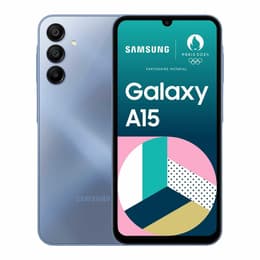
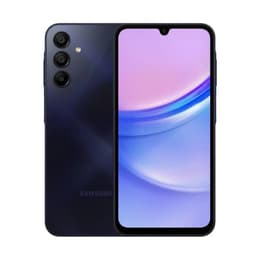
The Samsung Galaxy A15 (2023) and the Samsung Galaxy A15 5G (2023) are both Android-based smartphones from Samsung's Galaxy A series. Released concurrently, these devices share a largely identical design and many core features, offering a consistent user experience in most aspects. The primary distinctions between them lie in their network connectivity capabilities and the underlying processing power that supports these functions.
Available Models
Colour
Storage (GB)
Scores
Durability
Both the Galaxy A15 and Galaxy A15 5G were launched in December 2023, providing them with a similar starting point for their software support cycles. Samsung typically provides a commitment of four major Android operating system upgrades and five years of security updates for its A-series devices, which applies to both models.
- Software Longevity: Users can expect both devices to receive new Android versions and security patches for an extended period, contributing to their practical lifespan until approximately 2029.
- Build and Materials: Both phones feature a plastic frame and back. The 4G version has a glossy finish, and the 5G version also features a glossy back, offering a consistent feel. Neither device carries an official IP rating for water resistance.
- Repairability: While specific repairability scores are not prominently highlighted, the general construction of these devices suggests a consistent approach to repair across both variants. Users are advised to use screen protectors and cases as the screen does not feature Gorilla Glass protection.
Year of Release
2023
2023
Compatible with latest Update
Yes
Yes
OS
Android
Android
Foldable
No
No
Performance
The performance of the Galaxy A15 and Galaxy A15 5G differs mainly due to their respective processors, influencing how smoothly they handle various tasks. Both are designed for efficient everyday use, but the 5G variant offers a slight edge in computational power.
- Processing Power: The Galaxy A15 (4G) is equipped with a processor designed for efficient everyday use, while the Galaxy A15 5G features a different processor that offers enhanced capabilities, particularly for tasks requiring more computational power.
- Multitasking and Responsiveness: Both models are available with various RAM configurations, from 4GB to 8GB, and storage options of 128GB or 256GB, which can be expanded up to 1TB with a microSD card. Models with higher RAM generally handle switching between multiple demanding applications more smoothly.
- Battery Behavior: Both devices are powered by a 5000 mAh battery, supporting 25W fast charging, which allows for quick power-ups. This capacity is designed to provide ample power for daily use.
Screen quality
Both the Galaxy A15 and Galaxy A15 5G offer a consistent and vibrant visual experience, utilizing the same display technology and specifications.
- Display Technology: Both smartphones feature a 6.5-inch Super AMOLED display, which provides deep blacks and vibrant colors, enhancing the viewing experience for media consumption and general use.
- Clarity and Smoothness: The displays on both models have a resolution of 1080 x 2340 pixels (FHD+) and a 90Hz refresh rate, contributing to sharp images and smooth scrolling. The screen can reach up to 800 nits brightness in High Brightness Mode, aiding visibility in direct sunlight.
- Screen Size and Viewing: With a 6.5-inch diagonal, both offer a substantial viewing area. The display also incorporates features to reduce blue light for eye comfort.
Resolution
1080 x 2340
1080 x 2340
Screen type
Super AMOLED
Super AMOLED
Audiovisual
The camera systems on the Galaxy A15 and Galaxy A15 5G are identical, providing the same photographic and video capabilities across both models.
- Camera System Capabilities: Both devices feature a triple rear camera setup, including a 50 MP main sensor, a 5 MP ultrawide lens, and a 2 MP macro lens. The front-facing camera on both is a 13 MP sensor.
- Photography Performance: The 50 MP main sensor is capable of capturing detailed images in various lighting conditions. The ultrawide lens allows for broader landscape shots, while the macro lens is suitable for close-up photography.
- Video Recording and Audio: Both models support video recording up to 1080p at 30 frames per second with both the front and rear cameras. For audio, both devices feature a mono speaker, and users report that a 3.5mm audio jack is available for headphones.
Main camera
50 megapixels
50 megapixels
Front camera
13 megapixels
13 megapixels
Miscellaneous
Beyond core performance, several practical elements contribute to the overall user experience of the Galaxy A15 and Galaxy A15 5G, with connectivity being the most significant differentiator.
- Connectivity Options: The primary difference is network capability; the Galaxy A15 supports 4G LTE, while the Galaxy A15 5G offers the added benefit of 5G network access, enabling faster data speeds where 5G infrastructure is available. Both devices include Wi-Fi 5 (802.11a/b/g/n/ac), Bluetooth 5.3, and NFC.
- Ports and Sensors: Both phones feature a USB Type-C 2.0 port for charging and data transfer, and notably, they both retain a 3.5mm headphone jack. For security, both include a side-mounted fingerprint sensor.
- Physical Characteristics: Both models share identical dimensions of 160.1 x 76.8 x 8.4 mm and weigh 200 grams, providing a consistent feel in hand.
Weight
200 g
200 g
Screen size (in)
6.5
6.5
Network
4G
5G
SIM card
Dual Physical SIM
Dual Physical SIM
Carrier compatibility
Unlocked
Unlocked
What the community thinks
The Samsung Galaxy A15 and Galaxy A15 5G offer a very similar experience across most categories, from their vibrant Super AMOLED displays and capable camera systems to their substantial battery life and long-term software support. The most significant distinction lies in their network capabilities and the associated processing power.
Users who prioritize access to the fastest available mobile data speeds and a slightly more capable processor for demanding applications may find the Galaxy A15 5G better suited to their needs. The 5G connectivity can provide quicker downloads, smoother streaming, and more responsive online gaming in areas with 5G coverage.
Conversely, users who primarily rely on Wi-Fi or live in areas where 5G infrastructure is not yet prevalent, and whose daily tasks do not involve highly intensive processing, may find the Galaxy A15 (4G) to be a practical choice. Its performance for everyday tasks, media consumption, and photography remains consistent with its 5G counterpart.
Both devices represent a solid option for those seeking a reliable smartphone experience with a focus on core functionalities. Considering a quality-assured refurbished option for either model can also be an eco-friendly alternative for consumers.