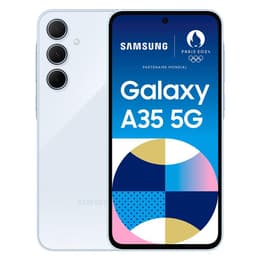



Galaxy A35 Vs Xiaomi Redmi Note 12 Pro

Galaxy A35
Galaxy A35
Starting at

Refurbished price:206.00

Versus €431.43 new

See options
Xiaomi Redmi Note 12 Pro
Starting at

Refurbished price:116.00

Versus €399.00 new

See options

Ratings

The Samsung Galaxy A35 and the Xiaomi Redmi Note 12 Pro are mid-range smartphones designed to offer a balance of features and performance for everyday users. The Galaxy A35, released in March 2024, runs on Android 14 with Samsung's One UI, while the Redmi Note 12 Pro, launched in late 2022 (5G variant), typically shipped with Android 12 and Xiaomi's MIUI. These devices cater to users seeking capable smartphones for daily tasks, media consumption, and photography, with key differences in their software support, charging capabilities, and build.

Scores

Durability

When considering the long-term usability of these devices, their release timelines and software support policies are significant factors.

  • Release and Software Support: The Samsung Galaxy A35, released in March 2024, benefits from Samsung's commitment to providing four generations of Android OS upgrades and five years of security updates. This means it is expected to receive updates until Android 18 and security patches until 2029. In contrast, the Xiaomi Redmi Note 12 Pro, launched in late 2022, was typically promised two major Android versions and three years of security patches. Users of the Redmi Note 12 Pro can expect its final major update to be HyperOS 2 (based on Android 15) by the end of 2025, with security support also concluding around that time. [2, 3, 6, 8, 11, 20, 29, 32, 36]
  • Repairability and Durability: The Galaxy A35 has a published repairability score of 8.4 out of 10, indicating a design that facilitates easier repairs and good availability of spare parts. It also features Gorilla Glass Victus+ for display protection and an IP67 rating for dust and water resistance, offering robust protection against environmental elements. The Redmi Note 12 Pro features Gorilla Glass 5 for screen protection and an IP53 rating, providing basic splash and dust resistance. [1, 4, 5, 7, 9, 14, 24, 34, 38, 40, 42]
  • Practical Lifespan: Users prioritizing extended software longevity and higher water and dust resistance will find the Galaxy A35 a more future-proof option. The Redmi Note 12 Pro, while still functional, will reach its end-of-software-support sooner, which might be a consideration for users who keep their devices for many years.

Year of Release

2024

2022

Compatible with latest Update

Yes

No

OS

Android

Android

Foldable

No

No

Performance

Both smartphones are equipped with processors designed for smooth daily operation, though their capabilities diverge in more demanding scenarios.

  • Processor Capabilities: The Samsung Galaxy A35 is powered by an in-house processor that capably handles everyday tasks such as web browsing, social media, and video streaming. While it performs well for general use, very demanding games or intensive multitasking might push its limits. The Xiaomi Redmi Note 12 Pro features a processor that is generally considered capable of smooth multitasking and gaming, with some sources suggesting it offers slightly better performance in graphics-intensive tasks. [12, 18, 30]
  • System Responsiveness and RAM: The Galaxy A35 is available with 6GB or 8GB of RAM, utilizing LPDDR4X standards, which contributes to responsive app loading and multitasking. The Redmi Note 12 Pro offers more RAM configurations, including 6GB, 8GB, and 12GB options, also using LPDDR4X, providing ample capacity for running multiple applications simultaneously. Both devices use UFS 2.2 storage, ensuring decent data transfer speeds. [14, 15, 19, 24, 40]
  • Battery Behavior: Both devices come with a 5000mAh battery, generally providing a full day of moderate to heavy use. The Galaxy A35 supports 25W fast charging, which can fully charge the device in under 1.5 hours, though the charger is often sold separately. The Redmi Note 12 Pro stands out with 67W fast charging, capable of reaching a full charge in approximately 46-50 minutes, and typically includes the charger in the box. Neither device supports wireless charging. [2, 14, 15, 18, 21, 25, 27, 28, 30, 40]

Memory (GB)

6 GB

8 GB

Screen quality

The visual experience on both devices is a highlight, offering vibrant displays suitable for media consumption and daily interactions.

  • Display Technology and Clarity: The Samsung Galaxy A35 features a 6.6-inch Super AMOLED display, delivering deep blacks and vibrant colors with a resolution of 2340x1080 pixels (FHD+). The Xiaomi Redmi Note 12 Pro sports a slightly larger 6.67-inch AMOLED display with a resolution of 1080x2400 pixels, also offering rich colors and contrast. Both displays provide a clear viewing experience for text and images. [2, 11, 14, 15, 19, 24, 31, 34, 40]
  • Refresh Rate and Brightness: Both smartphones boast a 120Hz refresh rate, contributing to smoother scrolling and more fluid animations. The Redmi Note 12 Pro offers a peak brightness of 900 nits (HBM), which aids visibility in bright outdoor conditions. While the Galaxy A35's peak brightness is not always explicitly stated, user reports indicate it is generally sufficient for outdoor use, though some users note colors can appear somewhat washed out in direct sunlight. [2, 11, 14, 18, 23, 24, 31, 40]
  • Screen Protection and Features: The Galaxy A35 is protected by Gorilla Glass Victus+, offering enhanced durability against scratches and drops. The Redmi Note 12 Pro uses Gorilla Glass 5. The Redmi Note 12 Pro also includes support for Dolby Vision and HDR10+, enhancing the viewing experience for compatible content. [14, 24, 31, 34, 40, 42]

Resolution

1080 x 2340

1080 x 2400

Screen type

Super AMOLED

AMOLED

Audiovisual

Both devices offer versatile camera systems, aiming to capture quality images and videos in various conditions.

  • Rear Camera Systems: The Samsung Galaxy A35 features a triple rear camera setup, including a 50MP main sensor with Optical Image Stabilization (OIS), an 8MP ultrawide lens with a 123-degree field of view, and a 5MP macro lens. The Xiaomi Redmi Note 12 Pro also has a triple rear camera system, comprising a 50MP main sensor (Sony IMX766) with OIS, an 8MP ultrawide lens, and a 2MP macro lens. [2, 8, 12, 15, 18, 19, 25, 27, 28, 30, 34, 37, 40]
  • Photography Performance: In daylight, both phones' main cameras are capable of producing sharp, vibrant photos with good detail. The Galaxy A35's main camera is praised for its color reproduction, while the Redmi Note 12 Pro's main sensor is noted for its detail and dynamic range. For low-light conditions, the Redmi Note 12 Pro's main camera performs adequately, especially with its dedicated Night Mode. The Galaxy A35's low-light performance can be less consistent, sometimes showing more noise. The ultrawide and macro lenses on both devices are generally considered decent for their specific uses, though the macro lens on both can be seen as less impactful than the main sensor. [12, 18, 19, 21, 23, 25, 27, 28, 30, 37]
  • Video and Front Camera: The Galaxy A35 supports 4K video recording at 30 frames per second (fps) on both its main rear camera and its 13MP front-facing camera. The Redmi Note 12 Pro also offers 4K@30fps video recording from its main rear camera, while its 16MP front camera records at 1080p@30/60fps. The Galaxy A35's front camera is noted for good skin tones and portrait mode. [2, 8, 14, 19, 21, 23, 25, 27, 34, 37, 40]

Main camera

50 megapixels

50 megapixels

Front camera

13 megapixels

16 megapixels

Miscellaneous

Beyond core performance, several practical features and design elements differentiate these two smartphones.

  • Connectivity and Ports: Both devices support 5G connectivity, ensuring access to faster mobile networks. The Galaxy A35 features Bluetooth 5.3, while the Redmi Note 12 Pro uses Bluetooth 5.2. Both include USB Type-C ports for charging and data transfer. A notable difference is the inclusion of a 3.5mm headphone jack on the Redmi Note 12 Pro, which is absent on the Galaxy A35. The Redmi Note 12 Pro also includes an IR Blaster. [2, 3, 14, 24, 26, 31, 34, 40]
  • Build Materials and Handling: The Galaxy A35 features a plastic back with a glossy finish, curved edges, and a weight of 209 grams. It has an IP67 rating for dust and water resistance, meaning it can withstand immersion in water. The Redmi Note 12 Pro has a glass front and back with a plastic frame, weighing 187 grams, and carries an IP53 rating for splash and dust resistance. The glass back of the Redmi Note 12 Pro can offer a more premium feel, while the Galaxy A35's plastic back might be more resistant to shattering. [2, 12, 24, 31, 34, 40]
  • Security and Storage: The Galaxy A35 incorporates an in-display fingerprint sensor for biometric security. The Redmi Note 12 Pro features a side-mounted fingerprint sensor. For storage, the Galaxy A35 offers expandable storage via a microSD card slot, supporting up to 1TB. The Redmi Note 12 Pro does not offer expandable storage. [2, 14, 17, 24, 26, 34, 40]

Weight

209 g

187 g

Width

78 cm

76 cm

Height

161,7 cm

162,9 cm

Depth

8,2 cm

7,9 cm

Screen size (in)

6.6

6.67

Network

5G

5G

SIM card

Dual Physical SIM

Dual Physical SIM

Carrier compatibility

Unlocked

Unlocked

Connector

USB-C

USB-C

The Samsung Galaxy A35 and Xiaomi Redmi Note 12 Pro each present a compelling package for users in the mid-range smartphone segment, with distinct strengths that cater to different priorities. User feedback for the Galaxy A35 often praises its extended software support, robust IP67 water and dust resistance, and reliable main camera performance in good lighting. Some users, however, note that its low-light camera performance could be improved and that the macro lens might be considered a less essential feature. The Redmi Note 12 Pro is frequently lauded for its fast 67W charging, vibrant AMOLED display with Dolby Vision, and the inclusion of a 3.5mm headphone jack and IR Blaster. Criticisms sometimes point to its shorter software update commitment and the less impressive performance of its secondary cameras compared to the main sensor. [18, 19, 21, 23, 25, 27, 28, 30, 36, 37]

Users prioritizing long-term software support, enhanced durability against water and dust, and expandable storage will find the Samsung Galaxy A35 well-suited to their needs. Its consistent performance for everyday tasks and strong main camera make it a solid choice for those who value longevity and peace of mind. Conversely, individuals who prioritize rapid charging speeds, a glass-back design, a dedicated headphone jack, and a slightly more powerful processor for graphics-intensive tasks may lean towards the Xiaomi Redmi Note 12 Pro. Both devices offer a quality-assured refurbished option, providing an eco-friendly alternative for consumers looking to make a sustainable choice while still enjoying advanced smartphone features. Ultimately, the decision between these two depends on whether extended software life and durability or faster charging and specific hardware inclusions align best with individual user preferences.


See all articles

Our recent comparisons