

iPad mini 5 (2019, A12 series) Vs Lenovo Tab M10 Gen 3 (10.1", 2022)

iPad mini 5 (2019, A12 series)
Starting at

Refurbished price:195.00

Versus €469.00 new

See options
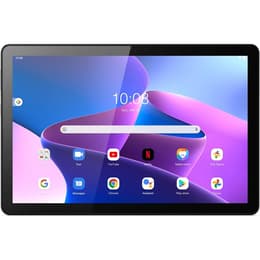
Lenovo Tab M10 Gen 3 (10.1", 2022)
Starting at

Refurbished price:124.00

Versus €299.99 new

See options

Ratings

The iPad Mini 2019 and the Lenovo Tab M10 Gen 3 2022 10 1 are distinct tablet offerings, released in March 2019 and September 2022 respectively. While the iPad Mini operates on Apple's iPadOS and features a compact design with a powerful internal processor, the Lenovo Tab M10 runs on Android, offering a larger display and a focus on everyday media consumption. These differences cater to varying user preferences, from portability and performance to screen size and operating system ecosystem.

Scores

Durability

When considering the longevity of these devices, their release timelines and software support policies are key factors. The iPad Mini 2019, despite its earlier release, benefits from Apple's extended software support, while the Lenovo Tab M10 Gen 3, a newer device, has a more limited update window.

  • Release Timeline: The iPad Mini 2019 was released in March 2019, making it an older model compared to the Lenovo Tab M10 Gen 3, which launched in September 2022. This age difference impacts the remaining period of official software support and the availability of the latest features.
  • Software Longevity: The iPad Mini 2019 shipped with iOS 12.2 and has received updates up to iPadOS 26 as of March 2026, with Apple typically providing 5 to 7 years of major OS updates. In contrast, the Lenovo Tab M10 Gen 3 launched with Android 11, was updated to Android 12, but is not planned to receive Android 13, with security updates expected until February 2025. This suggests a shorter official software lifespan for the Lenovo tablet.
  • Repairability: The iPad Mini 2019 has a low repairability score, primarily due to extensive use of adhesive for components like the battery and screen, making common repairs challenging. Information on the repairability of the Lenovo Tab M10 Gen 3 is less detailed, but its construction typically involves a mix of aluminum and plastic.

Year of Release

2019

2022

Compatible with latest Update

Yes

No

OS

iPadOS

Android

Performance

The performance capabilities of these two tablets differ significantly, largely due to their respective processors and operating system optimizations. The iPad Mini 2019 is designed for more demanding tasks, while the Lenovo Tab M10 Gen 3 is suited for general use.

  • Processing Power: The iPad Mini 2019 is equipped with a powerful processor that enables smooth operation for a wide range of applications, including more intensive creative and productivity software. Users can expect responsive multitasking and efficient handling of graphically demanding games. The Lenovo Tab M10 Gen 3 features a processor that is well-suited for everyday tasks such as web browsing, video streaming, and light gaming, but may show limitations with more complex applications or heavy multitasking.
  • Multitasking and Responsiveness: The iPad Mini 2019, with its robust processor and optimized iPadOS, offers a fluid user experience, allowing for seamless switching between applications and efficient handling of multiple tasks simultaneously. The Lenovo Tab M10 Gen 3 provides an adequate experience for typical tablet usage, though some users might notice occasional stutters when pushing the device with numerous open apps or demanding processes.
  • Storage and RAM: The iPad Mini 2019 comes with 3GB of RAM and storage options of 64GB or 256GB. The Lenovo Tab M10 Gen 3 offers 3GB or 4GB of RAM and 32GB or 64GB of internal storage, which can be expanded via a microSD card slot.

Memory (GB)

3 GB

3 GB

Screen quality

The visual experience on these tablets is shaped by their display technologies, resolutions, and overall screen characteristics, catering to different viewing preferences.

  • Display Technology and Clarity: The iPad Mini 2019 features a 7.9-inch IPS LCD Retina display with a resolution of 2048x1536 pixels, resulting in a high pixel density that provides sharp text and detailed images. It also includes Wide Color (P3) and True Tone technology for accurate color representation and adaptive white balance. The Lenovo Tab M10 Gen 3 has a larger 10.1-inch IPS LCD with a 1920 x 1200 resolution, offering a clear viewing experience for media consumption, though with a lower pixel density compared to the iPad Mini.
  • Brightness and Outdoor Visibility: The iPad Mini 2019 offers a maximum brightness of 500 nits, contributing to good visibility in various lighting conditions, including outdoors. The Lenovo Tab M10 Gen 3 has a typical brightness of 320 nits, which is sufficient for indoor use but may struggle in direct sunlight.
  • Special Features: The iPad Mini 2019's display is fully laminated and has an anti-reflective coating, enhancing the viewing experience. It also supports the first-generation Apple Pencil for creative and note-taking tasks. The Lenovo Tab M10 Gen 3 is TÜV Rheinland Low Blue Light certified, which helps reduce eye strain during prolonged use.

Resolution

2048 x 1536

1200 x 1920

Screen type

Retina display

IPS LCD

Pixel density

326ppp

230ppp

Audiovisual

Both tablets incorporate camera systems suitable for basic photography and video calls, rather than advanced imaging. Their capabilities are generally aligned with typical tablet usage scenarios.

  • Camera System Capabilities: The iPad Mini 2019 includes an 8-megapixel rear camera and a 7-megapixel front-facing camera, both capable of recording 1080p video. The Lenovo Tab M10 Gen 3 features an 8-megapixel autofocus rear camera and a 5-megapixel fixed-focus front camera.
  • Photography Performance: For the iPad Mini 2019, the cameras are generally considered adequate for scanning documents and casual use, but not for capturing high-quality photographs. Similarly, the Lenovo Tab M10 Gen 3's cameras are acceptable for casual snapshots and video calls, though low-light performance is limited, and users should not expect exceptional results.
  • Audio for Media and Calls: The iPad Mini 2019 features dual stereo speakers, providing a decent audio experience for media consumption. It also has dual microphones for improved call quality. The Lenovo Tab M10 Gen 3 also comes with dual speakers enhanced by Dolby Atmos support, aiming to provide an immersive audio experience, and its microphones are suitable for video conferencing.

Miscellaneous

Beyond core performance and display, several practical elements differentiate these two tablets, impacting their usability and integration into daily routines.

  • Connectivity Options: Both tablets support Wi-Fi 802.11ac (dual-band) and Bluetooth 5.0. Cellular models of the iPad Mini 2019 offer Gigabit-class LTE and eSIM support, along with GPS and GLONASS. The Lenovo Tab M10 Gen 3 also has LTE variants and includes GPS in these models.
  • Port Types: The iPad Mini 2019 retains a Lightning port for charging and data transfer, and includes a 3.5mm headphone jack. The Lenovo Tab M10 Gen 3 features a USB Type-C 2.0 port for charging and connectivity, alongside a 3.5mm audio jack.
  • Security and Biometrics: The iPad Mini 2019 utilizes Touch ID for secure authentication via its home button. The Lenovo Tab M10 Gen 3 offers face unlock as its primary biometric security feature.
  • Physical Characteristics: The iPad Mini 2019 is a compact device, weighing approximately 300.5 grams (Wi-Fi model) and measuring 6.1 mm thick. The Lenovo Tab M10 Gen 3 is larger and slightly heavier at around 460 grams and 8.5 mm thick. The iPad Mini's design is considered somewhat dated due to its larger bezels.

Weight

300 g

460 g

Screen size (in)

7.9

10.1

Network

Wi-Fi

Wi-Fi + 4G

Carrier compatibility

Without SIM Port

Unlocked

User feedback for the iPad Mini 2019 frequently highlights its strong performance, vibrant display, and the utility of Apple Pencil support as key advantages. Its compact size is often praised for portability, making it suitable for reading, light gaming, and on-the-go productivity. Common criticisms include its dated design with large bezels, the continued use of the Lightning port instead of USB-C, and cameras that are considered merely adequate rather than exceptional.

For the Lenovo Tab M10 Gen 3, users appreciate its larger screen for media consumption, solid build quality, and a clean Android software experience. Its inclusion of a USB-C port and a microSD card slot are also noted as practical benefits. However, frequent concerns revolve around its entry-level processor, which can lead to middling performance for anything beyond basic tasks, and its cameras, which are not designed for high-quality photography. Some reviews also point to a shorter battery life in certain usage scenarios compared to competitors.

Users prioritizing a highly portable tablet with robust performance for demanding applications, a high-quality display, and integration into the Apple ecosystem, especially with Apple Pencil support, may find the iPad Mini 2019 well-suited to their needs. Conversely, individuals seeking a larger screen for media viewing, a more recent Android operating system, expandable storage, and a USB-C port for broader compatibility, primarily for casual use, might lean towards the Lenovo Tab M10 Gen 3. Both devices offer distinct experiences, and considering a quality-assured refurbished option for either can be an eco-friendly alternative for making an informed choice.


See all articles

Our recent comparisons