

Galaxy S21 Ultra 5G Vs Galaxy S22 Ultra 5G

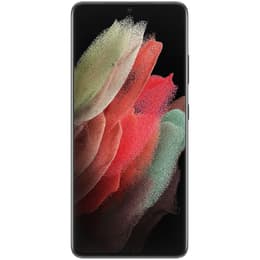
Galaxy S21 Ultra 5G
Galaxy S21 Ultra 5G
Starting at

Refurbished price:228.00

Versus €1,297.00 new

See options
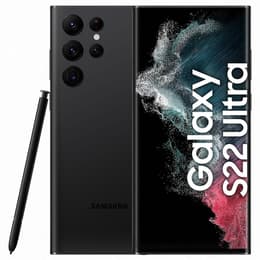
Galaxy S22 Ultra 5G
Galaxy S22 Ultra 5G
Starting at

Refurbished price:350.00

Versus €1,445.00 new

See options

Ratings

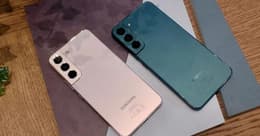
The Samsung Galaxy S21 Ultra 5G, released in January 2021, and the Samsung Galaxy S22 Ultra 5G, launched in February 2022, represent successive generations of Samsung's premium smartphone line. While both devices offer a high-end Android experience, the S22 Ultra introduces an integrated S Pen and refined camera capabilities, alongside updated internal components. Both run on Samsung's One UI atop the Android operating system, providing a consistent software experience with ongoing updates.

Scores

Durability

When considering the longevity of these devices, several factors come into play, including their release timeline, software support, and repairability.

  • Release Timeline: The Galaxy S21 Ultra was released in January 2021, while the Galaxy S22 Ultra followed in February 2022. This means the S22 Ultra benefits from an additional year of potential software support compared to its predecessor.
  • Software Support: Samsung typically provides several years of major Android OS updates and security patches. The Galaxy S21 Ultra received its final major Android OS update (Android 15-based One UI 7.0) in the first half of 2025, with security updates ending around February 2026. The Galaxy S22 Ultra, being a year newer, is expected to receive software support for a longer duration, extending its practical lifespan for users who prioritize the latest software features and security.
  • Repairability: Both the Galaxy S21 Ultra and S22 Ultra received low repairability scores from iFixit, with both models scoring 3 out of 10. This indicates that repairs, particularly for components like the battery and screen, can be challenging due to the extensive use of strong adhesives.

Year of Release

2021

2022

Compatible with latest Update

Yes

Yes

OS

Android

Android

Foldable

No

No

Performance

Both the Galaxy S21 Ultra and S22 Ultra are designed for demanding tasks, offering robust performance for everyday use and more intensive applications.

  • Storage Options: Both models offer various internal storage configurations, typically ranging from 128GB to 512GB, with the S22 Ultra also offering a 1TB option. Neither device includes a microSD card slot for expandable storage.
  • Battery Behavior: Both devices feature a 5000 mAh battery. In real-world usage, the S21 Ultra generally provides a full day of use, with some reports indicating over 7 hours of screen-on time. The S22 Ultra also aims for all-day battery life, though some users and tests noted that its battery performance was similar to or slightly less than the S21 Ultra, especially with the display set to its highest resolution and refresh rate.
  • System Responsiveness: The S22 Ultra features a newer generation processor compared to the S21 Ultra. This translates to slightly improved CPU and GPU performance, offering a smoother experience for demanding applications, multitasking, and graphic-intensive gaming. While the S21 Ultra remains highly capable, the S22 Ultra provides a marginal edge in raw processing power and efficiency for future-proofing.

Memory (GB)

12 GB

8 GB

Screen quality

Both Ultra models feature large, high-quality displays, providing an immersive viewing experience with vibrant colors and sharp details.

  • Display Technology: Both devices utilize a 6.8-inch Dynamic AMOLED 2X display. This technology delivers deep blacks, high contrast, and vibrant color reproduction, suitable for media consumption and detailed work.
  • Resolution and Clarity: Both phones offer a Quad HD+ resolution (3200 x 1440 pixels for S21 Ultra, 3088 x 1440 pixels for S22 Ultra), resulting in a high pixel density for sharp text and images.
  • Brightness and Refresh Rate: Both displays support an adaptive 120Hz refresh rate for smooth scrolling and responsiveness. The S22 Ultra's display can reach a peak brightness of 1750 nits, which is higher than the S21 Ultra, improving visibility in bright outdoor conditions. The S22 Ultra also features a more dynamic refresh rate, scaling down to 1Hz to conserve battery, whereas the S21 Ultra scales down to 10Hz.

Resolution

1440 x 3200

1440 x 3088

Screen type

Dynamic AMOLED 2X

Dynamic AMOLED 2X

Audiovisual

Both the Galaxy S21 Ultra and S22 Ultra are equipped with versatile camera systems designed to capture high-quality photos and videos in various conditions.

  • Camera System Capabilities: Both devices feature a quad-camera setup on the rear, including a 108MP main sensor, a 12MP ultrawide lens, and two 10MP telephoto lenses offering 3x and 10x optical zoom. The S22 Ultra's camera system benefits from a larger main sensor and improved image processing, which can lead to better detail and color accuracy.
  • Low-Light and Everyday Photography: The S22 Ultra generally offers enhanced low-light performance due to its larger sensor and improved software algorithms, capturing more detail and reducing noise in challenging lighting. For everyday photography, both phones deliver excellent results with vibrant colors and good dynamic range.
  • Video Recording and Audio: Both models support 8K video recording at 24fps and 4K at 30/60fps. The S22 Ultra includes features like improved video stabilization and auto-framing. Both devices offer stereo speakers and good microphone quality for calls and video recording.

Main camera

108 megapixels

108 megapixels

Front camera

40 megapixels

40 megapixels

Miscellaneous

Beyond core performance and display, several practical elements differentiate these two premium smartphones.

  • Connectivity and Ports: Both devices support 5G connectivity, Wi-Fi 6E, and Bluetooth 5.2. They both feature a USB-C port for charging and data transfer, but neither includes a 3.5mm headphone jack.
  • Sensors and Biometrics: Both the S21 Ultra and S22 Ultra incorporate an in-display ultrasonic fingerprint sensor for secure unlocking. They also include face recognition, along with standard sensors like accelerometers, gyroscopes, and compasses.
  • Design and Handling: The S21 Ultra has a more rounded design, while the S22 Ultra adopts a squarer, Note-like aesthetic with an integrated S Pen stylus. The S22 Ultra's S Pen offers lower latency for a more responsive writing and drawing experience. Both phones are large and relatively heavy, with the S21 Ultra weighing 227g-229g and the S22 Ultra weighing 228g-229g. Both are IP68 rated for dust and water resistance.

Weight

227 g

228 g

Screen size (in)

6.8

6.8

Network

5G

5G

SIM card

Physical SIM + eSIM

Physical SIM + eSIM

Carrier compatibility

Unlocked

Unlocked

Connector

USB-C

USB-C

User feedback for both the Galaxy S21 Ultra and S22 Ultra highlights their strengths and some common points of consideration. For the S21 Ultra, users often praise its robust camera system, vibrant display, and generally reliable performance. Some criticisms occasionally point to battery life when pushing the display to its highest settings and the phone's overall size.

The S22 Ultra is frequently lauded for its integrated S Pen, which many users find highly convenient for productivity and creative tasks, effectively merging the Galaxy S and Note lines. Its camera system, particularly the zoom capabilities, also receives significant praise. However, some users have noted that battery life, while generally good, might not always exceed its predecessor, and some reports mention inconsistent performance or heating, particularly in the Exynos variants.

Users prioritizing the convenience and functionality of an integrated stylus, along with the latest camera enhancements and a slightly brighter display, may find the Galaxy S22 Ultra better suited to their needs. Those who value a slightly more rounded design and still excellent performance, and do not require the S Pen, might lean towards the Galaxy S21 Ultra. Both devices offer a premium Android experience, and choosing a quality-assured refurbished option for either model can be a sustainable choice for consumers.


See all articles

Our recent comparisons