

Galaxy A35 Vs Xiaomi 13T

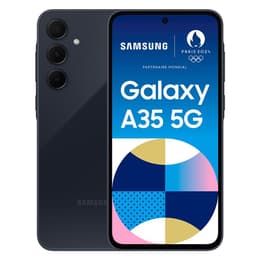
Galaxy A35
Galaxy A35
Starting at

Refurbished price:206.00

Versus €431.43 new

See options
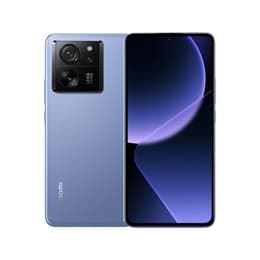
Xiaomi 13T
Xiaomi 13T
Starting at

Refurbished price:183.00

Versus €630.00 new

See options

Ratings

The Samsung Galaxy A35 (2024) and the Xiaomi 13T (2023) are both Android smartphones that offer a blend of features for everyday use. While the Galaxy A35 was released more recently, the Xiaomi 13T arrived in the market several months prior. Both devices run on the Android operating system, with the Galaxy A35 launching with Android 14 and the Xiaomi 13T with Android 13, influencing their respective software support timelines. A key differentiator lies in their camera systems and display technologies, catering to slightly different user preferences.

Scores

Durability

When considering the long-term usability of a smartphone, software support and physical resilience are important factors. Both the Galaxy A35 and the Xiaomi 13T offer substantial longevity in terms of software updates.

  • Software Support: The Samsung Galaxy A35, launched in March 2024, is promised four generations of Android OS upgrades and five years of security updates, extending its support until Android 18 and security patches until 2029. The Xiaomi 13T, released in September 2023, also receives four Android OS upgrades and five years of security patches, meaning it will be supported up to Android 17 and receive security updates until 2028. This indicates a similar commitment to keeping devices current and secure over several years.
  • Physical Durability: The Galaxy A35 features a glass back and a plastic frame, along with an IP67 rating for dust and water resistance. The Xiaomi 13T offers a glass front with Gorilla Glass 5 protection, a choice of glass or PU (polyurethane) for the back, a plastic frame, and a higher IP68 rating for dust and water resistance. The Xiaomi 13T's IP68 rating suggests a slightly greater degree of protection against immersion in water compared to the Galaxy A35's IP67 rating.
  • Practical Lifespan: Both phones are designed to offer a practical lifespan of several years, supported by their robust update policies and decent build quality. Users can expect both devices to remain functional and secure for an extended period, making them suitable for those seeking a quality-assured refurbished option.

Year of Release

2024

2023

Compatible with latest Update

Yes

Yes

OS

Android

Android

Foldable

No

No

Performance

The performance of a smartphone is crucial for daily tasks, app usage, and multitasking. Both the Galaxy A35 and Xiaomi 13T are equipped to handle common demands, though they approach performance with different internal components.

  • Processing Power: The Galaxy A35 is powered by an octa-core processor that provides smooth operation for regular tasks like browsing and using productivity applications. However, for graphically intensive games, some users might notice occasional slowdowns when settings are increased. The Xiaomi 13T features a different current-generation processor, which is noted for its excellent performance, handling demanding applications and multitasking smoothly. It is also described as efficient for gaming, even with titles like Genshin Impact.
  • Multitasking and Storage: The Galaxy A35 is available with 6GB or 8GB of RAM and 128GB or 256GB of internal storage, with the added benefit of expandable storage via a microSD card up to 1TB. The Xiaomi 13T comes with 8GB or 12GB of RAM and 256GB of internal storage, but it does not offer expandable storage. For users who frequently switch between many applications or require extensive local storage for media and files, these differences in RAM and storage options could be a deciding factor.
  • System Responsiveness: Both devices offer a responsive user experience for general navigation and app launching. The Xiaomi 13T's processor, combined with its display, contributes to a fluid feel, particularly in fast-paced interactions.

Memory (GB)

6 GB

8 GB

Screen quality

The display is a primary interface for smartphone interaction, and both devices offer vibrant viewing experiences with distinct characteristics.

  • Display Technology and Clarity: The Samsung Galaxy A35 features a 6.6-inch Super AMOLED display with a resolution of 2340x1080 pixels (FHD+), providing clear and vibrant visuals. The Xiaomi 13T has a slightly larger 6.67-inch AMOLED display with a higher resolution of 2712x1220 pixels (1.5K), which translates to a sharper image. Both displays offer deep blacks and rich colors characteristic of AMOLED panels.
  • Brightness and Outdoor Visibility: The Galaxy A35's display can reach a peak brightness of 1000 nits in High Brightness Mode (HBM), making it generally visible indoors, though direct sunlight can sometimes pose a challenge. The Xiaomi 13T boasts a higher peak brightness of 2600 nits and a HBM of 1200 nits, which significantly enhances outdoor readability even in bright conditions.
  • Refresh Rate and Smoothness: The Galaxy A35 offers a 120Hz adaptive refresh rate, contributing to smooth scrolling and animations. The Xiaomi 13T surpasses this with an adaptive refresh rate of up to 144Hz, providing an even smoother visual experience, particularly noticeable in fast-moving content and gaming.

Resolution

1080 x 2340

1220 x 2712

Screen type

Super AMOLED

AMOLED

Audiovisual

Photography and videography capabilities are often a key consideration for smartphone users, and both the Galaxy A35 and Xiaomi 13T offer capable camera systems with different strengths.

  • Rear Camera System: The Galaxy A35 features a triple camera setup on the rear, including a 50MP main camera with optical image stabilization (OIS), an 8MP ultrawide lens, and a 5MP macro camera. It is noted for good image and video capture, especially with its main camera in daylight. The Xiaomi 13T also has a triple rear camera system, co-engineered with Leica, featuring a 50MP main camera with OIS, a 50MP telephoto lens with 2x optical zoom, and a 12MP ultrawide camera. The inclusion of a dedicated telephoto lens on the Xiaomi 13T provides greater versatility for zoomed shots.
  • Low-Light and Video Performance: Both devices are capable of recording video at up to 4K resolution at 30 frames per second (fps) with their main cameras. The Galaxy A35 is highlighted for its ability to capture clear images even in low-light conditions. The Xiaomi 13T's Leica-tuned cameras are designed to deliver high-quality images with good color reproduction and contrast, even in challenging lighting.
  • Front Camera and Audio: For selfies, the Galaxy A35 is equipped with a 13MP front-facing camera. The Xiaomi 13T offers a higher resolution 20MP front camera. Both phones include stereo speakers, enhancing the media consumption experience.

Main camera

50 megapixels

50 megapixels

Front camera

13 megapixels

20 megapixels

Miscellaneous

Beyond core features, several practical elements contribute to the overall user experience and daily convenience of a smartphone.

  • Connectivity and Ports: Both the Galaxy A35 and Xiaomi 13T support 5G connectivity, ensuring access to faster mobile networks. They both feature a USB-C port for charging and data transfer. Neither device includes a traditional 3.5mm headphone jack. The Xiaomi 13T supports Wi-Fi 7 and Bluetooth 5.4, offering more advanced wireless connectivity compared to the Galaxy A35.
  • Biometric Security: Both smartphones incorporate an under-display fingerprint sensor for secure and convenient unlocking. The Galaxy A35 also offers a less secure face scanner via the front-facing camera.
  • Design and Handling: The Galaxy A35 measures 161.7 x 78 x 8.2 mm and weighs 209 grams, making it a relatively large and substantial device. The Xiaomi 13T has similar dimensions, starting from 162.2mm x 75.7mm x 8.49mm and weighing from 193 grams, offering a comparable in-hand feel. The Galaxy A35 features a flat-sided design with rounded corners.

Weight

209 g

193 g

Screen size (in)

6.6

6.67

Network

5G

5G

SIM card

Dual Physical SIM

Dual Physical SIM

Carrier compatibility

Unlocked

Unlocked

Connector

USB-C

USB-C

The Samsung Galaxy A35 and Xiaomi 13T both present compelling options in the Android smartphone market, each with distinct advantages that cater to different user priorities. User feedback for the Galaxy A35 often praises its vibrant display, dependable cameras, and long-term software support. Some common criticisms include gaming performance that could be better and battery life that is considered average by some, though others report it lasting a full day or more. The Xiaomi 13T is frequently lauded for its excellent performance, impressive display with a high refresh rate, and capable camera system co-engineered with Leica. However, some users have noted that its battery life, while generally lasting a full day, might require daily charging for heavy users.

Users prioritizing a slightly more robust build with a higher IP rating and a display with superior peak brightness for outdoor use, along with a dedicated telephoto camera, may find the Xiaomi 13T well-suited to their needs. Its stronger processing power also makes it a good fit for mobile gamers or those who frequently use demanding applications. Conversely, users who value expandable storage, a slightly newer release date for extended software support, and a generally reliable camera system for everyday photography might lean toward the Samsung Galaxy A35. Both devices offer a solid foundation for daily use, and choosing a quality-assured refurbished option for either can be an eco-friendly alternative to purchasing new.


See all articles

Our recent comparisons