

Samsung

Compare models
Differences at a glance
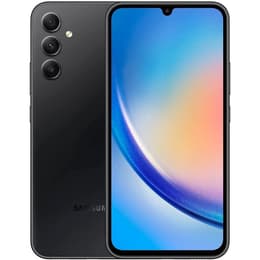
The Samsung Galaxy A34, released in March 2023, and the Xiaomi Redmi Note 13 Pro+, launched in September 2023 (globally in January 2024), are both contemporary smartphones designed to offer a comprehensive mobile experience. While both devices operate on the Android platform, they present distinct approaches to design, performance, and camera capabilities. This comparison will explore their core differences to help users understand which device might better suit their daily needs.
Colour
Storage
When considering the long-term usability of a smartphone, factors like software support and physical resilience are key. Both the Galaxy A34 and the Redmi Note 13 Pro+ offer robust foundations, but with some distinctions in their expected lifespans and durability features.
Year of Release
Compatible with latest Update
OS
Foldable
The performance of a smartphone is largely determined by its internal processing power, memory, and storage capabilities, influencing how smoothly applications run and how efficiently multitasking is handled.
The display is a primary interface for smartphone interaction, and both the Galaxy A34 and Redmi Note 13 Pro+ offer vibrant viewing experiences, though with some key differences in their specifications.
Resolution
Screen type
Photography and videography capabilities are often a deciding factor for many users, and both the Galaxy A34 and Redmi Note 13 Pro+ offer versatile camera systems with distinct strengths.
Main camera
Front camera
Beyond the core specifications, several practical features contribute to the overall user experience, from connectivity to physical design and security.
Weight
Screen size (in)
Network
SIM card
Carrier compatibility
Connector
The Samsung Galaxy A34 and Xiaomi Redmi Note 13 Pro+ both present compelling options in the smartphone market, each with a distinct set of advantages that cater to different user priorities. User feedback often highlights the Galaxy A34's reliable software support and consistent performance for everyday tasks. Its IP67 rating and Gorilla Glass 5 provide a good level of durability for general use. Some users appreciate its expandable storage, offering flexibility for media and app management. Criticisms sometimes point to its design, which some find less modern compared to competitors.
The Redmi Note 13 Pro+, on the other hand, frequently receives praise for its striking display with higher resolution and brightness, its significantly faster charging capabilities, and its higher-resolution main camera. Its IP68 rating and Gorilla Glass Victus also offer a higher degree of protection. Some user discussions indicate that while its performance is strong, battery efficiency might be a point of consideration for very heavy users, though recent software updates have shown improvements. The lack of expandable storage is also a noted difference.
Users prioritizing long-term software updates and expandable storage for media and files may find the Samsung Galaxy A34 well-suited to their needs. Conversely, users who value a more vibrant and sharper display, faster charging speeds, and a higher-resolution camera for detailed photography may lean towards the Xiaomi Redmi Note 13 Pro+. Both devices offer a solid Android experience, and choosing between them often comes down to these specific feature preferences. For those seeking an eco-friendly and quality-assured alternative, considering a refurbished version of either model can be a smart choice.