

Compare models

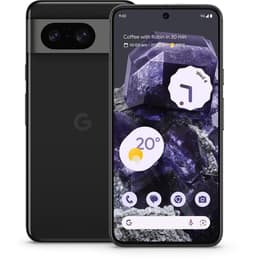
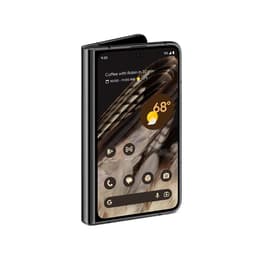
Google Pixel 8a Vs Google Pixel Fold

  • 1-year minimum warranty
  • Free delivery on all orders
  • Free 30-day returns
Google Pixel 8a
Starting at

Refurbished price:264.00

Versus €549.00 new

See options
Google Pixel Fold
Starting at

Refurbished price:422.00

Versus €1,734.65 new

See options

Differences at a glance

The Google Pixel 8a, released in May 2024, is a traditional smartphone offering, while the Google Pixel Fold, launched in June 2023, introduces a foldable design. These devices cater to different user preferences, with the Pixel 8a focusing on a compact, conventional experience and the Pixel Fold providing an expansive screen for enhanced productivity and media consumption. Both run on Google's Android operating system, offering a consistent software experience with unique hardware implementations.

Available Models

Colour

Storage (GB)

Scores

Durability

When considering the long-term usability of these devices, their release timelines and software support policies are key differentiators.

  • Software Longevity: The Pixel 8a benefits from Google's extended support policy, promising seven years of operating system and security updates, extending its software lifespan until at least May 2031. In contrast, the Pixel Fold, released earlier, is set to receive five years of updates, with support continuing until at least June 2028.
  • Physical Durability: The Pixel 8a features an IP67 rating for dust and water resistance and Gorilla Glass 3 for screen protection, offering robust protection against everyday elements. The Pixel Fold, designed with a more complex folding mechanism, has an IPX8 water resistance rating, meaning it can withstand submersion in water, but lacks official dust resistance. Its cover screen uses Gorilla Glass Victus, while the inner folding screen has a plastic protective layer.
  • Expected Practical Lifespan: Users seeking the longest possible software support and a more conventional, sealed design may find the Pixel 8a a suitable choice for extended use. The Pixel Fold, while offering a unique form factor, introduces additional considerations regarding the longevity of its folding display and hinge mechanism, though Google markets it with a durable hinge.

Year of Release

2024

2023

Compatible with latest Update

Yes

Yes

OS

Android

Android

Foldable

No

Yes

Performance

The processing capabilities and overall responsiveness of these devices vary due to their different generations of internal components.

  • Processing Power: The Pixel 8a is equipped with a newer generation processor, which generally translates to faster app loading times and smoother transitions between applications. The Pixel Fold utilizes an earlier generation processor, which still handles everyday tasks efficiently but may show limitations with more demanding applications or intensive multitasking compared to the 8a.
  • Multitasking and Responsiveness: The Pixel Fold comes with a larger amount of RAM, which can be beneficial for keeping many applications open simultaneously and switching between them without noticeable delays, especially when utilizing its expansive inner display. The Pixel 8a, with its slightly less RAM, still offers a responsive experience for typical smartphone usage, with users reporting snappy operation for daily tasks.
  • Battery Behavior: The Pixel 8a has a battery capacity that generally provides a full day of moderate use, though some heavy users have noted the need for more frequent charging. The Pixel Fold features a larger battery capacity, designed to power its dual-screen setup, and users often report good battery life for media consumption, though demanding tasks can still impact its duration.

Screen quality

The display experience is a primary distinguishing factor between the Pixel 8a and the Pixel Fold, offering different approaches to visual interaction.

  • Display Technology and Clarity: The Pixel 8a features a 6.1-inch OLED display, providing deep blacks and vibrant colors with a resolution of 1080x2400 pixels, resulting in a clear viewing experience for a traditional smartphone. The Pixel Fold offers two OLED displays: a 5.8-inch cover screen and a 7.6-inch inner folding screen. Both provide high resolution and vibrant colors, with the larger inner screen offering an immersive tablet-like experience when unfolded.
  • Brightness and Refresh Rate: Both devices feature a 120Hz refresh rate, contributing to smooth scrolling and fluid animations. The Pixel 8a boasts a peak brightness of 2000 nits, ensuring good visibility even in bright outdoor conditions. The Pixel Fold's cover screen reaches 1550 nits peak brightness, and its inner screen reaches 1450 nits, which is generally sufficient for most environments, though some users note the inner screen can be less bright in direct sunlight.
  • Viewing Experience: The Pixel 8a provides a consistent, high-quality display in a compact form factor. The Pixel Fold's main advantage is its adaptable screen, allowing users to switch between a standard smartphone experience and a larger, more expansive canvas ideal for multitasking, reading, and media consumption.

Resolution

1080 x 2400

1840 x 2208

Screen type

OLED

Foldable OLED

Audiovisual

Both Pixel devices are known for their camera capabilities, leveraging Google's computational photography, but they feature different hardware setups.

  • Rear Camera System: The Pixel 8a includes a dual-camera system with a 64MP main sensor and a 13MP ultrawide lens, capable of capturing detailed photos and wide-angle shots. The Pixel Fold offers a triple-camera setup on the rear, comprising a 48MP main sensor with optical image stabilization, a 10.8MP ultrawide lens, and a 10.8MP telephoto lens, providing more versatility with optical zoom capabilities.
  • Photography Performance: Both devices excel in everyday photography, producing images with accurate colors and good dynamic range, a hallmark of Pixel phones. The Pixel Fold's dedicated telephoto lens offers an advantage for zoomed-in shots, while the Pixel 8a's higher megapixel main sensor can capture fine details. Low-light performance is strong on both, benefiting from Google's software processing.
  • Video and Audio: Both phones offer quality video recording, with the Pixel 8a supporting 4K at 30/60fps and the Pixel Fold also providing strong video capabilities. For audio, both devices deliver clear microphone quality for calls and recordings, and their stereo speakers provide a good experience for media consumption.

Main camera

64 megapixels

48 megapixels

Front camera

13 megapixels

8 megapixels

Miscellaneous

Beyond core features, several practical elements contribute to the overall user experience and differentiate these two Pixel devices.

  • Connectivity and Ports: Both the Pixel 8a and Pixel Fold support 5G connectivity and modern Wi-Fi standards, ensuring fast internet speeds. They both utilize a USB-C port for charging and data transfer, but neither includes a traditional 3.5mm headphone jack. The Pixel Fold's USB-C port is a faster 3.2 Gen 2 standard.
  • Biometric Security: Both devices incorporate an in-display fingerprint sensor for secure unlocking. The Pixel 8a also offers face unlock. User feedback for the Pixel 8a's in-display fingerprint sensor has been mixed, with some finding it unreliable.
  • Physical Design and Handling: The Pixel 8a is a compact and lightweight device, weighing 188g, making it comfortable for one-handed use. The Pixel Fold, due to its folding design and larger internal components, is significantly heavier at 283g and thicker when folded, impacting its portability and one-handed usability. Its unique form factor, however, allows for a much larger screen in a device that can still fit in a pocket.

Weight

188 g

283 g

Screen size (in)

6.1

7.6

Network

5G

5G

SIM card

Physical SIM + eSIM

Physical SIM + eSIM

Carrier compatibility

Unlocked

Unlocked

What the community thinks

The Google Pixel 8a and Google Pixel Fold offer distinct smartphone experiences, each with its own set of advantages tailored to different user needs. The Pixel 8a is often praised for its consistent performance, reliable camera system, and extended software support, making it a solid choice for users who value longevity and a traditional, compact form factor. Some users have noted concerns regarding its battery life under heavy usage and charging speed.

The Pixel Fold, on the other hand, receives commendation for its innovative folding design, which provides an expansive display for media consumption and multitasking. Its cameras are also highly regarded, benefiting from Google's image processing. However, some users have expressed concerns about the durability of the inner screen and hinge over time, and its heavier, thicker build can be a consideration for daily handling. The performance of its processor, while capable, is a generation older than the 8a's.

Users prioritizing a long-lasting device with the latest software updates and a conventional, pocketable design may find the Pixel 8a well-suited to their needs. Those who desire a versatile device with a large, immersive screen for productivity and entertainment, and are comfortable with a more substantial form factor, might lean towards the Pixel Fold. Both devices represent quality-assured refurbished options, providing an eco-friendly alternative for consumers looking to make informed and sustainable choices.




