
Galaxy A25 Vs iPhone 14 Pro

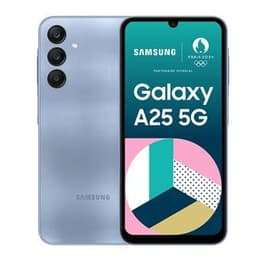
Galaxy A25
Galaxy A25
Starting at

Refurbished price:134.00

Versus €319.11 new

See options
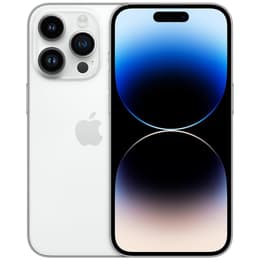
iPhone 14 Pro
iPhone 14 Pro
Starting at

Refurbished price:423.00

Versus €1,339.00 new

See options

Ratings

The Samsung Galaxy A25, released in December 2023, and the Apple iPhone 14 Pro, launched in September 2022, represent distinct approaches to smartphone design and functionality. While the Galaxy A25 operates on Android with Samsung's One UI, the iPhone 14 Pro runs on Apple's iOS platform. Key differentiators include their operating systems, display technologies, and camera capabilities, catering to different user preferences and ecosystems.

Scores

Durability

When considering the longevity of these devices, both offer substantial software support, though with differing timelines and ecosystems.

  • Release Timeline and Age: The iPhone 14 Pro was released in September 2022, making it an older model compared to the Galaxy A25, which launched in December 2023. This difference in release dates impacts their respective software support cycles.
  • OS Support Duration: Apple typically provides iOS updates for its iPhones for approximately five to seven years from their initial release. For the iPhone 14 Pro, this suggests software support could extend until around 2029. The Samsung Galaxy A25 is expected to receive four years of Android OS updates and five years of security updates, offering a solid period of software relevance.
  • Expected Practical Lifespan: Both devices are built to last, with their practical lifespan often extending beyond official software support, especially for users who prioritize functionality over the latest features. The iPhone 14 Pro's robust build and consistent software updates contribute to a long usable life, while the Galaxy A25's commitment to several years of updates ensures continued usability and security.

Year of Release

2023

2022

Compatible with latest Update

Yes

Yes

OS

Android

iOS

Foldable

No

No

Performance

Performance is a key area where these two smartphones offer different experiences, influenced by their underlying hardware and software optimization.

  • Processor Capabilities: The iPhone 14 Pro features a powerful current-generation processor designed for demanding applications and smooth multitasking. This allows for fluid navigation, rapid app loading, and high-performance gaming. The Galaxy A25 is equipped with an octa-core processor that handles everyday tasks efficiently, providing a responsive experience for general use and moderate gaming.
  • Storage and RAM: The iPhone 14 Pro offers a range of storage options from 128GB up to 1TB, paired with 6GB of RAM, providing ample space and efficient multitasking for most users. The Galaxy A25 comes with 6GB or 8GB of RAM and storage options of 128GB or 256GB, expandable via microSD card up to 1TB, offering flexibility for users who need more storage for media and files.
  • Battery Behavior: The iPhone 14 Pro, with its 3200 mAh battery, is optimized for efficiency, providing up to 23 hours of video playback. In real-world usage, it typically offers over 10 hours of screen-on time. The Galaxy A25 houses a larger 5000 mAh battery, designed to last a full day of typical use, with some reports indicating up to 13 hours and 10 minutes of video playback.

Memory (GB)

6 GB

6 GB

Screen quality

The visual experience on both devices is shaped by their display technologies, offering distinct characteristics in clarity, brightness, and smoothness.

  • Display Technology and Clarity: The iPhone 14 Pro features a 6.1-inch Super Retina XDR OLED display, known for its deep blacks, vibrant colors, and sharp 2556x1179 pixel resolution at 460 pixels per inch. The Galaxy A25 sports a larger 6.5-inch Super AMOLED display with a Full HD+ resolution of 1080 x 2340 pixels, delivering rich colors and good detail for media consumption.
  • Brightness and Outdoor Visibility: The iPhone 14 Pro excels in brightness, offering a typical maximum of 1000 nits and a peak outdoor brightness of up to 2000 nits, ensuring excellent visibility even in direct sunlight. The Galaxy A25 also provides a bright viewing experience with up to 1000 nits in High Brightness Mode (HBM), which enhances outdoor readability.
  • Refresh Rate and Smoothness: Both devices feature a 120Hz refresh rate for smoother scrolling and more fluid animations. The iPhone 14 Pro's ProMotion technology offers an adaptive refresh rate that can scale down to 1Hz to conserve battery life. The Galaxy A25 maintains a consistent 120Hz refresh rate for a smooth user interface.

Resolution

1080x2340

1179 x 2556

Screen type

Super AMOLED

LTPO Super Retina XDR OLED

Audiovisual

The camera systems on the Galaxy A25 and iPhone 14 Pro are designed for different levels of photographic versatility and image quality.

  • Rear Camera System: The iPhone 14 Pro boasts a Pro camera system with a 48MP main sensor featuring second-generation sensor-shift optical image stabilization, a 12MP ultrawide lens with a 120-degree field of view, and a 12MP 3x telephoto lens with optical image stabilization. The Galaxy A25 includes a triple camera setup with a 50MP main sensor with optical image stabilization, an 8MP ultrawide lens, and a 2MP macro lens.
  • Photography Performance: The iPhone 14 Pro is recognized for its advanced image processing, delivering detailed photos with accurate colors and strong low-light performance, further enhanced by features like Photonic Engine and Apple ProRAW. The Galaxy A25's 50MP main camera performs well in various conditions, producing clear images, though some users note slight oversaturation in colors. Its ultrawide and macro lenses offer additional shooting perspectives.
  • Video Recording Capabilities: The iPhone 14 Pro offers extensive video features, including 4K recording at up to 60fps, Cinematic mode up to 4K HDR at 30fps, and Action mode for stabilized footage. It also supports ProRes video recording. The Galaxy A25 can record video at 4K resolution at 30fps with its rear camera, and 1080p at 30fps with its front camera.

Main camera

50 megapixels

48 megapixels

Front camera

13 megapixels

12 megapixels

Miscellaneous

Beyond core features, several practical elements contribute to the overall user experience and daily usability of these smartphones.

  • Connectivity Options: Both devices support 5G connectivity for fast mobile data speeds. The iPhone 14 Pro includes Wi-Fi 6 and Bluetooth 5.3. The Galaxy A25 supports Wi-Fi 802.11 a/b/g/n/ac and Bluetooth 5.3.
  • Ports and Sensors: The iPhone 14 Pro utilizes a Lightning port for charging and data transfer and lacks a 3.5mm headphone jack. It features Face ID for secure authentication and a LiDAR scanner for enhanced augmented reality and low-light focusing. The Galaxy A25 includes a USB-C port and retains a 3.5mm headphone jack, offering more traditional connectivity. It uses a side-mounted fingerprint sensor for biometric security.
  • Build Materials and Handling: The iPhone 14 Pro features a premium build with a Ceramic Shield front cover and a stainless steel frame, contributing to its durability and a solid in-hand feel. The Galaxy A25 has a glass front and a plastic back, offering a lighter build. Its dimensions are 161 x 76.5 x 8.3 mm and it weighs 197g. The iPhone 14 Pro is slightly more compact at 147.5 x 71.5 x 7.85 mm and weighs 206g.

Weight

197 g

206 g

Screen size (in)

6.5

6.1

Network

5G

5G

SIM card

Physical SIM

Physical SIM + eSIM

Carrier compatibility

Unlocked

Unlocked

Connector

USB-C

Lightning

User feedback for the Samsung Galaxy A25 often highlights its strong battery life and vibrant Super AMOLED display as significant advantages. Some users have noted concerns regarding intermittent slow performance, particularly with the 4GB RAM variant, and occasional connectivity issues. The side-mounted fingerprint sensor has also been described as somewhat slow by some users. Conversely, the iPhone 14 Pro receives consistent praise for its exceptional camera system, powerful performance, and the immersive experience provided by its advanced OLED display and Dynamic Island feature. While its battery life is generally considered good, some users have observed that it doesn't always offer a substantial improvement over previous Pro models despite efficiency gains.

Users prioritizing a highly refined software experience, top-tier camera capabilities, and a compact, premium build will find the iPhone 14 Pro well-suited to their needs. Its robust ecosystem and long-term software support make it a compelling choice for those seeking a device that remains current for an extended period. On the other hand, users who value a larger display, expandable storage, a traditional headphone jack, and extended battery life for everyday use may prefer the Galaxy A25. It offers a capable Android experience with a strong commitment to software updates, making it a practical option for those who appreciate flexibility and a more accessible feature set.

Both devices are available as quality-assured refurbished options, providing an eco-friendly alternative for consumers looking to make a sustainable choice.


See all articles

Our recent comparisons