

Galaxy A23 5G Vs iPhone 11

Galaxy A23 5G
Galaxy A23 5G
Starting at

Refurbished price:108.00

Versus €600.00 new

See options
iPhone 11
iPhone 11
Starting at

Refurbished price:149.00

Versus €589.00 new

See options

Ratings

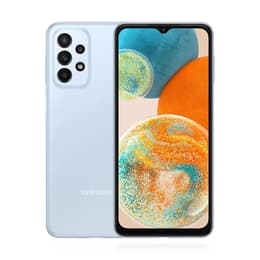
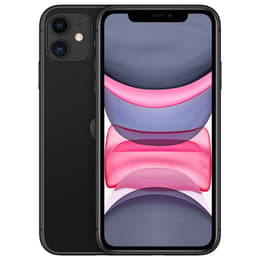
The Samsung Galaxy A23 5G, released in August 2022, and the Apple iPhone 11, launched in September 2019, represent different approaches to smartphone design and functionality. While the Galaxy A23 5G operates on the Android platform, offering a customizable experience, the iPhone 11 runs on Apple's iOS, known for its integrated ecosystem. Key differentiators include their display technologies, camera systems, and connectivity options.

Scores

Durability

The practical lifespan of a smartphone is influenced by its release timeline, software support, and physical durability. These two devices, despite their different launch dates, offer distinct longevity prospects.

  • Release Timeline: The iPhone 11 was released in September 2019, making it an older model compared to the Galaxy A23 5G, which launched in August 2022. This difference in age impacts their remaining software support cycles.
  • Software Longevity: Apple typically provides iOS updates for its devices for approximately 5-6 years from their release. The iPhone 11, having been discontinued in September 2022, still receives updates, but its update cycle is naturally shorter than a more recently released device. Samsung generally offers 2-3 major Android OS updates and around 4 years of security updates for its A-series phones, meaning the Galaxy A23 5G, being newer, is likely to receive software support for a longer period from the current date.
  • Physical Durability: The iPhone 11 features a glass front and back with an aluminum frame and boasts an IP68 rating for dust and water resistance, allowing submersion up to 2 meters for 30 minutes. The Galaxy A23 5G has a plastic back and frame, with a Gorilla Glass 5 front for screen protection, but lacks an official IP rating for water and dust resistance.

Year of Release

2022

2019

Compatible with latest Update

Yes

Yes

OS

Android

iOS

Foldable

No

No

Performance

Performance in smartphones is about how smoothly tasks are handled, from everyday browsing to more demanding applications. Both devices offer capable performance for their respective ecosystems.

  • Everyday Responsiveness: The iPhone 11, powered by its custom-designed processor, delivers a fluid user experience, handling app launches, multitasking, and general navigation with consistent speed. The Galaxy A23 5G, equipped with a modern octa-core processor, provides efficient performance for daily tasks and can manage multiple applications simultaneously without significant slowdowns.
  • Demanding Applications and Gaming: For graphically intensive games and heavy applications, the iPhone 11's processing unit offers robust capabilities, ensuring smooth gameplay and quick rendering. The Galaxy A23 5G's processor is designed to handle current-generation games and demanding apps, providing a responsive experience, though it may not match the peak performance of higher-end devices.
  • Storage and Multitasking: The iPhone 11 comes with 4GB of RAM and storage options up to 256GB, which is not expandable. The Galaxy A23 5G offers configurations with 4GB, 6GB, or 8GB of RAM and 64GB or 128GB of internal storage, with the added flexibility of expanding storage up to 1TB via a microSD card. This expandable storage is a practical benefit for users who need significant space for media and files.

Memory (GB)

4 GB

4 GB

Screen quality

The display is a primary interface for any smartphone, and these two models offer different visual experiences tailored to their respective designs.

  • Display Technology and Clarity: The iPhone 11 features a 6.1-inch Liquid Retina IPS LCD display with a resolution of 1792 x 828 pixels, resulting in a pixel density of 326 pixels per inch (ppi). This provides clear visuals for most content. The Galaxy A23 5G sports a larger 6.6-inch PLS LCD display with a higher resolution of 1080 x 2408 pixels, offering a sharper image with approximately 400 ppi.
  • Brightness and Outdoor Visibility: The iPhone 11's display offers a typical maximum brightness of 625 nits, which contributes to good visibility in various lighting conditions, including outdoors. The Galaxy A23 5G's display also provides adequate brightness for everyday use, though specific nits values are not as widely highlighted as for the iPhone.
  • Refresh Rate and Smoothness: A notable difference is the refresh rate. The iPhone 11 has a standard 60Hz refresh rate, providing a smooth experience for typical interactions. The Galaxy A23 5G, however, features a 120Hz refresh rate, which results in noticeably smoother scrolling and more fluid animations, enhancing the visual experience, especially during gaming or fast-paced content consumption.

Resolution

1080 x 2408

828 x 1792

Screen type

PLS LCD

Liquid Retina IPS LCD

Audiovisual

Camera capabilities are a significant factor for many users, and both devices offer distinct strengths in capturing photos and videos.

  • Rear Camera Systems: The iPhone 11 features a dual 12MP camera system, comprising a wide lens with optical image stabilization (OIS) and an ultrawide lens. It is known for its consistent image processing and the introduction of Night mode for improved low-light photography, as well as Deep Fusion for enhanced detail in various lighting. The Galaxy A23 5G boasts a quad-camera setup with a 50MP main sensor with OIS, a 5MP ultrawide, a 2MP macro, and a 2MP depth sensor. This offers more versatility in shot types, particularly with dedicated macro and depth sensors.
  • Video Recording Quality: The iPhone 11 supports 4K video recording at up to 60 frames per second (fps), offering high-resolution and smooth video capture. The Galaxy A23 5G records video at 1080p at 30fps, which is suitable for general use but offers less detail and frame rate flexibility than the iPhone 11.
  • Front Camera and Audio: For selfies and video calls, the iPhone 11 has a 12MP front camera capable of 4K video recording. The Galaxy A23 5G features an 8MP front camera, recording at 1080p. Both devices provide clear audio for calls and media consumption, with the iPhone 11 supporting spatial audio and Dolby Atmos for an immersive sound experience.

Main camera

50 megapixels

12 megapixels

Front camera

8 megapixels

12 megapixels

Miscellaneous

Beyond core features, several practical elements contribute to the overall user experience and daily convenience of these smartphones.

  • Connectivity and Ports: The Galaxy A23 5G supports 5G connectivity, offering faster mobile data speeds where available, along with Wi-Fi 5 (802.11ac) and Bluetooth 5.1. It uses a USB-C port for charging and data transfer and retains a 3.5mm headphone jack. The iPhone 11 is limited to 4G LTE but features Wi-Fi 6 (802.11ax) for faster wireless internet and Bluetooth 5.0. It uses Apple's proprietary Lightning port and does not have a headphone jack.
  • Biometric Security: The iPhone 11 relies on Face ID for secure facial recognition, providing a convenient and robust biometric authentication method. The Galaxy A23 5G incorporates a side-mounted fingerprint scanner, offering a quick and accessible way to unlock the device and authenticate payments.
  • Design and Handling: The iPhone 11 measures 150.9 x 75.7 x 8.3 mm and weighs 194g, offering a compact feel for a 6.1-inch device. The Galaxy A23 5G is larger at 165.4 x 76.9 x 8.4 mm and weighs 197g, which is expected given its larger 6.6-inch display. The iPhone 11 features a more premium glass and aluminum construction, while the Galaxy A23 5G utilizes a plastic build.

Weight

197 g

194 g

Screen size (in)

6.6

6.1

Network

5G

4G

SIM card

Dual Physical SIM

Physical SIM + eSIM

Carrier compatibility

Unlocked

Unlocked

Connector

USB-C + Jack 3.5mm

Lightning

When considering the Samsung Galaxy A23 5G and the iPhone 11, user priorities play a significant role in determining the more suitable device. Users frequently praise the iPhone 11 for its consistent performance, reliable camera system with features like Night mode, and the long-term software support characteristic of Apple devices. Common criticisms, particularly in the current market, often revolve around its older LCD display technology and the absence of 5G connectivity. For the Galaxy A23 5G, users appreciate its large, high-refresh-rate display, expandable storage, and the inclusion of 5G connectivity, offering a more modern Android experience. Its larger battery capacity is also a frequent highlight. Some users might find its plastic build less premium compared to glass-backed phones, and its camera performance, while versatile, may not always match the computational photography strengths of the iPhone in certain scenarios.

Users prioritizing a smooth, long-supported operating system, strong video capabilities, and a compact, premium build may prefer the iPhone 11. Its Face ID system and integrated ecosystem are also strong draws. Conversely, users who value a larger, smoother display with a high refresh rate, the flexibility of expandable storage, a versatile quad-camera setup, and future-proof 5G connectivity will find the Galaxy A23 5G well-suited to their needs. The availability of these devices as quality-assured refurbished options provides an eco-friendly alternative for consumers looking to make informed and sustainable choices.

See all articles

Our recent comparisons







