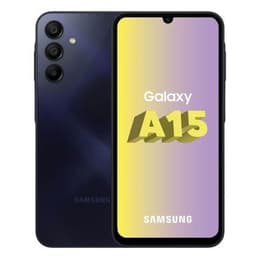
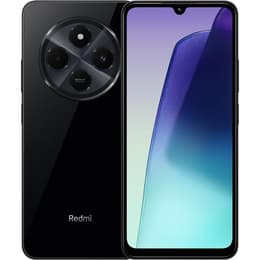


Galaxy A15 Vs Xiaomi Redmi 14C

Galaxy A15
Galaxy A15
Starting at

Refurbished price:124.00

Versus €189.00 new

See options
Xiaomi Redmi 14C
Xiaomi Redmi 14C
Starting at

Refurbished price:128.20

Versus €189.00 new

See options

Ratings

The Samsung Galaxy A15, released in December 2023, and the Xiaomi Redmi 14C, launched in August 2024, are both smartphones designed to offer essential features for everyday use. While both devices operate on the Android platform, they present different approaches to display technology, processing power, and overall user experience. This comparison will explore their practical differences to help users determine which device best suits their needs.

Scores

Durability

When considering the long-term usability of a smartphone, factors like software support and physical resilience are key. Both the Galaxy A15 and Redmi 14C offer a reasonable expected lifespan for their category.

  • Software Longevity: The Samsung Galaxy A15 is notable for its commitment to software updates, promising four major Android operating system upgrades and five years of security patches, extending its support until 2029. The Xiaomi Redmi 14C, running on Android 14 with HyperOS, guarantees security updates until September 2028, though specific details on major OS upgrades are less defined.
  • Physical Durability: The Galaxy A15 features a plastic back and frame with a glass front, while the Redmi 14C offers a glass front, plastic frame, and options for a glass or eco-leather back. Both devices are built to withstand typical daily handling, with user reviews suggesting the Redmi 14C has a sturdy and well-made casing.
  • Repairability: While specific repairability scores are not widely available for either model, both are designed with components that are generally accessible for common repairs, contributing to their practical lifespan.

Year of Release

2023

2024

Compatible with latest Update

Yes

Yes

OS

Android

Android

Foldable

No

No

Performance

The performance of a smartphone dictates how smoothly applications run and how efficiently it handles daily tasks. Both the Galaxy A15 and Redmi 14C are equipped to manage common usage scenarios, though with differing underlying hardware.

  • Processing Capabilities: The Samsung Galaxy A15 (5G variant) is powered by a processor that handles everyday applications and light multitasking adequately. Users report that while single applications run fine, there can be slight delays when loading apps or switching between multiple tasks. The Xiaomi Redmi 14C features a processor designed for general use, capably managing basic tasks like social media browsing, messaging, and light gaming. Some users might experience minor stutters during heavy multitasking.
  • Multitasking and Storage: Both devices offer various RAM configurations, typically ranging from 4GB to 8GB, which influences how many applications can run simultaneously without slowdowns. The Redmi 14C also supports memory extension, allowing it to utilize a portion of its storage as virtual RAM for enhanced multitasking. Both provide 128GB or 256GB of internal storage, expandable via a microSD card, offering ample space for apps and media.
  • Battery Behavior: Both smartphones are equipped with large batteries, with the Galaxy A15 featuring a 5000mAh capacity and the Redmi 14C a 5160mAh capacity. Users generally find that both devices can last a full day on a single charge, even with moderate to heavy use. The Galaxy A15 supports 25W fast charging, while the Redmi 14C supports 18W fast charging.

Memory (GB)

4 GB

4 GB

Screen quality

The display is a primary interface for smartphone interaction, and both devices offer distinct visual experiences.

  • Display Technology and Clarity: The Samsung Galaxy A15 features a 6.5-inch Super AMOLED display, known for its deep blacks, vibrant colors, and excellent contrast. It offers a Full HD+ resolution (1080 x 2340 pixels), resulting in sharp and clear visuals. In contrast, the Xiaomi Redmi 14C comes with a larger 6.88-inch IPS LCD panel. While it provides a spacious viewing area, its HD+ resolution (720 x 1640 pixels) means a lower pixel density compared to the A15, which can lead to a slightly less sharp image.
  • Brightness and Refresh Rate: The Galaxy A15's Super AMOLED screen can reach up to 800 nits of brightness in High Brightness Mode (HBM), making it visible even in direct sunlight. It also features a 90Hz refresh rate for smoother scrolling and animations. The Redmi 14C's IPS LCD display offers a typical brightness of 450 nits and up to 600 nits HBM, which is sufficient for indoor use but may struggle more in very bright outdoor conditions. However, it boasts a higher 120Hz refresh rate, providing a very fluid visual experience, particularly noticeable during scrolling and gaming.
  • Viewing Experience: Users prioritizing vivid colors and high contrast for media consumption will likely appreciate the Galaxy A15's AMOLED display. Those who prefer a larger screen and exceptionally smooth scrolling, even with a slightly lower resolution, might find the Redmi 14C's display appealing.

Resolution

1080 x 2340

720 x 1640

Screen type

Super AMOLED

IPS LCD

Audiovisual

For many users, a smartphone's camera system is a crucial element, capturing everyday moments and memories.

  • Rear Camera System: Both devices feature a 50-megapixel main rear camera. The Samsung Galaxy A15 includes a versatile triple-camera setup with a 50MP main sensor, a 5MP ultrawide lens, and a 2MP macro lens, offering flexibility for different types of shots. The Xiaomi Redmi 14C also has a 50MP main sensor, often accompanied by an auxiliary 2MP lens, which primarily serves for depth sensing rather than independent photography.
  • Photography Performance: In well-lit conditions, both phones are capable of producing decent photos with good detail and color. The Galaxy A15's ultrawide lens provides a broader perspective, which the Redmi 14C lacks. For low-light scenarios, both devices may exhibit some graininess, which is common in this segment.
  • Front Camera and Video: Both smartphones are equipped with a 13-megapixel front-facing camera, suitable for selfies and video calls. Video recording on both the Galaxy A15 and Redmi 14C is capped at 1080p at 30 frames per second for both front and rear cameras, providing standard quality for casual video capture.

Main camera

50 megapixels

50 megapixels

Front camera

13 megapixels

13 megapixels

Miscellaneous

Beyond the core specifications, several practical features contribute to the overall user experience and daily convenience.

  • Connectivity and Ports: The Samsung Galaxy A15 (5G variant) supports 5G connectivity, offering faster mobile data speeds where available, alongside Wi-Fi 5 and Bluetooth 5.3. The Xiaomi Redmi 14C supports 4G connectivity, Wi-Fi (2.4GHz and 5GHz), and Bluetooth 5.4. Both devices include a USB Type-C port for charging and data transfer, and notably, both retain a 3.5mm headphone jack, a feature appreciated by many users.
  • Biometric Security: For secure unlocking, both smartphones feature a side-mounted fingerprint sensor. The Redmi 14C also includes AI face unlock.
  • Design and Handling: The Galaxy A15 measures 160.1 x 76.8 x 8.4 mm and weighs 200g. The Redmi 14C is slightly larger and heavier at 171.88 x 77.8 x 8.22 mm and 204-211g. The Redmi 14C's larger screen size contributes to its overall dimensions, which might impact one-handed use for some individuals.

Weight

200 g

207 g

Screen size (in)

6.5

6.88

Network

4G

4G

SIM card

Dual Physical SIM

Dual Physical SIM

Carrier compatibility

Unlocked

Unlocked

User feedback for the Samsung Galaxy A15 often praises its vibrant Super AMOLED display and Samsung's commitment to long-term software support. Many appreciate its solid battery life and the inclusion of an ultrawide camera. However, some users note that its processing performance can feel a bit slow for demanding tasks, and the design, while functional, might not stand out.

The Xiaomi Redmi 14C receives commendation for its large, smooth 120Hz display, which enhances the scrolling and general navigation experience. Its long battery life is also a frequent highlight, and the build quality is often described as sturdy. Criticisms sometimes point to the lower HD+ resolution of its large screen, which can result in less sharp visuals compared to higher-resolution displays, and its camera performance in challenging lighting conditions.

Users prioritizing a vivid, high-contrast display and extended software longevity may find the Samsung Galaxy A15 to be a suitable choice. Its more compact size might also appeal to those seeking easier one-handed operation. Conversely, individuals who value a larger screen with exceptionally smooth scrolling and a robust battery for prolonged use might lean towards the Xiaomi Redmi 14C. Both devices offer practical features for daily communication and entertainment, and considering a quality-assured refurbished option for either model can be an eco-friendly alternative for making an informed purchasing decision.


See all articles

Our recent comparisons