

Galaxy A15 Vs Xiaomi 14

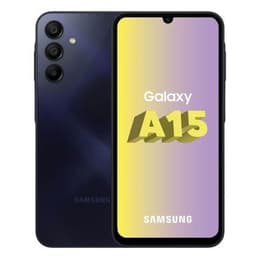
Galaxy A15
Galaxy A15
Starting at

Refurbished price:127.00

Versus €248.54 new

See options
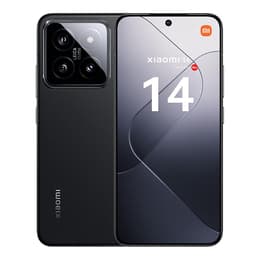
Xiaomi 14
Xiaomi 14
Starting at

Refurbished price:386.00

Versus €1,099.00 new

See options

Ratings

The Samsung Galaxy A15 and the Xiaomi 14 are contemporary smartphones, both released in late 2023 or early 2024, offering distinct experiences within the Android ecosystem. While the Galaxy A15 focuses on delivering essential smartphone features with extended software support, the Xiaomi 14 positions itself as a compact flagship with advanced performance and camera capabilities. Both devices run on Android 14, though with different custom user interfaces: Samsung's One UI and Xiaomi's HyperOS.

Scores

Durability

When considering the long-term usability of these devices, their release timelines and software commitments are key factors.

  • Software Support: The Samsung Galaxy A15 is expected to receive four years of Android operating system updates and five years of security patches, extending its software longevity until approximately late 2028 for OS updates and late 2029 for security updates. The Xiaomi 14 also offers a similar commitment with four years of OS updates and five years of security patches, ensuring a comparable duration of software relevance.
  • Build and Materials: The Galaxy A15 features a glass front with a plastic back and frame, providing a practical and durable construction for everyday use. The Xiaomi 14, on the other hand, incorporates an aluminum alloy frame and a glass back, often protected by Gorilla Glass Victus 2, contributing to a more robust feel and enhanced durability.
  • Repairability: The Xiaomi 14 has a moderate repairability score, with accessible screen and battery components, though some adhesive use can make disassembly challenging. Information suggests that the Galaxy A15 is also designed with repairability in mind, with Samsung actively promoting easier repairs for its A-series devices.

Performance

The performance profiles of the Galaxy A15 and Xiaomi 14 cater to different user expectations, primarily driven by their internal components.

  • Processing Power: The Galaxy A15 is equipped with a processor that handles daily tasks and general app usage adequately. While it may exhibit slight delays in response for more demanding applications or intensive multitasking, it generally provides a smooth experience for typical smartphone activities. The Xiaomi 14 features a current-generation flagship processor, delivering a significantly more powerful experience. This translates to exceptionally smooth operation, rapid app loading, and efficient handling of graphically intensive games and complex applications without noticeable slowdowns.
  • Multitasking and Storage: The Galaxy A15 typically comes with 4GB or 6GB of RAM, which is sufficient for managing several applications simultaneously, though heavy multitasking might occasionally lead to apps reloading. Storage options range from 128GB to 256GB, expandable via a microSD card. The Xiaomi 14 offers higher RAM configurations, starting from 8GB and going up to 16GB, paired with faster UFS 4.0 storage options from 256GB to 1TB. This combination ensures superior multitasking capabilities and quicker data access.
  • Battery Behavior: The Galaxy A15 houses a substantial 5000 mAh battery, often providing extended usage that can last through a full day or more for many users. It supports 25W wired charging. The Xiaomi 14 has a 4610 mAh battery, which, despite being slightly smaller, is optimized for efficient power management and can also comfortably last a full day for most users. It supports very fast 90W wired charging and 50W wireless charging, allowing for quick power replenishment.

Memory (GB)

4 GB

16 GB

Screen quality

The visual experience on both devices is shaped by their display technologies and specifications.

  • Display Technology and Clarity: The Samsung Galaxy A15 features a 6.5-inch Super AMOLED display with a Full HD+ resolution (1080 x 2340 pixels). This technology provides vibrant colors and deep blacks, enhancing the viewing experience for media consumption. The Xiaomi 14 comes with a 6.36-inch LTPO OLED display, offering a higher resolution of 1200 x 2670 pixels. This results in a sharper and more detailed image, particularly noticeable with high-resolution content.
  • Brightness and Refresh Rate: The Galaxy A15's display can reach up to 800 nits in High Brightness Mode, making it adequately visible in most outdoor conditions, and features a 90Hz refresh rate for smoother scrolling and animations. The Xiaomi 14 boasts a significantly higher peak brightness of up to 3000 nits and a typical HBM of 1000 nits, ensuring excellent visibility even in direct sunlight. Its LTPO panel allows for a dynamic refresh rate ranging from 1Hz to 120Hz, providing a very fluid visual experience while optimizing power consumption.
  • Color and Viewing Experience: Both displays offer good color reproduction. The Xiaomi 14's screen supports a wider color gamut and 12-bit color depth, capable of displaying billions of colors, which contributes to a more immersive and accurate visual experience, especially for professional content creation or high-quality media.

Audiovisual

The camera systems on the Galaxy A15 and Xiaomi 14 offer different levels of photographic versatility and image quality.

  • Rear Camera Setup: The Galaxy A15 features a triple camera system comprising a 50MP main sensor, a 5MP ultrawide lens, and a 2MP macro lens. The 50MP main camera performs well in good lighting conditions, capturing decent detail and color. The Xiaomi 14 is equipped with a more advanced triple 50MP camera system, co-engineered with Leica. This includes a 50MP main sensor with a wide aperture and optical image stabilization (OIS), a 50MP ultrawide lens with a broad field of view, and a 50MP telephoto lens offering 3.2x optical zoom and OIS, which also functions as a macro lens.
  • Photography Performance: For everyday photography, the Galaxy A15 delivers acceptable results, particularly from its main sensor. Low-light performance is generally adequate but can show some graininess. The Xiaomi 14 excels in various lighting conditions, producing highly detailed and dynamic images. Its Leica-tuned cameras are praised for their color science and ability to capture professional-looking photos, even in challenging low-light scenarios.
  • Video and Audio: Both phones can record video at 1080p resolution at 30 frames per second from their main cameras. The Xiaomi 14 significantly surpasses this, offering video recording up to 8K at 24fps and 4K at 60fps from its rear cameras, and 4K at 60fps from the front camera, along with a 4-mic array for enhanced audio capture. The Galaxy A15 has a single mono speaker, while the Xiaomi 14 features stereo speakers for a more immersive audio experience.

Miscellaneous

Beyond core features, several other elements contribute to the overall user experience of these smartphones.

  • Connectivity and Ports: Both devices support 5G connectivity. The Galaxy A15 includes Wi-Fi 5 and Bluetooth 5.3, a USB Type-C 2.0 port, and retains a 3.5mm headphone jack. The Xiaomi 14 offers more advanced connectivity with Wi-Fi 6E/7 (market dependent) and Bluetooth 5.4, a faster USB Type-C 3.2 Gen 1 port, but omits the traditional headphone jack.
  • Biometric Security: The Galaxy A15 features a side-mounted fingerprint sensor for convenient unlocking. The Xiaomi 14 incorporates an in-screen optical fingerprint sensor, offering a more integrated and modern aesthetic. Both also support AI face unlock.
  • Design and Handling: The Galaxy A15 weighs around 200 grams and has dimensions of 160.1 x 76.8 x 8.4 mm, providing a comfortable grip for its screen size. The Xiaomi 14 is slightly more compact and lighter at 193 grams with dimensions of 152.8 x 71.5 x 8.2 mm, making it easier for one-handed use. The Xiaomi 14 also boasts an IP68 rating for dust and water resistance, a feature not typically found on the Galaxy A15.

Screen size (in)

6.5

6.36

Network

4G

5G

SIM card

Physical SIM

Dual Physical SIM

Carrier compatibility

Unlocked

Unlocked

The Samsung Galaxy A15 and Xiaomi 14 cater to different user priorities, each excelling in specific areas. User feedback for the Galaxy A15 often praises its reliable battery life, vibrant Super AMOLED display, and Samsung's commitment to long-term software updates. Some common criticisms point to its performance, which can feel sluggish for demanding tasks, and the relatively lower quality of its ultrawide and macro cameras.

The Xiaomi 14 receives high acclaim for its powerful performance, exceptional camera system co-engineered with Leica, and its bright, high-refresh-rate display. Users frequently highlight its fast charging capabilities and premium build quality. Occasional feedback mentions that its HyperOS software, while feature-rich, can sometimes feel overwhelming or have minor optimization quirks.

Users prioritizing extended software support, a large battery, and a traditional headphone jack for everyday communication and media consumption may find the Samsung Galaxy A15 well-suited to their needs. Conversely, individuals who demand top-tier performance for gaming and demanding applications, a highly versatile and capable camera system, a premium design, and rapid charging will likely lean towards the Xiaomi 14. Both devices offer a pathway to modern smartphone features, and considering a quality-assured refurbished option for either model can be an eco-friendly alternative to new purchases.

See all articles

Our recent comparisons