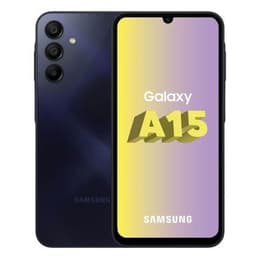



Galaxy A15 Vs Google Pixel 8 Pro

Galaxy A15
Galaxy A15
Starting at

Refurbished price:124.00

Versus €189.00 new

See options
Google Pixel 8 Pro
Google Pixel 8 Pro
Starting at

Refurbished price:293.00

Versus €1,099.00 new

See options

Ratings

The Samsung Galaxy A15, released in late 2023 and early 2024, and the Google Pixel 8 Pro, launched in October 2023, are both Android smartphones offering distinct user experiences. While the Galaxy A15 focuses on delivering essential features with a strong emphasis on display quality and battery longevity, the Pixel 8 Pro stands out with its advanced camera system, powerful processing capabilities, and extended software support. Both devices operate on the Android 14 platform, providing access to a wide ecosystem of applications and services.

Scores

Durability

When considering the long-term usability of these devices, their release timelines and software support policies are key factors.

  • Release Timeline: The Google Pixel 8 Pro was released in October 2023, while the Samsung Galaxy A15 followed shortly after, with its 5G variant launching in December 2023 and January 2024. This means the Pixel 8 Pro is slightly older, but both are relatively current models.
  • Software Longevity: Google offers an extensive seven years of OS updates, security updates, and feature drops for the Pixel 8 Pro, providing a prolonged period of software support. The Galaxy A15 is slated to receive four years of OS upgrades and five years of security updates. This difference means the Pixel 8 Pro will receive software support for a significantly longer duration.
  • Expected Practical Lifespan: Users prioritizing the longest possible software support and access to the latest Android features will find the Pixel 8 Pro's extended update policy beneficial. The Galaxy A15 still offers a respectable update cycle, making it a viable option for several years of use.

Year of Release

2023

2023

Compatible with latest Update

Yes

Yes

Foldable

No

No

Performance

The performance of a smartphone impacts how smoothly applications run, how quickly tasks are completed, and the overall responsiveness of the device.

  • Processing Capabilities: The Pixel 8 Pro features a current-generation processor designed for advanced computational tasks, including sophisticated AI features and demanding applications, resulting in very smooth operation and efficient multitasking. The Galaxy A15 is equipped with an octa-core processor that handles everyday tasks like web browsing, email, and media playback competently.
  • Multitasking and Responsiveness: With its higher amount of RAM, typically 12GB, the Pixel 8 Pro offers a more fluid experience when switching between numerous applications and managing complex workflows. The Galaxy A15 comes with various RAM configurations, from 4GB to 8GB, which is suitable for general use but may show limitations with very heavy multitasking.
  • Battery Behavior: Both devices house large batteries, with the Pixel 8 Pro having a 5050 mAh capacity and the Galaxy A15 a 5000 mAh capacity. The Galaxy A15 is noted for its impressive battery life, often lasting up to two days on a single charge for typical usage. The Pixel 8 Pro also offers all-day battery life, with improvements over its predecessors, and supports faster wired and wireless charging.

Memory (GB)

4 GB

12 GB

Screen quality

The display is a primary interface for any smartphone, and both models offer distinct viewing experiences.

  • Display Technology and Clarity: The Pixel 8 Pro features a 6.7-inch LTPO OLED display, known as Super Actua, which provides deep blacks, vibrant colors, and sharp detail with a resolution of 1344 x 2992 pixels. The Galaxy A15 comes with a 6.5-inch Super AMOLED display, offering a resolution of 1080 x 2340 pixels, which delivers clear and vivid visuals.
  • Brightness and Refresh Rate: The Pixel 8 Pro's display can reach a peak brightness of up to 2400 nits, making it highly visible even in bright outdoor conditions, and features an adaptive refresh rate that can scale from 1Hz to 120Hz for smooth scrolling and power efficiency. The Galaxy A15 offers up to 800 nits of brightness in High Brightness Mode and a 90Hz refresh rate, providing a smooth viewing experience for its class.
  • Viewing Experience: Users who prioritize a larger, brighter, and more fluid display for media consumption and gaming will find the Pixel 8 Pro's screen capabilities more advanced. The Galaxy A15's display provides a good quality viewing experience for everyday tasks, especially considering its segment.

Resolution

1080 x 2340

1344 x 2992

Screen type

Super AMOLED

LTPO OLED

Audiovisual

Camera capabilities are a significant differentiator, influencing how users capture and share moments.

  • Rear Camera System: The Pixel 8 Pro boasts a versatile triple-camera setup, including a 50MP main sensor with optical image stabilization (OIS), a 48MP ultrawide lens with autofocus, and a 48MP telephoto lens offering 5x optical zoom and OIS. The Galaxy A15 features a triple-camera system with a 50MP main lens, a 5MP ultrawide, and a 2MP macro lens.
  • Photography Performance: The Pixel 8 Pro excels in computational photography, delivering detailed images with accurate colors across various lighting conditions, including strong low-light performance and advanced features like a Pro mode for manual controls. The Galaxy A15's main camera produces competent images in good lighting, with colors that appear slightly saturated. Its ultrawide and macro lenses offer additional versatility for different shot types.
  • Video Recording and Audio: The Pixel 8 Pro supports video recording up to 4K at 60 frames per second, with features like Audio Eraser for improved sound quality in videos. The Galaxy A15 records video at 1080p at 30 frames per second. Both devices offer standard microphone quality for calls, but the Pixel 8 Pro's advanced audio processing for video can be a notable advantage.

Main camera

50 megapixels

50 megapixels

Front camera

13 megapixels

10.5 megapixels

Miscellaneous

Beyond core features, several practical elements contribute to the overall user experience and device utility.

  • Connectivity and Ports: The Pixel 8 Pro supports the latest Wi-Fi 7 standard, along with 5G and Bluetooth 5.3, and includes a USB-C port. The Galaxy A15 offers 5G connectivity, Wi-Fi 5, Bluetooth 5.3, a USB-C port, and retains a 3.5mm headphone jack, which can be a convenience for users with wired audio accessories.
  • Security and Biometrics: Both phones include fingerprint sensors for secure unlocking. The Pixel 8 Pro features an in-display optical fingerprint sensor and enhanced facial recognition. The Galaxy A15 integrates its fingerprint sensor into the power button.
  • Build Materials and Handling: The Pixel 8 Pro features a more premium construction with Gorilla Glass Victus 2 on both the front and back, and an aluminum frame, giving it a solid feel. It weighs 213g and measures 162.9 x 76.5 x 8.8 mm. The Galaxy A15 has a plastic back and frame with a glass front, weighing 200g and measuring 160.1 x 76.8 x 8.4 mm, offering a sturdy yet lighter build.

Weight

200 g

213 g

Screen size (in)

6.5

6.7

Network

4G

5G

SIM card

Dual Physical SIM

Physical SIM + eSIM

Carrier compatibility

Unlocked

Unlocked

The Samsung Galaxy A15 and Google Pixel 8 Pro cater to different user priorities, each offering a compelling set of features within their respective segments. Users often praise the Galaxy A15 for its vibrant Super AMOLED display and its impressive battery life, which can comfortably last for extended periods. Some common feedback points for the Galaxy A15 include its competent performance for daily tasks, though it may not be suited for the most demanding applications, and its camera system is generally considered good for its class but not exceptional in all scenarios.

The Google Pixel 8 Pro consistently receives acclaim for its advanced camera capabilities, particularly its computational photography features and versatile lens array, which deliver high-quality images and video. Its extended software support and powerful processing for AI-driven tasks are also frequently highlighted as significant advantages. Some users have noted that while battery life is improved, it might not always match the longevity of some competitors under heavy use, and its premium build contributes to a slightly heavier feel.

Users prioritizing a long-lasting battery and a clear, vibrant display for everyday communication and media consumption may find the Samsung Galaxy A15 well-suited to their needs. Conversely, individuals who place a high value on cutting-edge camera technology, advanced software features, and a prolonged period of software updates will likely lean towards the Google Pixel 8 Pro. Both devices represent solid choices, and considering a quality-assured refurbished option for either model can be an eco-friendly alternative to purchasing new.


See all articles

Our recent comparisons