
Galaxy A15 Vs iPhone 16 Plus

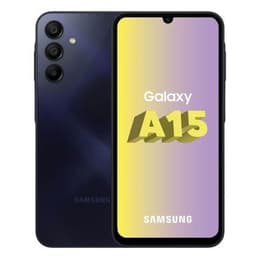
Galaxy A15
Galaxy A15
Starting at

Refurbished price:124.00

Versus €189.00 new

See options
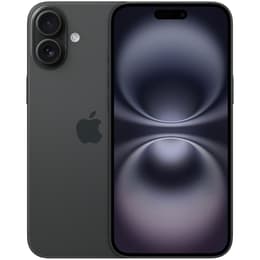
iPhone 16 Plus
iPhone 16 Plus
Starting at

Refurbished price:559.00

Versus €979.00 new

See options

Ratings

The Samsung Galaxy A15, released in late 2023 and early 2024, and the Apple iPhone 16 Plus, launched in September 2024, represent distinct offerings in the smartphone market. While both devices aim to provide a comprehensive mobile experience, they cater to different user expectations through their respective Android and iOS operating systems. The Galaxy A15 focuses on delivering essential features and robust battery life, whereas the iPhone 16 Plus emphasizes advanced performance, an enhanced camera system, and a premium user interface.

Scores

Durability

When considering the long-term usability of these devices, their release timelines and software support policies are key factors.

  • Release Timeline: The Samsung Galaxy A15 was released in December 2023 and January 2024, making it a more recent entry into the Android ecosystem. The iPhone 16 Plus followed in September 2024, positioning it as a newer device with a slightly later start to its support cycle.
  • Software Longevity: Samsung has committed to providing the Galaxy A15 with four major Android OS upgrades and five years of security updates, extending its support until approximately 2029. Apple typically offers 5-6 years of major iOS updates for its devices, suggesting the iPhone 16 Plus will receive software support well into the future, potentially longer than the Galaxy A15.
  • Durability Features: The Galaxy A15 features a glass front with a plastic back and frame, offering a practical build. The iPhone 16 Plus incorporates a Ceramic Shield front cover, a glass back, and an aluminum frame, along with an IP68 rating for water and dust resistance, indicating a more robust construction.

Year of Release

2023

2024

Compatible with latest Update

Yes

Yes

Foldable

No

No

Performance

The performance of a smartphone is crucial for daily tasks, from app usage to multitasking and gaming.

  • Processing Power: The Galaxy A15 is powered by a processor designed for efficient everyday use, handling common applications and light multitasking smoothly. The iPhone 16 Plus features Apple's A18 chip, which includes a new 6-core CPU, 5-core GPU, and a 16-core Neural Engine, providing a significant boost in performance for demanding applications, advanced gaming, and complex computational tasks.
  • Multitasking and Storage: The Galaxy A15 offers various RAM configurations (4GB, 6GB, 8GB) and storage options (128GB, 256GB), with expandable storage via microSD. The iPhone 16 Plus comes with 8GB of RAM and storage options up to 512GB, ensuring smooth multitasking and ample space for apps and media, though without expandable storage.
  • Battery Behavior: The Galaxy A15 is equipped with a 5000 mAh battery, known for providing extended usage on a single charge. The iPhone 16 Plus has a 4674 mAh battery, which, combined with its efficient processor and iOS optimization, delivers up to 27 hours of video playback, offering substantial battery life for most users.

Memory (GB)

4 GB

8 GB

Screen quality

The visual experience is a primary consideration for many users, and both devices offer distinct display technologies.

  • Display Technology and Clarity: The Galaxy A15 features a 6.5-inch Super AMOLED display with a Full HD+ resolution (1080 x 2340 pixels), providing vibrant colors and deep blacks. The iPhone 16 Plus sports a 6.7-inch Super Retina XDR OLED display with a resolution of 2796 by 1290 pixels at 460 ppi, offering exceptional clarity and color accuracy.
  • Brightness and Refresh Rate: The Galaxy A15's display has a 90Hz refresh rate for smoother scrolling and an enhanced brightness of up to 800 nits, making it visible in various lighting conditions. The iPhone 16 Plus maintains a standard 60Hz refresh rate but boasts higher brightness levels, with typical maximum brightness of 1000 nits, peak HDR brightness of 1600 nits, and an impressive 2000 nits peak brightness outdoors.
  • Viewing Experience: The iPhone 16 Plus includes the Dynamic Island, an interactive area at the top of the display that adapts to alerts and activities, enhancing the user experience. Both displays offer wide color support and features like Eye Comfort Shield on the A15 to reduce blue light, contributing to comfortable viewing.

Resolution

1080 x 2340

1290 x 2796

Screen type

Super AMOLED

Super Retina XDR OLED

Audiovisual

Camera capabilities are a significant differentiator, with each device offering a unique approach to photography and videography.

  • Rear Camera Systems: The Galaxy A15 features a versatile triple-camera setup on the rear, including a 50MP main sensor, a 5MP ultrawide lens, and a 2MP macro lens, suitable for capturing a variety of scenes. The iPhone 16 Plus comes with an advanced dual-camera system, comprising a 48MP Fusion Main camera with sensor-shift optical image stabilization and a 12MP ultrawide lens. The main camera also enables 2x telephoto capabilities.
  • Photography Features: The iPhone 16 Plus introduces a new vertical camera arrangement, which supports Spatial Video recording. It also includes a new Capture Button for quick access to camera functions. While the Galaxy A15 provides a range of lenses for different photographic styles, the iPhone 16 Plus focuses on computational photography enhancements and features like Photonic Engine and Deep Fusion for improved image quality.
  • Video Recording and Front Camera: Both devices can record video, with the Galaxy A15 supporting Full HD at 30fps. The iPhone 16 Plus offers advanced video recording capabilities, including support for Spatial Audio sound recording and wind noise reduction. For selfies and video calls, the Galaxy A15 has a 13MP front camera, while the iPhone 16 Plus features a 12MP front camera.

Main camera

50 megapixels

48 megapixels

Front camera

13 megapixels

12 megapixels

Miscellaneous

Beyond core features, several practical elements contribute to the overall user experience and device utility.

  • Connectivity and Ports: The Galaxy A15 supports 5G connectivity (on the 5G model), Wi-Fi 5, and Bluetooth 5.3, and notably includes a 3.5mm headphone jack and a USB-C 2.0 port. The iPhone 16 Plus also supports 5G and features Wi-Fi 7 (or Wi-Fi 6E depending on region), Bluetooth 5.3, and a USB-C port, though it omits the traditional headphone jack.
  • Biometric Security and Navigation: For security, the Galaxy A15 uses a side-mounted fingerprint sensor. The iPhone 16 Plus relies on Face ID for secure authentication. Both devices offer robust navigation capabilities with support for multiple global positioning systems.
  • Design and Handling: The Galaxy A15 weighs 200g and measures 160.1 x 76.8 x 8.4 mm. The iPhone 16 Plus is slightly lighter at 199g and has dimensions of 160.9 x 77.8 x 7.8 mm, offering a slim profile. The iPhone 16 Plus also features an Action Button, customizable for quick access to various functions.

Weight

200 g

199 g

Screen size (in)

6.5

6.7

Network

4G

5G

SIM card

Dual Physical SIM

eSIM

Carrier compatibility

Unlocked

Unlocked

The Samsung Galaxy A15 and the iPhone 16 Plus cater to different segments of the smartphone market, each with its own strengths. Users often praise the Galaxy A15 for its long-lasting battery and the inclusion of a headphone jack and expandable storage, which are practical benefits for many. Some users, however, note that its processing power is geared more towards everyday tasks rather than intensive applications.

Conversely, the iPhone 16 Plus is frequently lauded for its powerful performance, advanced camera capabilities, and the seamless integration of the iOS ecosystem. Its vibrant OLED display and robust build quality are also common points of appreciation. Some users might find the absence of a headphone jack and expandable storage a limitation, and the 60Hz refresh rate on a premium device is sometimes a point of discussion.

Users prioritizing an extensive software update policy, a large battery, and the flexibility of Android with expandable storage may find the Galaxy A15 well-suited to their needs. It represents a solid choice for those seeking a reliable device for daily communication and media consumption. On the other hand, users who value cutting-edge performance, a sophisticated camera system, and the integrated experience of iOS, including features like the Dynamic Island and Apple Intelligence, will likely lean towards the iPhone 16 Plus. It is designed for those who engage in more demanding tasks, advanced photography, and prefer a premium ecosystem.

For consumers looking for an eco-friendly alternative, considering a quality-assured refurbished option for either of these models can provide a sustainable choice without compromising on functionality.


See all articles

Our recent comparisons