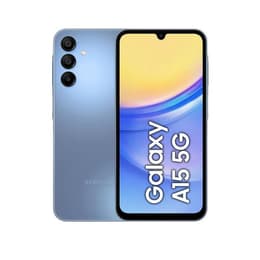



Galaxy A15 5G Vs Google Pixel 7 Pro

Galaxy A15 5G
Galaxy A15 5G
Starting at

Refurbished price:123.00

Versus €248.54 new

See options
Google Pixel 7 Pro
Google Pixel 7 Pro
Starting at

Refurbished price:201.00

Versus €640.98 new

See options

Ratings

The Samsung Galaxy A15 5G, released in late 2023 and early 2024, and the Google Pixel 7 Pro, launched in late 2022, represent distinct segments within the Android smartphone market. While both offer a modern smartphone experience, they cater to different user priorities, with the Pixel 7 Pro emphasizing advanced camera capabilities and flagship-tier performance, and the Galaxy A15 5G focusing on essential features and extended software support.

Scores

Durability

When considering the practical lifespan of these devices, several factors come into play, including their release timelines, software support, and physical construction.

  • Release Timeline: The Galaxy A15 5G was released more recently, in December 2023 globally and January 2024 in the US, making it a newer device compared to the Google Pixel 7 Pro, which launched in October 2022.
  • Software Support: Samsung promises four major OS updates and five years of security updates for the Galaxy A15 5G from its release. The Pixel 7 Pro, while older, was promised three years of OS upgrades and five years of security updates from its launch, which was later increased to five years of security updates, with support extending to 2027. This means the Galaxy A15 5G will likely receive OS updates for a longer period from its initial release date.
  • Build Quality: The Pixel 7 Pro features a more premium construction with Gorilla Glass Victus on both the front and back, and an aluminum frame, along with an IP68 rating for dust and water resistance. The Galaxy A15 5G utilizes a plastic frame and back, with Dragontrail Pro glass protecting the display, and does not carry an official IP rating.

Year of Release

2023

2022

Compatible with latest Update

Yes

Yes

OS

Android

Android

Foldable

No

No

Performance

The performance capabilities of these two smartphones differ significantly, reflecting their original market positioning and hardware configurations.

  • Processing Power: The Google Pixel 7 Pro is equipped with a processor designed for flagship performance, allowing it to handle demanding applications, complex multitasking, and graphic-intensive games with smoothness and efficiency. The Galaxy A15 5G features a mid-range processor that capably manages everyday tasks such as web browsing, email, and media playback, though users might experience slight delays when switching between multiple applications or loading graphically rich content.
  • Multitasking and Storage: The Pixel 7 Pro typically comes with 12GB of RAM, providing ample capacity for extensive multitasking and keeping numerous applications open in the background without performance degradation. It offers storage options up to 512GB, but without expandable storage. The Galaxy A15 5G is available with 4GB or 8GB of RAM, which is suitable for typical daily use, and offers 128GB or 256GB of internal storage, with the added benefit of expandable storage up to 1TB via a microSD card.
  • Battery Behavior: Both devices house a 5000 mAh battery. The Galaxy A15 5G is noted for its long battery life, often lasting through a full day of heavy use. The Pixel 7 Pro also offers solid battery performance, with adaptive battery features designed to extend usage, though its more powerful components can lead to similar or slightly less endurance in demanding scenarios compared to the A15 5G.

Memory (GB)

4 GB

12 GB

Screen quality

The visual experience offered by each device's display presents a clear distinction in quality and features.

  • Display Technology and Resolution: The Google Pixel 7 Pro boasts a 6.7-inch LTPO AMOLED display with a high resolution of 3120 x 1440 pixels, resulting in a very sharp and detailed viewing experience. The Samsung Galaxy A15 5G features a 6.5-inch Super AMOLED display with a resolution of 2340 x 1080 pixels, providing clear and vibrant visuals for everyday content consumption.
  • Brightness and Refresh Rate: The Pixel 7 Pro's display offers a variable refresh rate up to 120Hz, contributing to smoother scrolling and more fluid animations, alongside a peak brightness of 1500 nits, which ensures excellent visibility even in bright outdoor conditions. The Galaxy A15 5G has a 90Hz refresh rate, offering a noticeable improvement in smoothness over standard 60Hz displays, and reaches up to 800 nits of brightness in high brightness mode, making it adequately visible outdoors.
  • Viewing Experience: The Pixel 7 Pro's larger, higher-resolution, and brighter display with a faster refresh rate provides a more immersive and premium viewing experience, particularly for high-definition video content and gaming. The Galaxy A15 5G's display, while not as technically advanced, still delivers a good quality viewing experience with vibrant colors characteristic of AMOLED panels.

Resolution

1080 x 2340

1440 x 3120

Screen type

Super AMOLED

LTPO AMOLED

Audiovisual

The camera systems are a primary differentiating factor, with the Google Pixel 7 Pro offering a more advanced and versatile photography experience.

  • Rear Camera System: The Pixel 7 Pro features a triple camera setup including a 50MP main sensor with optical image stabilization (OIS), a 12MP ultrawide lens with autofocus, and a 48MP telephoto lens capable of 5x optical zoom and OIS. This system is enhanced by advanced computational photography. The Galaxy A15 5G comes with a triple camera array consisting of a 50MP main camera, a 5MP ultrawide camera, and a 2MP macro camera. The main camera on the A15 5G lacks OIS.
  • Photography Performance: The Pixel 7 Pro excels in various lighting conditions, producing detailed images with accurate colors, and its telephoto lens allows for high-quality zoomed shots. Its computational photography features, such as Night Sight and Photo Unblur, significantly enhance image quality. The Galaxy A15 5G's main camera performs well in good lighting, capturing clear and vibrant photos, but its ultrawide and macro lenses offer more limited utility, and low-light performance is less refined compared to the Pixel 7 Pro.
  • Video and Audio: The Pixel 7 Pro supports 4K video recording at 30 or 60 frames per second, with features like Cinematic Blur and improved stabilization. The Galaxy A15 5G records video at 1080p at 30 frames per second. For audio, the Pixel 7 Pro offers stereo speakers, while the Galaxy A15 5G has a single down-firing speaker, which can sound less full.

Main camera

50 megapixels

50 megapixels

Front camera

13 megapixels

10.8 megapixels

Miscellaneous

Beyond core performance and display, several practical features and design elements distinguish these two devices.

  • Connectivity and Ports: Both phones support 5G connectivity. The Pixel 7 Pro supports Wi-Fi 6E and Bluetooth 5.2, and features a USB-C 3.2 port. The Galaxy A15 5G supports Wi-Fi 5 and Bluetooth 5.3, and includes a USB-C 2.0 port. A notable difference is the presence of a 3.5mm headphone jack on the Galaxy A15 5G, which is absent on the Pixel 7 Pro.
  • Biometric Security: The Pixel 7 Pro offers both an under-display optical fingerprint sensor and face unlock for security. The Galaxy A15 5G features a side-mounted fingerprint sensor.
  • Design and Build: The Pixel 7 Pro has a more substantial feel, weighing 212g with dimensions of 162.9 x 76.6 x 8.9 mm, and features a premium glass and aluminum construction. The Galaxy A15 5G is slightly lighter at 200g and more compact at 160.1 x 76.8 x 8.4 mm, with a primarily plastic build.

Weight

200 g

212 g

Screen size (in)

6.5

6.7

Network

5G

5G

SIM card

Dual Physical SIM

Physical SIM + eSIM

Carrier compatibility

Unlocked

Unlocked

The Samsung Galaxy A15 5G and Google Pixel 7 Pro cater to different user needs and preferences. The Pixel 7 Pro is often praised by users for its exceptional camera system, which consistently delivers high-quality photos and videos, especially with its advanced computational photography features and versatile telephoto lens. Users also appreciate its fluid performance for demanding tasks and its vibrant, high-resolution display. Some common criticisms, however, include its relatively shorter software update commitment compared to newer devices and its faster battery drain under heavy use due to its powerful processor.

Conversely, the Galaxy A15 5G receives positive feedback for its reliable everyday performance, impressive battery life, and the inclusion of a 3.5mm headphone jack and expandable storage, which are increasingly rare features. Its extended software update policy from its release date is also a significant advantage for users seeking long-term usability. Criticisms often point to its less powerful processor, which can lead to occasional lag with intensive applications, and its more basic camera system compared to higher-end devices.

Users prioritizing a top-tier camera experience, robust performance for gaming and demanding applications, and a premium display will find the Google Pixel 7 Pro well-suited to their needs. Its advanced features make it ideal for photography enthusiasts and power users. On the other hand, users who value long-term software support, excellent battery life, expandable storage, and a headphone jack for everyday convenience may prefer the Samsung Galaxy A15 5G. It serves as a practical and dependable choice for general use. Both devices, whether new or as quality-assured refurbished options, offer distinct advantages depending on individual priorities, enabling informed and sustainable choices.


See all articles

Our recent comparisons