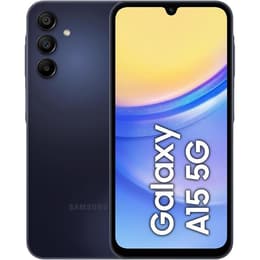
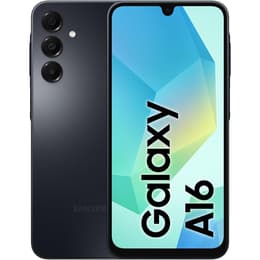


Galaxy A15 5G Vs Galaxy A16

Galaxy A15 5G
Galaxy A15 5G
Starting at

Refurbished price:124.00

Versus €248.54 new

See options
Galaxy A16
Galaxy A16
Starting at

Refurbished price:134.00

Versus €250.00 new

See options

Ratings

The Samsung Galaxy A15 5G, released in late 2023, and the Samsung Galaxy A16, launched in late 2024, are both Android smartphones designed to offer essential features for everyday use. While they share a similar design philosophy and operate on the Android platform with Samsung's One UI, the newer Galaxy A16 introduces an extended software support policy and a slightly larger display, alongside incremental internal updates.

Scores

Durability

When considering the long-term usability of these devices, their release timelines and software support policies are key factors. The Galaxy A16 offers a notable advantage in this area.

  • Release Timeline: The Galaxy A15 5G was released in December 2023, while the Galaxy A16 followed in October 2024, making the A16 a more recent model.
  • Software Longevity: The Galaxy A15 5G is promised four major Android OS upgrades and five years of security updates, extending its support until approximately 2028. In contrast, the Galaxy A16 stands out with an impressive commitment of six major Android OS upgrades and six years of security updates, ensuring support until October 2030. This extended support means the A16 will receive updates for a significantly longer period, enhancing its practical lifespan.
  • Repairability: Both devices are generally considered to have average repairability. The Galaxy A16 has received repairability scores around 8.0 to 9.0 out of 10 from some sources, noting features like pull tabs for battery removal and accessible components, though adhesive is used for the back cover. The Galaxy A15 5G also offers accessible screen repair services.

Year of Release

2023

2024

OS

Android

Android

Foldable

No

No

Performance

Both the Galaxy A15 5G and Galaxy A16 are equipped to handle daily tasks, but their performance characteristics cater to general usage rather than demanding applications.

  • Everyday Responsiveness: The Galaxy A15 5G, powered by a MediaTek Dimensity 6100+ processor, provides reliable performance for common applications and multitasking. User feedback indicates it handles daily activities adequately, though some report it can feel slow with basic tasks and multitasking may not be seamless. The Galaxy A16, featuring either a MediaTek Dimensity 6300 or Exynos 1330 processor depending on the region, offers a similar experience. While it aims for improved performance, some users still note mediocre performance, slow app loading, and occasional stuttering, particularly with the base 4GB RAM model.
  • Battery Behavior: Both smartphones are equipped with a 5000mAh battery, supporting 25W fast charging. Users of the Galaxy A15 5G report excellent battery life, often lasting over a day with moderate use. The Galaxy A16 also delivers strong battery endurance, with many users experiencing a full day of mixed use or even longer. Neither device includes a charger in the box.
  • Storage and Multitasking: Both models offer various RAM configurations, typically starting from 4GB and going up to 8GB, paired with 128GB or 256GB of internal storage. Both also support expandable storage via a microSD card, with the A16 supporting up to 1.5TB and the A15 5G up to 1TB. For multitasking, the higher RAM options on either device will provide a smoother experience, as lower RAM configurations can lead to app refreshes.

Memory (GB)

4 GB

4 GB

Screen quality

The visual experience on both the Galaxy A15 5G and Galaxy A16 is characterized by vibrant displays, though the A16 offers a slightly larger viewing area.

  • Display Technology and Clarity: Both devices feature a Super AMOLED display with Full HD+ resolution (2340x1080 pixels), providing deep blacks and vibrant colors. This technology ensures clear and sharp visuals for everyday content consumption.
  • Size and Brightness: The Galaxy A15 5G comes with a 6.5-inch display, offering a peak brightness of 800 nits. The Galaxy A16 features a slightly larger 6.7-inch display, with a peak brightness of 808 nits, making it comfortably viewable outdoors even in bright conditions.
  • Refresh Rate: Both smartphones incorporate a 90Hz refresh rate, contributing to smoother scrolling and a more fluid user interface experience. However, the A16's display does not feature an adaptive refresh rate, meaning it consistently operates at 90Hz, which can have a minor impact on battery efficiency compared to adaptive systems.

Resolution

1080 x 2340

1080x2340

Screen type

Super AMOLED

Super AMOLED

Audiovisual

The camera systems on both the Galaxy A15 5G and Galaxy A16 are designed for general photography, excelling in well-lit conditions.

  • Camera System Configuration: Both devices feature a triple rear camera setup, consisting of a 50-megapixel main sensor, a 5-megapixel ultrawide lens, and a 2-megapixel macro camera. For selfies and video calls, both are equipped with a 13-megapixel front-facing camera.
  • Photography Performance: The main 50MP sensor on both phones performs well in daylight, producing sharp images with vibrant colors. However, low-light performance tends to be average, and neither device includes optical image stabilization (OIS) for the main camera, which can affect clarity in challenging conditions. The 5MP ultrawide camera is functional for wider shots but offers less detail, and the 2MP macro camera is generally considered to be of limited practical use.
  • Video and Audio: Both the Galaxy A15 5G and Galaxy A16 support video recording up to 1080p at 30 frames per second, without 4K capabilities. The video quality is suitable for social media but may appear shaky due to the absence of OIS. User feedback on the Galaxy A15 5G indicates the mono speaker can sound "tinny." The Galaxy A16 also lacks stereo speakers.

Miscellaneous

Beyond core features, several practical elements differentiate the user experience of these two Samsung Galaxy models.

  • Connectivity and Ports: Both the Galaxy A15 5G and Galaxy A16 offer 5G connectivity, Wi-Fi, and Bluetooth 5.3. They both include a USB-C port for charging and data transfer, and notably, retain a 3.5mm headphone jack.
  • Durability and Build: Both devices feature a plastic frame and back. A key difference is that the Galaxy A16 comes with an IP54 rating for dust and splash resistance, offering a degree of protection against environmental elements. The Galaxy A15 5G does not have an official IP rating, though some sources imply basic splash resistance.
  • Sensors and Handling: Both smartphones include a side-mounted fingerprint sensor for secure unlocking. The dimensions and weight are similar, with the Galaxy A15 5G measuring 160.1 x 76.8 x 8.4 mm and weighing 200g, while the Galaxy A16 is slightly larger at 164.4 x 77.9 x 7.9 mm and also weighs 200g. The A16's slightly slimmer profile might contribute to a marginally different feel in hand.

Weight

200 g

200 g

Screen size (in)

6.5

6.7

Network

5G

4G

SIM card

Dual Physical SIM

Physical SIM

Carrier compatibility

Unlocked

Unlocked

User feedback for the Galaxy A15 5G frequently praises its impressive battery life and the quality of its AMOLED display. Many appreciate Samsung's commitment to software updates for this model, offering a solid foundation for long-term use. However, common criticisms point to its performance, which can be sluggish for some users, and the limitations of its secondary cameras. The mono speaker quality is also a frequent point of concern.

For the Galaxy A16, users highlight the vibrant and slightly larger display as a significant positive, along with its robust battery life. The most notable praise is directed at Samsung's extended software support policy, promising six years of updates, which is a substantial benefit for longevity. Conversely, the A16 faces similar criticisms regarding its performance, with reports of slow app loading and occasional stuttering, especially with lower RAM configurations. The secondary cameras are also noted as being mediocre, and the absence of stereo speakers is a drawback for some.

Users prioritizing extended software support and a slightly larger, officially splash-resistant display may find the Galaxy A16 to be a more suitable choice. Its longer update cycle makes it an appealing option for those seeking to maximize the lifespan of their device. On the other hand, users who find the Galaxy A15 5G's slightly more compact size appealing and are content with its still-generous software support will find it a capable device. Both models offer a strong battery experience and vibrant screens, making them practical choices for everyday communication and media consumption. Exploring quality-assured refurbished options for either model can provide an eco-friendly alternative for consumers.


See all articles

Our recent comparisons