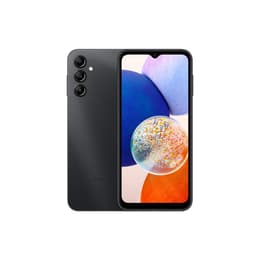
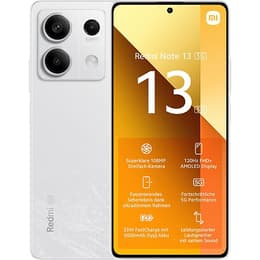


Galaxy A14 Vs Xiaomi Redmi Note 13

Galaxy A14
Galaxy A14
Starting at

Refurbished price:97.00

Versus €269.00 new

See options
Xiaomi Redmi Note 13
Starting at

Refurbished price:135.00

Versus €340.00 new

See options

Ratings

The Samsung Galaxy A14 and the Xiaomi Redmi Note 13 are both smartphones designed for users seeking reliable performance and essential features. The Galaxy A14, released in early 2023, offers a straightforward Android experience with a focus on durability and battery life. The Redmi Note 13, launched in early 2024, distinguishes itself with a more advanced display and faster charging capabilities.

Scores

Durability

When considering the practical lifespan of these devices, several factors come into play, including their release timelines and software support policies.

  • Release Timeline: The Samsung Galaxy A14 5G was launched in January 2023, with the 4G LTE model following in February 2023. The Xiaomi Redmi Note 13 4G was released in January 2024, making it a newer device.
  • OS Support: The Galaxy A14 is expected to receive two major Android OS upgrades, bringing it up to Android 15, and four years of security updates, extending until 2027. The Redmi Note 13 series is committed to receiving three major Android OS updates, reaching up to Android 16, and four years of security patches, with support until 2028.
  • Practical Lifespan: The Redmi Note 13 generally offers a longer period of software support, which can contribute to a more extended practical lifespan for users who prioritize up-to-date software and security. Both devices are built with plastic frames and backs, which are common for their segment.

Year of Release

2023

2024

Compatible with latest Update

No

Yes

OS

Android

Android

Foldable

No

No

Performance

The performance of these smartphones impacts daily usage, from app responsiveness to handling demanding tasks.

  • Processor Capabilities: The Samsung Galaxy A14 5G is powered by an octa-core processor, with variants including the Exynos 1330 or Mediatek Dimensity 700, depending on the region. The Xiaomi Redmi Note 13 4G features an octa-core Snapdragon 685 processor. User reports suggest the Redmi Note 13 feels snappier and handles gaming scenarios better, with more stable frame rates compared to the Galaxy A14, which some users describe as slow and prone to overheating during heavy use.
  • Storage and RAM: Both devices offer various configurations, typically starting from 4GB or 6GB of RAM and 64GB or 128GB of internal storage, with expandable storage options via microSD. The Redmi Note 13 also offers higher RAM options up to 12GB in some variants.
  • Battery Behavior: Both phones are equipped with a 5000mAh battery, providing ample power for a full day of average use. However, the Redmi Note 13 supports 33W fast charging, significantly reducing charging times compared to the Galaxy A14's 15W charging, which can take approximately 2.5 hours for a full charge.

Memory (GB)

4 GB

8 GB

Screen quality

The display is a primary interaction point, and differences in technology and specifications can greatly affect the viewing experience.

  • Display Technology and Size: The Samsung Galaxy A14 features a 6.6-inch PLS LCD display. In contrast, the Xiaomi Redmi Note 13 boasts a larger 6.67-inch AMOLED display. The AMOLED technology on the Redmi Note 13 provides deeper blacks and better contrast, enhancing the immersive viewing experience for media consumption and gaming.
  • Resolution and Refresh Rate: Both phones offer Full HD+ resolution (1080x2408 for A14, 1080x2400 for Note 13), ensuring clear visuals. The Redmi Note 13 stands out with a 120Hz refresh rate, offering smoother scrolling and more fluid animations compared to the Galaxy A14's 90Hz (5G model) or 60Hz (4G model) refresh rate.
  • Brightness: While the Redmi Note 13's AMOLED panel excels indoors, the Galaxy A14's display has been noted by some users to be brighter and more readable in direct sunlight. The Redmi Note 13 4G, however, has a peak brightness of 1300 nits.

Resolution

1080 x 2408

1080 x 2400

Screen type

PLS LCD

AMOLED

Audiovisual

For many users, camera capabilities are a key differentiator, influencing how they capture and share moments.

  • Rear Camera System: The Samsung Galaxy A14 features a triple rear camera setup, with a 50MP main sensor, accompanied by 2MP macro and 2MP depth sensors. The Xiaomi Redmi Note 13 4G also has a triple camera system, but it includes a higher resolution 108MP main sensor, an 8MP ultrawide lens, and a 2MP macro lens. The Redmi Note 13's main camera is capable of capturing highly detailed photos.
  • Photography Performance: While the Galaxy A14's camera is considered adequate for everyday photos, some users have reported issues with focus and pixelation when zooming. The Redmi Note 13's 108MP sensor generally offers better detail, though its ultrawide and macro lenses may not perform as strongly, and some users have noted focus issues.
  • Front Camera and Video: The Galaxy A14 comes with a 13MP front camera, while the Redmi Note 13 features a 16MP front camera. Both devices typically record video at 1080p resolution at 30 frames per second.

Main camera

50 megapixels

108 megapixels

Front camera

13 megapixels

16 megapixels

Miscellaneous

Beyond core features, several practical elements contribute to the overall user experience and device utility.

  • Connectivity and Ports: Both smartphones offer essential connectivity options, including Wi-Fi and Bluetooth. The Galaxy A14 supports Bluetooth 5.1, while the Redmi Note 13 supports Bluetooth 5.3. Both include a USB Type-C port for charging and data transfer, and notably, both retain a 3.5mm headphone jack.
  • Biometric Security: The Samsung Galaxy A14 typically features a side-mounted fingerprint sensor. The Xiaomi Redmi Note 13, on the other hand, incorporates an in-display fingerprint sensor, offering a more modern unlocking experience.
  • Design and Handling: The Galaxy A14 has dimensions of 167.7 x 78 x 9.1 mm and weighs around 201-202g. The Redmi Note 13 4G is slightly more compact and lighter, measuring 162.24 x 75.55 x 7.97 mm and weighing 188.5g. Some users have described the Galaxy A14 as feeling thick and uncomfortable to handle due to its size and boxy shape.

Weight

201 g

175 g

Screen size (in)

6.6

6.67

Network

4G

5G

SIM card

Dual Physical SIM

Dual Physical SIM

Carrier compatibility

Unlocked

Unlocked

User feedback for the Samsung Galaxy A14 often highlights its robust battery life and the familiar, polished One UI software experience. However, common criticisms include its sometimes sluggish performance, particularly during demanding tasks, and a design that some find bulky. Users have also reported issues with touchscreen responsiveness and audio quality.

The Xiaomi Redmi Note 13 receives praise for its vibrant AMOLED display with a high refresh rate, offering a visually engaging experience, and its generally snappier performance for everyday use and gaming. Criticisms sometimes point to potential software issues like inconsistent notifications and bloatware, as well as some camera inconsistencies with the secondary lenses. Some users have also noted fast battery drain for heavy usage, despite the large battery capacity.

Users prioritizing a longer software support window and a smoother visual experience with an AMOLED display and higher refresh rate may find the Xiaomi Redmi Note 13 more aligned with their needs. Its faster charging capability is also a notable advantage for those who need to power up quickly. Conversely, users who prefer the established Samsung ecosystem, a brighter screen for outdoor visibility, and a device that is generally perceived as reliable for basic tasks, might lean towards the Samsung Galaxy A14. Both devices offer a solid foundation for daily smartphone use, and choosing a quality-assured refurbished option for either model can be an eco-friendly alternative for consumers.


See all articles

Our recent comparisons