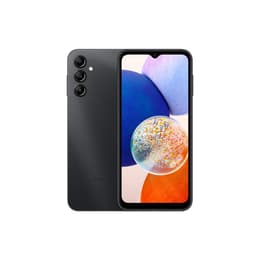
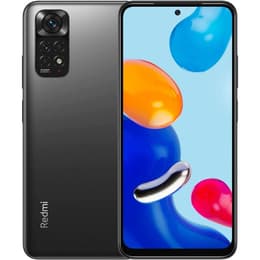


Galaxy A14 Vs Xiaomi Redmi Note 11

Galaxy A14
Galaxy A14
Starting at

Refurbished price:97.00

Versus €269.00 new

See options
Xiaomi Redmi Note 11
Starting at

Refurbished price:108.00

Versus €249.99 new

See options

Ratings

The Samsung Galaxy A14 5G, released in January 2023, and the Xiaomi Redmi Note 11, launched in January 2022, are both Android smartphones designed for everyday use. While both devices offer a robust set of features for their segment, key differences emerge in their display technology, software longevity, and connectivity options.

Both phones operate on the Android platform, providing access to a wide ecosystem of applications and services, but they differ in their manufacturer-specific user interfaces and update policies.

Scores

Durability

The longevity of a smartphone is significantly influenced by its release timeline, software support, and ease of repair.

  • Release Timeline: The Samsung Galaxy A14 5G was released in January 2023, making it a year newer than the Xiaomi Redmi Note 11, which launched in January 2022. This difference in release date typically translates to a longer period of official software support for the newer device.
  • OS Support: The Galaxy A14 5G launched with Android 13 and is promised two major OS upgrades (up to Android 15) and four years of security updates, with security patches delivered quarterly. In contrast, the Redmi Note 11 launched with Android 11 and has been added to Xiaomi's End-of-Support list as of February 2025, meaning it will no longer receive official Android updates or security patches. This makes the Galaxy A14 5G a more suitable option for users prioritizing long-term software support.
  • Repairability: Both devices demonstrate good repairability. The Samsung Galaxy A14 5G has a repairability score of 8 out of 10, notably featuring an adhesive pull pouch for the battery, which simplifies battery replacement. The Redmi Note 11 Pro, a closely related model, has a repairability score of 8.75 out of 10, indicating a design that facilitates component access.

Year of Release

2023

2022

Compatible with latest Update

No

No

OS

Android

Android

Foldable

No

No

Performance

Evaluating smartphone performance involves looking at how smoothly devices handle daily tasks, multitasking, and app usage, alongside their storage and battery characteristics.

  • Storage and RAM: Both devices offer similar storage configurations, typically ranging from 64GB to 128GB, with options for 4GB or 6GB of RAM. Both also support expandable storage via a microSD card, which is beneficial for users who need additional space for apps, photos, and videos. The Galaxy A14 5G also has an 8GB RAM option.
  • Processor Capabilities: The Galaxy A14 5G is equipped with a processor that provides satisfactory performance for everyday tasks, though some users have noted occasional lags when switching between applications. The Redmi Note 11 features a processor that is generally sufficient for mobile games and common applications, but some reviews indicate it can feel sluggish compared to other devices in its category.
  • Battery Behavior: Both smartphones are powered by a 5000mAh battery, offering extended usage on a single charge. The Galaxy A14 5G is frequently praised for its excellent battery life, often lasting between 1.5 to 2 days for many users. The Redmi Note 11 also provides strong battery performance, often exceeding a day and a half of use. However, the Redmi Note 11 supports 33W fast charging, allowing it to charge fully in about an hour, while the Galaxy A14 5G charges at a slower 15W.

Memory (GB)

4 GB

4 GB

Screen quality

The display is a primary interface for smartphone interaction, and its quality significantly impacts the user experience.

  • Display Technology: The Xiaomi Redmi Note 11 features a 6.43-inch AMOLED display, known for its vibrant colors, deep blacks, and high contrast. In contrast, the Samsung Galaxy A14 5G utilizes a 6.6-inch PLS LCD panel. While LCDs offer good color accuracy, they typically do not match the contrast levels of AMOLED screens.
  • Resolution and Clarity: Both devices offer a Full HD+ resolution (1080x2408 pixels for the A14 5G and 1080x2400 pixels for the Note 11), resulting in sharp and clear visuals for typical viewing distances. The pixel density for both is around 400 pixels per inch.
  • Brightness and Refresh Rate: Both phones feature a 90Hz refresh rate, contributing to smoother scrolling and a more fluid user interface experience. The Redmi Note 11's AMOLED display can reach peak brightness levels of 1000 nits, making it highly visible even in bright outdoor conditions. The Galaxy A14 5G's LCD display, while generally bright, may be less ideal for direct sunlight visibility.

Resolution

1080 x 2408

1080 x 2400

Screen type

PLS LCD

AMOLED

Audiovisual

Camera capabilities are a significant factor for many users, encompassing photo and video quality across various conditions.

  • Rear Camera System: The Samsung Galaxy A14 5G features a triple rear camera setup, including a 50-megapixel main sensor, a 2-megapixel macro lens, and a 2-megapixel depth sensor. The Xiaomi Redmi Note 11 offers a quad-camera system with a 50-megapixel main sensor, an 8-megapixel ultrawide lens, a 2-megapixel macro lens, and a 2-megapixel depth sensor. The inclusion of an ultrawide lens on the Redmi Note 11 provides more versatility for capturing wider scenes, a feature absent on the Galaxy A14 5G.
  • Photography Performance: Both devices perform well in good lighting conditions, capturing decent detail and color with their main 50-megapixel sensors. However, low-light performance is generally average for both, with images showing increased noise and reduced detail. The macro lenses on both are often considered less useful due to their low resolution.
  • Video Recording and Audio: Both the Galaxy A14 5G and Redmi Note 11 are limited to 1080p video recording at 30 frames per second from both front and rear cameras. Neither device offers advanced video stabilization or 4K recording capabilities. For audio, the Galaxy A14 5G has a single loudspeaker, which some users find to have average audio quality. The Redmi Note 11 features dual speakers, which can enhance the media consumption experience.

Main camera

50 megapixels

50 megapixels

Front camera

13 megapixels

13 megapixels

Miscellaneous

Beyond core specifications, several practical elements contribute to the overall user experience and device utility.

  • Connectivity: A significant difference lies in network support; the Samsung Galaxy A14 5G offers 5G connectivity, providing faster mobile data speeds where available. The Xiaomi Redmi Note 11 is limited to 4G connectivity. Both support Wi-Fi 5 (802.11 a/b/g/n/ac) and Bluetooth (v5.1 for A14 5G, v5.0 for Note 11). The Redmi Note 11 also includes an infrared blaster, a feature not present on the A14 5G.
  • Ports and Sensors: Both smartphones retain a 3.5mm headphone jack and use a USB Type-C port for charging and data transfer. For security, both feature a side-mounted fingerprint sensor for convenient unlocking.
  • Design and Handling: The Galaxy A14 5G has dimensions of 167.7 x 78 x 9.1 mm and weighs around 202g, featuring a plastic polycarbonate back and frame. The Redmi Note 11 is slightly more compact at 159.9 x 73.9 x 8.1 mm and lighter at 179g, also utilizing a polycarbonate build with a Gorilla Glass 3 front for display protection. The Redmi Note 11 also boasts an IP53 rating for splash protection.

Weight

201 g

179 g

Screen size (in)

6.6

6.43

Network

4G

4G

SIM card

Dual Physical SIM

Dual Physical SIM

Carrier compatibility

Unlocked

Unlocked

Both the Samsung Galaxy A14 5G and the Xiaomi Redmi Note 11 present compelling options for users seeking capable smartphones without advanced features. User feedback for the Galaxy A14 5G often praises its excellent battery life and the reliability of its main camera in good lighting conditions. Criticisms frequently point to its slower charging speed, the absence of an ultrawide camera, and occasional performance lags during heavy multitasking.

The Redmi Note 11 is commonly lauded for its vibrant AMOLED display, fast charging capabilities, and generally strong battery life. However, users have noted its average camera performance, particularly in low light, the lack of 5G connectivity, and its processor's tendency to be sluggish compared to some competitors. A significant concern for the Redmi Note 11 is its recent placement on Xiaomi's End-of-Support list, meaning it will no longer receive official software or security updates.

Users prioritizing long-term software support, 5G connectivity, and a slightly larger screen may find the Samsung Galaxy A14 5G to be a more suitable choice. Conversely, those who value a superior display technology (AMOLED), faster charging, and the inclusion of an ultrawide camera might lean towards the Xiaomi Redmi Note 11, provided they are aware of its limited future software updates. Both devices offer practical features for daily use, and considering a quality-assured refurbished option for either model can be an eco-friendly alternative for making an informed purchasing decision.


See all articles

Our recent comparisons







