
Samsung

Compare models
Differences at a glance
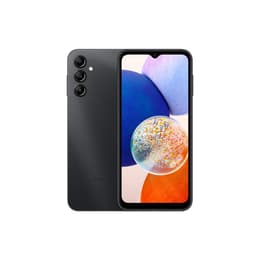
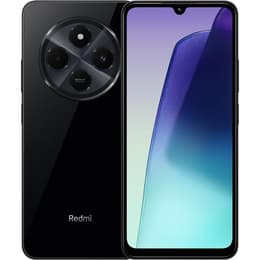
The Samsung Galaxy A14 (released in early 2023) and the Xiaomi Redmi 14C (launched in late 2024) are both smartphones designed for everyday use. While both devices aim to provide a comprehensive mobile experience, they differ in their display technology, software approach, and specific hardware optimizations. This comparison will explore their practical differences to help users determine which device best suits their needs.
Colour
Storage
When considering the long-term usability of a smartphone, factors like software support and physical resilience are key. The Galaxy A14 and Redmi 14C offer distinct timelines for updates and varying levels of physical robustness.
Year of Release
Compatible with latest Update
OS
Foldable
The performance of a smartphone directly impacts daily interactions, from launching applications to managing multiple tasks. Both the Galaxy A14 and Redmi 14C are equipped to handle common smartphone activities, though with different underlying hardware.
The display is a primary interface for any smartphone, influencing everything from content consumption to daily navigation. The Galaxy A14 and Redmi 14C offer large screens with different characteristics.
Resolution
Screen type
Camera capabilities are a significant consideration for many smartphone users, capturing everyday moments and special occasions. Both devices offer multi-camera setups with varying performance.
Main camera
Front camera
Beyond core specifications, several practical features contribute to the overall user experience. The Galaxy A14 and Redmi 14C offer a range of connectivity and design elements.
Weight
Screen size (in)
Network
SIM card
Carrier compatibility
Both the Samsung Galaxy A14 and Xiaomi Redmi 14C cater to users seeking capable smartphones for everyday tasks. User feedback for the Galaxy A14 often praises its strong battery life and a main camera that performs well in good lighting conditions. However, some users have expressed concerns about occasional performance sluggishness and touch responsiveness.
The Redmi 14C is frequently lauded for its remarkably smooth 120Hz display and generally dependable battery life. Criticisms sometimes point to its HD+ display resolution and the presence of bloatware, along with slower app performance due to eMMC storage.
Users prioritizing a sharper display resolution and a slightly longer software security update commitment might lean towards the Samsung Galaxy A14. Its 5G connectivity also makes it a suitable choice for those needing faster mobile data speeds. Conversely, users who value an exceptionally smooth display experience for browsing and media, along with a slightly larger screen, may find the Xiaomi Redmi 14C more appealing. Its 120Hz refresh rate is a notable feature for its segment.
Ultimately, the choice depends on individual priorities. Both devices offer a solid foundation for daily smartphone use, and considering a quality-assured refurbished option for either model can be an eco-friendly alternative to extend their lifecycle.