

Galaxy A14 Vs Galaxy Z Fold4

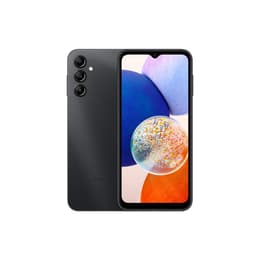
Galaxy A14
Galaxy A14
Starting at

Refurbished price:97.00

Versus €269.00 new

See options
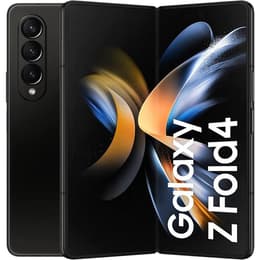
Galaxy Z Fold4
Galaxy Z Fold4
Starting at

Refurbished price:433.00

Versus €1,889.00 new

See options

Ratings

The Samsung Galaxy A14 (2023) is a traditional smartphone designed for everyday use, while the Samsung Galaxy Z Fold4 (2022) is a foldable smartphone that offers a tablet-like experience when unfolded. These devices cater to different user needs, primarily distinguished by their form factor, display technology, and overall performance capabilities. Both operate on the Android platform with Samsung's One UI.

Scores

Durability

The expected lifespan and software support differ between these two models, reflecting their respective market segments.

  • Software Support: The Galaxy A14, released in early 2023, is typically slated to receive two major Android operating system updates and four years of security updates, extending its support until approximately 2027. The Galaxy Z Fold4, launched in August 2022, is promised four Android OS upgrades and five years of security updates, providing a longer software longevity, potentially until 2027 or beyond for security patches.
  • Build Materials: The Galaxy A14 features a plastic back and sides with a glass front, offering a practical and durable construction for daily handling. The Galaxy Z Fold4 incorporates more robust materials, including Gorilla Glass Victus+ on its outer display and back panel, and an Armor Aluminum frame, contributing to its enhanced physical resilience.
  • Water Resistance: The Galaxy A14 does not carry an official IP rating for water or dust resistance. In contrast, the Galaxy Z Fold4 boasts an IPX8 water resistance rating, meaning it can withstand submersion in fresh water, though it lacks official dust resistance.

Year of Release

2023

2022

Compatible with latest Update

No

Yes

OS

Android

Android

Foldable

No

Yes

Performance

The performance capabilities of the Galaxy A14 and Galaxy Z Fold4 are tailored to different usage demands, primarily influenced by their internal components and battery configurations.

  • Processing Power: The Galaxy A14 is equipped with an octa-core processor, such as the Mediatek Helio G80 or Exynos 850 for the 4G model, or the Dimensity 700 or Exynos 1330 for the 5G variant, providing sufficient power for common daily applications and light multitasking. The Galaxy Z Fold4 features a more advanced octa-core processor, enabling it to handle demanding applications, intensive gaming, and complex multitasking scenarios with greater fluidity and responsiveness.
  • Memory and Storage: The Galaxy A14 typically comes with 4GB or 6GB of RAM and 64GB or 128GB of internal storage, with the option to expand storage using a microSD card. The Galaxy Z Fold4 offers a more generous 12GB of RAM and storage options of 256GB, 512GB, or 1TB, without expandable storage.
  • Battery Life: The Galaxy A14 includes a 5000 mAh battery, which generally provides extended usage throughout a day for most users. The Galaxy Z Fold4 has a 4400 mAh dual battery, designed to power its two displays and higher-performance components, offering reliable battery performance for a flagship device. The Galaxy A14 supports 15W wired charging, while the Galaxy Z Fold4 supports faster 25W wired charging and 15W wireless charging.

Memory (GB)

4 GB

12 GB

Screen quality

The display experience is a primary differentiator between these two devices, with the Galaxy Z Fold4 offering a unique and versatile screen setup.

  • Display Technology and Size: The Galaxy A14 features a single 6.6-inch PLS LCD display, providing a clear and adequately bright viewing area for general content consumption. The Galaxy Z Fold4 offers two Dynamic AMOLED 2X displays: a 6.2-inch cover screen for quick interactions and a large 7.6-inch foldable main screen that provides an expansive canvas when unfolded.
  • Resolution and Clarity: The A14's display has a 1080 x 2408 pixel (FHD+) resolution, resulting in sharp images and text for its size. The Z Fold4's cover screen has a resolution of 2316 x 904 pixels, and its main screen boasts a higher 2176 x 1812 pixel (QXGA+) resolution, offering exceptional detail and clarity across both displays.
  • Refresh Rate and Brightness: The Galaxy A14's display operates at either a 60Hz or 90Hz refresh rate, depending on the model, providing a smooth experience for typical scrolling and navigation. Both displays on the Galaxy Z Fold4 feature an adaptive 120Hz refresh rate, which adjusts dynamically to content for smoother visuals and more responsive interactions, alongside higher peak brightness levels for better outdoor visibility.

Resolution

1080 x 2408

1812 x 2176

Screen type

PLS LCD

Foldable Dynamic AMOLED 2X

Audiovisual

The camera systems of the Galaxy A14 and Galaxy Z Fold4 are designed for different levels of photographic versatility and image quality.

  • Rear Camera System: The Galaxy A14 includes a triple rear camera setup, typically featuring a 50MP main sensor for general photography, complemented by a 5MP ultrawide or 2MP depth sensor and a 2MP macro lens. The Galaxy Z Fold4 offers a more advanced triple camera system, comprising a 50MP main sensor with optical image stabilization (OIS), a 12MP ultrawide lens, and a 10MP telephoto lens with 3x optical zoom and OIS, providing greater flexibility for various shooting conditions.
  • Front and Specialty Cameras: For selfies, the Galaxy A14 has a 13MP front-facing camera. The Galaxy Z Fold4 features a 10MP camera on its cover screen and a 4MP under-display camera on the main foldable screen, designed to be less visible during use.
  • Video Recording and Audio: The Galaxy A14 supports video recording up to 1080p at 30 frames per second. The Galaxy Z Fold4 is capable of recording video at up to 8K resolution at 24 frames per second, and includes advanced video digital image stabilization for smoother footage. For audio, the A14 has a single loudspeaker, while the Z Fold4 provides a more immersive experience with stereo speakers and Dolby Atmos support.

Main camera

50 megapixels

50 megapixels

Front camera

13 megapixels

4 megapixels

Miscellaneous

Beyond core specifications, several practical elements differentiate the user experience between the Galaxy A14 and Galaxy Z Fold4.

  • Connectivity and Ports: Both devices support modern connectivity standards, including Wi-Fi and Bluetooth. The Galaxy A14 typically features Wi-Fi 5 and Bluetooth 5.1 or 5.2, along with a 3.5mm headphone jack and a USB-C port. The Galaxy Z Fold4 supports Wi-Fi 6 and Bluetooth 5.2, and includes a USB-C 3.1 port, but omits the traditional headphone jack.
  • Biometric Security: Both smartphones incorporate a side-mounted fingerprint sensor for secure unlocking. The Galaxy Z Fold4 also offers face recognition as an additional biometric option.
  • Physical Design and Handling: The Galaxy A14 has a traditional slab design, measuring approximately 167.7 x 78 x 9.1 mm and weighing around 201-202 grams, making it a substantial but manageable device. The Galaxy Z Fold4, due to its foldable nature, has distinct dimensions: when folded, it measures about 155.1 x 67.1 x 14.2-15.8 mm, and when unfolded, it expands to 155.1 x 130.1 x 6.3 mm. It weighs 263 grams, reflecting its more complex construction and larger screen area.

Weight

201 g

263 g

Screen size (in)

6.6

7.6

Network

4G

5G

SIM card

Dual Physical SIM

Dual Physical SIM + eSIM

Carrier compatibility

Unlocked

Unlocked

The Samsung Galaxy A14 and Galaxy Z Fold4 cater to distinct user preferences and needs. The Galaxy A14 is often praised by users for its dependable battery life, clear display for its category, and the inclusion of a headphone jack and expandable storage, making it a practical choice for essential smartphone functions. Some common feedback points include its plastic build and the absence of advanced display features like higher refresh rates on all models.

Conversely, the Galaxy Z Fold4 receives acclaim for its innovative foldable design, offering a versatile large screen for productivity and immersive media consumption. Users appreciate its powerful performance, advanced camera system with optical zoom, and premium build quality. However, some users note its increased weight and thickness when folded, and the visible crease on the inner display.

Users prioritizing a straightforward, reliable smartphone for daily communication, social media, and casual content viewing will find the Galaxy A14 well-suited to their needs. Its robust battery and functional design make it a solid choice for students or those seeking a dependable device without advanced features. For individuals who require a device that can transform to offer a larger workspace, enhanced multitasking capabilities, and a more sophisticated camera system for creative pursuits, the Galaxy Z Fold4 presents a compelling option. It is particularly beneficial for professionals or travelers who value a device that adapts to various tasks, from detailed document review to immersive entertainment.

Both models are available as quality-assured refurbished options, providing an eco-friendly alternative for consumers looking to make informed and sustainable choices.


See all articles

Our recent comparisons