
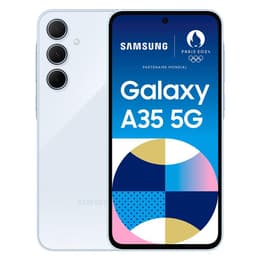


Galaxy A14 Vs Galaxy A35

Galaxy A14
Galaxy A14
Starting at

Refurbished price:97.00

Versus €269.00 new

See options
Galaxy A35
Galaxy A35
Starting at

Refurbished price:210.00

Versus €429.00 new

See options

Ratings

The Samsung Galaxy A14, released in early 2023, and the Samsung Galaxy A35, launched in early 2024, are both smartphones designed to offer a balanced experience for everyday users. While sharing the Android operating system with Samsung's One UI, the Galaxy A35 introduces notable enhancements in display technology, processing power, and overall durability compared to its predecessor.

Scores

Durability

When considering the long-term usability of these devices, several factors contribute to their practical lifespan.

  • Release Timeline and Software Support: The Galaxy A14, released in January 2023, typically receives two major Android operating system updates and four years of security updates, extending its software support until approximately 2027. The newer Galaxy A35, launched in March 2024, benefits from a longer commitment, offering four major Android updates and five years of security patches, providing support well into 2029.
  • Physical Durability: The Galaxy A14 features a plastic back and frame, offering a degree of resilience to everyday bumps. The Galaxy A35 elevates this with a glass front and back, protected by Gorilla Glass Victus+, and a plastic frame, contributing to a more robust feel. Additionally, the Galaxy A35 includes an IP67 rating for dust and water resistance, a feature absent from the Galaxy A14, providing better protection against environmental elements.
  • Repairability: Both devices demonstrate a commitment to repairability. The Galaxy A14 has a repairability score of 8 out of 10, partly due to its battery being secured with pull tabs, simplifying replacement. The Galaxy A35 achieves a slightly higher repairability score of 8.4 out of 10, indicating improved accessibility for repairs and longer availability of spare parts.

Year of Release

2023

2024

Compatible with latest Update

No

Yes

OS

Android

Android

Foldable

No

No

Performance

The responsiveness and capability of a smartphone's internal components significantly impact daily usage, from launching applications to handling demanding tasks.

  • Processing Power: The Galaxy A14 is equipped with an octa-core processor that capably handles routine tasks such as web browsing, social media, and light applications. The Galaxy A35 features a more advanced octa-core processor, which provides a noticeable boost in overall speed and efficiency. This translates to quicker app loading times, smoother transitions between applications, and a more fluid user experience, even when multitasking.
  • Multitasking and Storage: The Galaxy A14 typically comes with 4GB or 6GB of RAM and 64GB or 128GB of internal storage, which is expandable via a microSD card. The Galaxy A35 offers more generous configurations, starting with 6GB or 8GB of RAM and 128GB or 256GB of internal storage, also expandable. The increased RAM in the A35 allows for more applications to run simultaneously without slowdowns, benefiting users who frequently switch between apps.
  • Gaming and Demanding Applications: While the Galaxy A14 can manage casual games, the Galaxy A35's enhanced processing capabilities and improved thermal management make it better suited for more graphically intensive games and demanding applications, offering a more consistent and enjoyable experience. Users of the A35 report snappy performance for daily tasks, though occasional minor delays might occur with very heavy applications.

Memory (GB)

4 GB

6 GB

Screen quality

The display is a primary interface for any smartphone, and the differences in screen technology and features between these two models impact the visual experience.

  • Display Technology and Clarity: The Galaxy A14 features a 6.6-inch PLS LCD display, providing clear visuals for everyday content consumption. The Galaxy A35, on the other hand, boasts a 6.6-inch Super AMOLED display. This technology delivers deeper blacks, higher contrast, and more vibrant colors, enhancing the viewing experience for photos, videos, and general use.
  • Smoothness and Brightness: The Galaxy A14 offers a refresh rate of up to 90Hz on its 5G variant, providing a smoother scrolling experience than standard 60Hz displays. The Galaxy A35 steps up to a 120Hz refresh rate, resulting in even more fluid animations and responsiveness, particularly noticeable during scrolling and gaming. Furthermore, the A35's display can reach a peak brightness of 1000 nits, aided by Vision Booster technology, which significantly improves outdoor visibility under direct sunlight compared to the A14.
  • Viewing Experience: Both phones offer a Full HD+ resolution, ensuring sharp text and images. However, the Super AMOLED panel of the Galaxy A35, combined with its higher refresh rate and brightness, provides a more immersive and comfortable viewing experience, especially for media consumption and use in varied lighting conditions.

Resolution

1080 x 2408

1080 x 2340

Screen type

PLS LCD

Super AMOLED

Audiovisual

The camera systems on both devices are designed to capture everyday moments, but they offer different capabilities and features.

  • Rear Camera System: The Galaxy A14 5G includes a triple-camera setup with a 50-megapixel main sensor, a 2-megapixel macro lens, and a 2-megapixel depth sensor. The Galaxy A35 also features a triple-camera system, but it enhances the experience with a 50-megapixel main sensor that includes Optical Image Stabilization (OIS), an 8-megapixel ultrawide lens, and a 5-megapixel macro lens. The OIS on the A35's main camera helps reduce blur in photos and videos, especially in challenging lighting conditions.
  • Photography Performance: In well-lit environments, both phones can capture detailed images with their main sensors. However, the Galaxy A35's OIS contributes to clearer shots, and its dedicated ultrawide lens offers more versatility for capturing broader scenes, a feature absent in the Galaxy A14 5G. For low-light photography, the A35 generally performs better, producing images with more detail and less noise, though users note that low-light photos can still be blurry without night mode.
  • Video Recording and Front Camera: The Galaxy A14 supports video recording up to 1080p at 30 frames per second (fps) with both its rear and 13-megapixel front cameras. The Galaxy A35 significantly upgrades video capabilities, allowing for 4K video recording at 30fps from both its 50-megapixel main rear camera and its 13-megapixel front camera, offering higher detail and clarity for video content. The A35 also features stereo speakers for a more immersive audio experience during media playback.

Main camera

50 megapixels

50 megapixels

Front camera

13 megapixels

13 megapixels

Miscellaneous

Beyond the core components, several practical features differentiate the user experience of these two smartphones.

  • Connectivity and Ports: Both devices support 5G connectivity. The Galaxy A14 includes Wi-Fi 5 and Bluetooth 5.1 or 5.2, along with a 3.5mm headphone jack and a USB-C port for charging and data transfer. The Galaxy A35 steps up to Wi-Fi 6 and Bluetooth 5.3, offering faster and more stable wireless connections. It features a USB-C port but omits the 3.5mm headphone jack.
  • Biometric Security: The Galaxy A14 utilizes a side-mounted fingerprint sensor for secure unlocking. The Galaxy A35 integrates an in-display fingerprint sensor, providing a more modern and seamless unlocking experience.
  • Design and Handling: The Galaxy A14 has dimensions of approximately 167.7 x 78 x 9.1 mm and weighs around 201-202 grams. The Galaxy A35 is slightly more compact and refined, measuring about 161.7 x 78 x 8.2 mm and weighing 209 grams. The A35's glass construction and IP67 rating contribute to a more premium feel and enhanced durability against dust and water ingress.

Weight

201 g

209 g

Screen size (in)

6.6

6.6

Network

4G

5G

SIM card

Dual Physical SIM

Dual Physical SIM

Carrier compatibility

Unlocked

Unlocked

The Samsung Galaxy A14 and Galaxy A35 cater to different user priorities, reflecting their respective release timelines and feature sets. The Galaxy A14, as an earlier model, provides a solid foundation for essential smartphone functions. Users often praise its reliable battery life and the continued inclusion of a 3.5mm headphone jack, which is a practical benefit for many. Its performance is generally considered adequate for daily tasks, making it a suitable choice for those who primarily use their phone for communication, social media, and light browsing.

The Galaxy A35, being a newer iteration, builds upon this foundation with significant upgrades. Users frequently highlight its vibrant Super AMOLED display with a high refresh rate, which offers a noticeably smoother and more visually engaging experience. The improved camera system, particularly with the addition of Optical Image Stabilization and enhanced video recording capabilities, is another common point of appreciation, allowing for more stable and detailed captures. Its increased processing power and longer software support also contribute to a more future-proof device, capable of handling more demanding applications and receiving updates for an extended period. Some users note that while the A35's daylight camera performance is strong, low-light results can still be inconsistent, and the macro lens is often seen as less useful than a more capable ultrawide or telephoto option.

Users prioritizing a device with a modern display, enhanced camera features, smoother overall performance, and a longer software support window may find the Galaxy A35 to be a more suitable option. Its IP67 rating also offers an added layer of protection for those concerned about dust and water exposure. Conversely, individuals who value a more accessible entry point into the smartphone ecosystem, appreciate the presence of a traditional headphone jack, and primarily engage in less intensive smartphone activities, may find the Galaxy A14 to meet their needs effectively. Both models, especially when considering quality-assured refurbished options, present eco-friendly alternatives for consumers looking to make informed and sustainable choices.


See all articles

Our recent comparisons