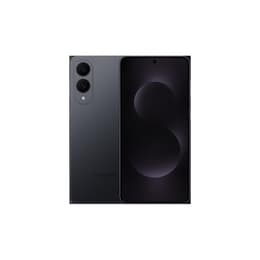


Compare models

Galaxy A16 Vs Galaxy S25 Edge

  • 1-year minimum warranty
  • Free delivery on all orders
  • Free 30-day returns
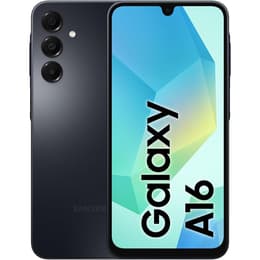
Galaxy A16
Starting at

Refurbished price:€168.00

Versus €250.00 new

See options
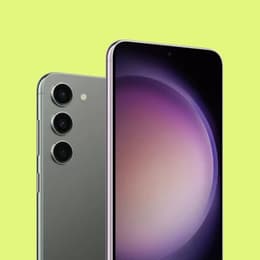
Galaxy S25 Edge
Starting at

Refurbished price:€475.00

Versus €1,275.21 new

See options

Differences at a glance

The Samsung Galaxy A16 (2024) and the Samsung Galaxy S25 Edge (2025) represent two very different tiers within Samsung's smartphone lineup, addressing distinct user priorities. While the Galaxy A16 focuses on essential everyday reliability and long-term software support in a practical package, the Galaxy S25 Edge emphasizes an ultra-slim profile, premium materials, and advanced processing capabilities. Both models operate on Android with Samsung's custom interface, though they cater to entirely different expectations regarding daily handling and capability.

Available Models

Colour

Storage

Scores

Durability

When examining longevity and build endurance, these two smartphones approach support and hardware durability from contrasting angles based on their release timelines and market positioning.

  • Software Support: The Galaxy A16 offers extended update commitments unusual for its tier, while the Galaxy S25 Edge benefits from a flagship-tier multi-year update schedule designed to keep software current for many years.
  • Build and Materials: The Galaxy S25 Edge utilizes robust titanium-infused framing for increased structural rigidity, whereas the Galaxy A16 relies on a sturdy plastic composite build that handles everyday wear predictably.
  • Expected Lifespan: Both devices are built to easily endure multi-year usage cycles, with the choice depending on whether users prefer long-term security patching on an accessible device or high-end hardware longevity.

Year of Release

2024

2025

OS

Android

Android

Foldable

No

No

Performance

Underneath the surface, day-to-day speed and multitasking behavior differ significantly due to the processing hardware housed inside each device.

  • App Responsiveness and Multitasking: The Galaxy S25 Edge handles heavy applications, demanding games, and rapid multitasking effortlessly, whereas the Galaxy A16 manages standard messaging, web browsing, and casual apps reliably without high-end overhead.
  • Memory and Storage Configurations: The Galaxy S25 Edge starts with higher baseline storage and generous RAM configurations, while the Galaxy A16 provides moderate base storage paired with expandable card slots for media flexibility.
  • Battery Behavior: The Galaxy A16's larger physical cell comfortably spans typical daily routines, whereas the ultra-slim profile of the Galaxy S25 Edge requires a smaller battery capacity, leading to more frequent recharges for heavy users.

Screen quality

Visual output and display engineering offer sharp differences in clarity, brightness performance, and fluid motion during media consumption.

  • Display Technology: Both models feature vibrant OLED panels that deliver deep blacks and rich contrast, though the S25 Edge employs a higher-resolution panel.
  • Refresh Rate and Fluidity: The Galaxy S25 Edge features an adaptive high refresh rate for exceptionally smooth scrolling, while the Galaxy A16 supports a standard high refresh rate that improves everyday navigation smoothness.
  • Outdoor Legibility: Peak brightness levels on the Galaxy S25 Edge ensure strong visibility under direct sunlight, whereas the Galaxy A16 remains adequately legible for standard outdoor tasks.

Resolution

1080x2340

1440 x 3120

Audiovisual

Photography and media recording capabilities vary noticeably, reflecting the distinct design goals of an accessible daily tool versus a slim flagship.

  • Camera Systems: The Galaxy S25 Edge incorporates high-resolution primary sensors capable of capturing fine details and versatile zoom ranges, while the Galaxy A16 relies on a functional triple-lens setup suited for casual snapshots.
  • Low-Light Performance: Advanced image processing on the Galaxy S25 Edge preserves clarity in dim environments, whereas the Galaxy A16 produces balanced results that benefit from stable hands or adequate ambient light.
  • Audio and Video: Stereo speakers on the S25 Edge offer a fuller soundstage for media playback, while the single speaker and headphone options on the A16 cater to traditional listening setups.

Miscellaneous

Practical daily usability features, physical dimensions, and connectivity standards shape how each phone integrates into everyday life.

  • Dimensions and Handling: The Galaxy S25 Edge stands out for its exceptionally thin profile and lightweight chassis, whereas the Galaxy A16 has a slightly thicker build that provides a secure, traditional grip.
  • Connectivity: Both models support modern 5G networks, fast Wi-Fi standards, and Bluetooth pairing for wireless accessories.
  • Authentication: Each device utilizes responsive biometric security methods, including facial recognition and integrated fingerprint sensors, for quick unlocking.

Weight

200 g

163 g

Screen size (in)

6.7

6.7

Network

4G

5G

SIM card

Physical SIM

Physical SIM + eSIM

Carrier compatibility

Unlocked

Unlocked

Connector

USB-C

USB-C

What the community thinks

User feedback highlights distinct preferences for each smartphone. Owners of the Galaxy A16 frequently praise its dependable battery endurance, reliable daily utility, and long software support window relative to its category. Conversely, users of the Galaxy S25 Edge often commend its strikingly thin physical profile, fluid display smoothness, and rapid system execution. Common discussions note that the S25 Edge requires more mindful daily recharging, while the A16 is sometimes noted for modest processing speeds during intensive tasks.

Users prioritizing an exceptionally slim design, high-tier responsiveness, and advanced visual capabilities will find the Galaxy S25 Edge well-suited to their needs. Meanwhile, users prioritizing a reliable, straightforward daily device with expandable storage may lean toward the Galaxy A16. For those seeking an eco-friendly, quality-assured alternative, choosing a refurbished model provides a sustainable path to acquiring either device without compromising on functionality.