

Compare models
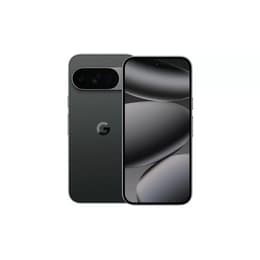
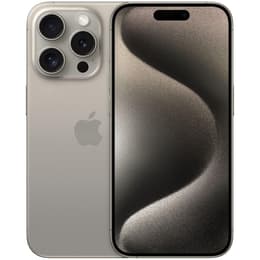
Google Pixel 10 Pro Vs iPhone 15 Pro
- 1-year minimum warranty
- Free delivery on all orders
- Free 30-day returns
Differences at a glance
The Google Pixel 10 Pro (2025) and the iPhone 15 Pro (2023) represent refined flagship smartphone engineering from two major platform ecosystems. While they run on entirely different operating systems, both devices deliver high-end processing power, versatile camera systems, and premium build quality in pocket-friendly form factors.
Available Models
Colour
Storage
Scores
Durability
When evaluating hardware longevity and software support, both devices offer robust multi-year backing, though their release schedules and update frameworks differ.
- Software Support Duration: The Google Pixel 10 Pro benefits from an extended software update commitment spanning multiple years of operating system upgrades, whereas the iPhone 15 Pro follows Apple's traditional long-term update cycle.
- Repairability and Build Maintenance: Both models utilize durable frame materials and hardened glass protection, with modular internal layouts that support standard component replacements through authorized service channels.
- Expected Practical Lifespan: Thanks to powerful internal architecture and generous memory capacities, both smartphones maintain reliable day-to-day usability over extended ownership cycles.
Year of Release
2025
2023
Performance
Both smartphones handle demanding daily workflows, intensive multitasking, and complex applications with high system fluidity and responsiveness.
- App Loading and Multitasking: Each device features ample memory capacity and powerful processing hardware that allow background applications to remain active without stuttering or unexpected reloads.
- Battery Behavior: The Google Pixel 10 Pro integrates a larger battery capacity suited for extended daily screen time, while the iPhone 15 Pro optimizes power efficiency to sustain typical daily usage profiles reliably.
- Storage Configurations: Both models offer scalable storage tiers starting from standard capacities up to expansive options for large media libraries and heavy file storage.
Screen quality
Display engineering differs slightly between the two models in size, peak luminance capabilities, and refresh technology.
- Display Technology: Both devices employ advanced OLED panels that produce deep black levels, high contrast ratios, and sharp resolutions for media viewing.
- Outdoor Visibility: High peak brightness levels on both screens ensure clear readability and vibrant color reproduction even under direct sunlight.
- Refresh Rate and Smoothness: Adaptive refresh rate technology scales dynamically on both displays to provide fluid scrolling during navigation and lower rates during static tasks to conserve battery.
Audiovisual
Photography and video capabilities are central to both flagship experiences, offering multi-lens setups tailored for varied shooting conditions.
- Camera System Versatility: Both models feature high-resolution main, ultra-wide, and telephoto lenses that capture detailed imagery across diverse focal lengths.
- Low-Light and Video Performance: Computational photography algorithms on the Google Pixel 10 Pro excel in challenging dark environments, while the iPhone 15 Pro provides robust stabilization and cinematic video recording features.
- Audio and Media Output: Stereo speaker systems on both devices deliver balanced sound output suitable for hands-free calling, video playback, and casual music listening.
Miscellaneous
Physical dimensions, weight distribution, and connectivity standards shape the everyday handling experience of each device.
- Build Materials: The Google Pixel 10 Pro utilizes an aluminum frame with textured glass backing, whereas the iPhone 15 Pro features a brushed titanium frame with contoured edges.
- Connectivity and Ports: Both models support current-generation 5G connectivity standards and utilize reversible USB-C charging ports for universal cable compatibility.
- Authentication and Sensors: Biometric security options include secure facial recognition alongside distinct fingerprint authentication methods depending on the ecosystem.
Screen size (in)
6.3
6.1
Network
5G
5G
SIM card
Physical SIM + eSIM
eSIM
Carrier compatibility
Unlocked
Unlocked
Connector
USB-C
USB-C (USB 3)
What the community thinks
Choosing between the Google Pixel 10 Pro and the iPhone 15 Pro largely depends on user preference for operating systems and ecosystem integration. Users prioritizing a customized interface, advanced artificial intelligence integrations, and flexible Google ecosystem services will find the Pixel 10 Pro well-suited to their workflow. Conversely, users who prefer streamlined Apple ecosystem continuity, long-standing iOS familiarity, and compact titanium ergonomics often gravitate toward the iPhone 15 Pro.
For consumers seeking an eco-friendly alternative, choosing a quality-assured refurbished option provides a sustainable way to access these high-end features while reducing electronic waste. Both devices stand as capable daily companions that deliver reliable performance across diverse user profiles.