
Compare models
Galaxy A13 Vs iPhone 16 Plus
- 1-year minimum warranty
- Free delivery on all orders
- Free 30-day returns
Differences at a glance
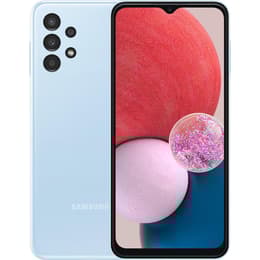
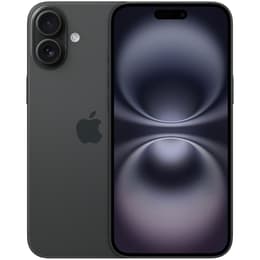
The Samsung Galaxy A13, released in March 2022, and the iPhone 16 Plus, launched in September 2024, represent distinct approaches to smartphone design and functionality. While both are large-screen devices, they cater to different user expectations, primarily differentiated by their operating systems and the technological advancements associated with their respective release timelines. The Galaxy A13 operates on Android, offering a customizable experience, whereas the iPhone 16 Plus runs on Apple's iOS, known for its integrated ecosystem and streamlined interface.
Available Models
Colour
Storage (GB)
Scores
Durability
The practical lifespan of a smartphone is influenced by its initial build quality, software support, and the pace of technological evolution.
- Release Timeline: The Galaxy A13 was introduced in March 2022, making it a device that has been on the market for approximately four years. The iPhone 16 Plus, released in September 2024, is a more recent model, benefiting from newer components and design principles.
- Software Longevity: The Galaxy A13 launched with Android 12 and One UI 4.1. It is no longer eligible for major Android OS upgrades, with software support for these updates concluding around early 2025. However, it continues to receive quarterly security updates as of February 2026. The iPhone 16 Plus, having launched with iOS 18, is expected to receive software updates for a longer duration, typically six to seven years or more, ensuring extended access to new features and security patches.
- Durability Features: The Galaxy A13 features Corning Gorilla Glass 5 for screen protection and a plastic frame and back. The iPhone 16 Plus incorporates a Ceramic Shield front, an aluminum design, and a color-infused glass back, along with an IP68 rating for water and dust resistance, indicating a higher level of protection against environmental elements.
Year of Release
2022
2024
Compatible with latest Update
No
Yes
Foldable
No
No
Performance
Performance differences between these two devices are notable, stemming from their distinct hardware generations and operating system optimizations.
- Processing Power: The Galaxy A13 is equipped with an octa-core processor, such as the Exynos 850 or MediaTek Dimensity 700, paired with 3GB, 4GB, or 6GB of RAM. This configuration is suitable for everyday tasks like browsing and social media. The iPhone 16 Plus features the A18 Bionic chip, which includes a new 6-core CPU, 5-core GPU, and a 16-core Neural Engine, alongside 8GB of RAM. This hardware enables smooth handling of demanding applications, advanced gaming, and complex multitasking.
- System Responsiveness: Users of the Galaxy A13 have reported that the device can experience sluggishness and lag, particularly with prolonged use or when running more intensive applications and games. In contrast, the iPhone 16 Plus is designed for consistent and fluid performance across various tasks, with users noting its ability to run games smoothly without significant heat generation.
- Storage Options: The Galaxy A13 offers internal storage options of 32GB, 64GB, or 128GB, with the flexibility to expand storage up to 1TB using a microSD card. The iPhone 16 Plus comes with internal storage capacities of 128GB, 256GB, or 512GB, but does not support expandable storage.
Screen quality
The visual experience offered by these two smartphones differs significantly due to their display technologies and specifications.
- Display Technology and Clarity: The Galaxy A13 features a 6.6-inch PLS LCD display with a resolution of 1080 x 2408 pixels, providing a clear viewing experience for general content. The iPhone 16 Plus boasts a 6.7-inch Super Retina XDR OLED display with a resolution of 2796 x 1290 pixels at 460 ppi. This OLED technology delivers deep blacks, high contrast, and vibrant colors.
- Brightness and Refresh Rate: The Galaxy A13's display operates at a standard 60Hz refresh rate. The iPhone 16 Plus also features a 60Hz refresh rate, which provides a smooth experience for most users, though it does not offer the adaptive refresh rates found in some higher-end models. The iPhone 16 Plus offers a typical brightness of 1000 nits, with a peak outdoor brightness of 2000 nits, enhancing visibility in bright conditions.
- Additional Display Features: The iPhone 16 Plus includes features like Dynamic Island, HDR display, True Tone for adaptive white balance, and Wide Color (P3) for a broader range of colors. These elements contribute to a more immersive and visually rich user experience compared to the more conventional display of the Galaxy A13.
Resolution
1080 x 2408
1290 x 2796
Screen type
PLS LCD
Super Retina XDR OLED
Audiovisual
The camera systems on the Galaxy A13 and iPhone 16 Plus are designed for different levels of photographic capability and user expectations.
- Rear Camera System: The Galaxy A13 (4G variant) is equipped with a quad-camera setup, including a 50MP main sensor, a 5MP ultrawide lens, and two 2MP sensors for macro and depth. This system is suitable for basic photography in well-lit environments. The iPhone 16 Plus features an advanced dual-camera system with a 48MP Fusion Main camera that also enables a 2x telephoto capability, and a 12MP ultrawide lens with a 120-degree field of view.
- Photography and Video Features: The Galaxy A13 records video at 1080p resolution at 30 frames per second. User feedback suggests that its camera performance, particularly in low light and for selfies, can be a limitation. The iPhone 16 Plus offers more advanced video capabilities, including 4K Dolby Vision video recording at up to 60 frames per second and Cinematic mode for professional-looking depth effects. It also supports spatial video recording.
- Front Camera and User Experience: The Galaxy A13 has an 8MP front camera. The iPhone 16 Plus features a 12MP front camera with autofocus. The iPhone 16 Plus also introduces a new Camera Control button and an Action button, enhancing the user's ability to quickly access and adjust camera settings.
Main camera
50 megapixels
48 megapixels
Front camera
8 megapixels
12 megapixels
Miscellaneous
Beyond core performance and display, several practical elements contribute to the overall user experience of these devices.
- Connectivity and Ports: The Galaxy A13 supports 4G/5G (depending on the variant), Wi-Fi 5, and Bluetooth 5.0. It includes a USB Type-C 2.0 port and a 3.5mm headphone jack. The iPhone 16 Plus offers more advanced connectivity with 5G, Wi-Fi 7, and Bluetooth 5.3. It features a USB-C port for charging and data transfer, but does not include a 3.5mm headphone jack.
- Security and Interaction: The Galaxy A13 incorporates a side-mounted fingerprint sensor for biometric authentication. The iPhone 16 Plus utilizes Face ID for secure facial recognition. Additionally, the iPhone 16 Plus features a customizable Action button, allowing users to quickly access preferred functions.
- Physical Characteristics: The Galaxy A13 measures 165.1 x 76.4 x 8.8 mm and weighs 195 grams. The iPhone 16 Plus has dimensions of 160.9 x 77.8 x 7.8 mm and weighs 199 grams. Both are large-screen devices, but the iPhone 16 Plus is slightly thinner and heavier.
Weight
195 g
199 g
Screen size (in)
6.6
6.7
Network
4G
5G
SIM card
Dual Physical SIM
eSIM
Carrier compatibility
Unlocked
Unlocked
What the community thinks
User sentiment for the Galaxy A13 often highlights its robust battery life as a significant advantage, with many appreciating its ability to last through a full day of use. However, common criticisms revolve around its performance, with users reporting sluggishness, especially after extended use or with demanding applications, and dissatisfaction with camera quality.
The iPhone 16 Plus receives praise for its exceptional battery life, with many users reporting it can comfortably last a full day or even longer, making it a strong contender for those prioritizing endurance. Its smooth performance and advanced camera capabilities are also frequently lauded. Some users note that while the 60Hz display is functional, it may not offer the same fluidity as higher refresh rate screens found in other premium devices.
For users prioritizing extended software support, a highly responsive operating system, and advanced camera features, the iPhone 16 Plus aligns well with those needs. Its robust build and strong performance make it suitable for professionals, content creators, or anyone seeking a premium and long-lasting device. Conversely, individuals who value expandable storage, a 3.5mm headphone jack, and a more budget-conscious approach to smartphone ownership may find the Galaxy A13 to be a practical choice for essential daily tasks. Both devices, when considered as quality-assured refurbished options, offer an eco-friendly alternative for consumers looking to make informed and sustainable choices.