

Compare models
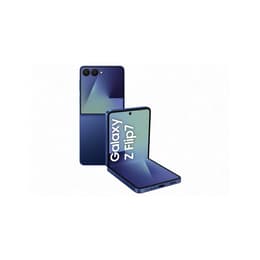
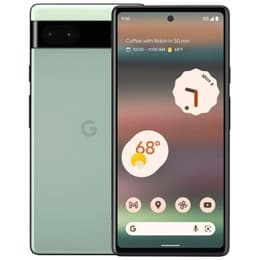
Galaxy Z Flip7 Vs Google Pixel 6A
- 1-year minimum warranty
- Free delivery on all orders
- Free 30-day returns
Differences at a glance
The Samsung Galaxy Z Flip7 (2025) and the Google Pixel 6A (2022) represent two completely different approaches to smartphone engineering, contrasting a modern foldable clamshell design with a traditional, pocket-friendly candy bar format. While the Galaxy Z Flip7 features a flexible folding screen and contemporary internals running Android, the Google Pixel 6A relies on a standard rigid display powered by Google's own operating system ecosystem. These structural differences define their unique form factors and everyday utility.
Available Models
Colour
Storage
Scores
Durability
When evaluating hardware longevity and software support, the Galaxy Z Flip7 and Google Pixel 6A differ significantly due to their distinct release years and hardware designs.
- Release timeline: The Galaxy Z Flip7 launched in 2025, whereas the Google Pixel 6A debuted in 2022, placing them generations apart in manufacturing age.
- Software support: The Galaxy Z Flip7 benefits from a much longer extended software update schedule, while the Pixel 6A approaches the latter stages of its supported security patch lifecycle.
- Physical durability: The folding mechanism of the Galaxy Z Flip7 requires careful handling compared to the rigid, monolithic glass-and-plastic construction of the Pixel 6A.
Year of Release
2025
2022
Compatible with latest Update
Yes
Yes
OS
Android
Android
Foldable
Yes
No
Performance
Underneath their respective exteriors, both smartphones handle daily tasks, multitasking, and media consumption through distinct hardware configurations and storage capacities.
- Storage options: The Galaxy Z Flip7 provides high-tier storage configurations starting at 256GB, while the Pixel 6A offers a standard 128GB capacity.
- Multitasking execution: The Galaxy Z Flip7 handles demanding mobile games and intensive apps smoothly, whereas the Pixel 6A manages everyday tasks, messaging, and web browsing reliably with its standard memory allocation.
- Battery behavior: The Pixel 6A's smaller battery capacity paired with an older processor requires daily recharging for moderate users, while the newer internal architecture of the Galaxy Z Flip7 balances power efficiency differently across its dual-screen setup.
Screen quality
Display technology is one of the most prominent points of divergence between these two devices, affecting everything from media viewing to outdoor visibility.
- Display structure: The Galaxy Z Flip7 features a foldable dynamic OLED main screen paired with a large exterior cover display, while the Pixel 6A uses a traditional flat 6.1-inch OLED panel.
- Refresh rate: The Galaxy Z Flip7 supports a smooth 120Hz refresh rate for fluid scrolling, whereas the Pixel 6A operates at a standard 60Hz refresh rate.
- Outdoor visibility: The Galaxy Z Flip7 reaches high peak brightness levels for clear outdoor viewing, while the Pixel 6A provides adequate legibility under standard daylight conditions.
Resolution
1080x2520
1080 x 2400
Audiovisual
Optics and media output vary noticeably, offering distinct photography tools and audio-visual experiences for content capture and consumption.
- Camera systems: The Galaxy Z Flip7 utilizes a dual rear camera setup anchored by a high-resolution 50-megapixel main sensor, while the Pixel 6A relies on a proven 12.2-megapixel dual sensor arrangement known for computational photography processing.
- Video and low light: Both devices capture clear low-light imagery and stable high-definition video, though the newer processing hardware on the Galaxy Z Flip7 offers additional flexibility for creative framing angles enabled by its folding hinge.
- Media output: The stereo speaker systems on both phones deliver clear audio for hands-free calls and casual video streaming.
Front camera
10 megapixels
8 megapixels
Miscellaneous
Practical daily usability is shaped by connectivity standards, physical dimensions, and security authentication features built into each chassis.
- Biometric security: The Galaxy Z Flip7 features side-mounted fingerprint recognition and facial scanning, whereas the Pixel 6A uses an optical in-display fingerprint sensor.
- Connectivity: Both models support 5G networks, modern Wi-Fi standards, and Bluetooth, though the Galaxy Z Flip7 incorporates newer generation wireless chipsets.
- Form factor and weight: The Pixel 6A offers a lightweight, traditional candy-bar feel in the hand, while the Galaxy Z Flip7 folds compactly into a square shape that takes up less vertical pocket space.
Weight
188 g
178 g
Screen size (in)
6.9
6.1
Network
5G
5G
SIM card
Physical SIM + eSIM
Physical SIM + eSIM
Carrier compatibility
Unlocked
Unlocked
Connector
USB-C
USB-C
What the community thinks
User discussions highlight that the Google Pixel 6A earns praise for its reliable software interface, compact traditional form, and dependable everyday camera capabilities. Common concerns center around its standard 60Hz refresh rate and the aging battery life of older units. Conversely, the Galaxy Z Flip7 draws positive feedback for its innovative folding display, expansive cover screen, and fluid high-refresh-rate panel, though users note that foldable screens require mindful physical care over years of use.
Users who prioritize a compact, pocketable folding device with modern multitasking capabilities may prefer the Galaxy Z Flip7, while users looking for a straightforward, traditional smartphone experience with proven software will find the Pixel 6A well-suited to their needs. For consumers exploring sustainable technology choices, a quality-assured refurbished option provides an eco-friendly alternative to purchasing newly manufactured electronics.










