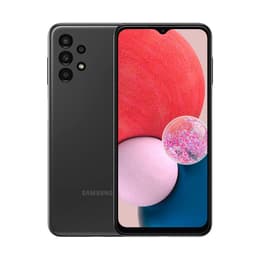
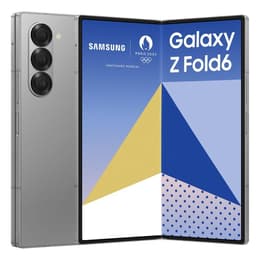


Galaxy A13 Vs Galaxy Z Fold6

Galaxy A13
Galaxy A13
Starting at

Refurbished price:96.00

Versus €249.00 new

See options
Galaxy Z Fold6
Galaxy Z Fold6
Starting at

Refurbished price:750.00

Versus €1,973.53 new

See options

Ratings

The Samsung Galaxy A13 and the Samsung Galaxy Z Fold6 represent two distinct approaches to smartphone design and functionality. The Galaxy A13, released in March 2022, is a traditional slab-style smartphone designed for everyday use, while the Galaxy Z Fold6, launched in July 2024, is a cutting-edge foldable device offering a tablet-like experience in a phone form factor. These devices cater to vastly different user needs, primarily differing in their form factor, performance capabilities, and display technology.

Scores

Durability

When considering the practical lifespan of these devices, their release timelines and software support are key factors.

  • Release Timeline: The Galaxy A13 was released in March 2022, making it an older model compared to the Galaxy Z Fold6, which launched in July 2024. This age difference directly impacts their remaining software support.
  • Software Longevity: The Galaxy Z Fold6 is expected to receive 7 years of OS and security updates, offering a significantly longer support period. The Galaxy A13, having launched with Android 12, has likely received updates to Android 14 and potentially Android 15, but its update cycle will conclude sooner than the Z Fold6.
  • Durability Features: The Galaxy A13 features Gorilla Glass 5 for screen protection, but lacks an official IP rating for water and dust resistance. The Galaxy Z Fold6, as a foldable, incorporates a more complex design with an Armor Aluminum frame and an IPX8 water resistance rating, though dust resistance for foldable hinges can be a concern.

Year of Release

2022

2024

Compatible with latest Update

No

Yes

OS

Android

Android

Foldable

No

Yes

Performance

The performance capabilities of the Galaxy A13 and Galaxy Z Fold6 are tailored for different user expectations and tasks.

  • Everyday Responsiveness: The Galaxy A13, powered by an octa-core processor (Exynos 850 or MediaTek Helio G80 depending on the variant), handles basic tasks like browsing and social media adequately, but users may experience occasional stutters and slower app loading. The Galaxy Z Fold6, featuring a flagship-grade processor (Qualcomm Snapdragon 8 Gen 3 for Galaxy), offers smooth and rapid performance for demanding applications, multitasking, and high-end gaming.
  • Multitasking and Storage: The Galaxy A13 typically comes with 3GB to 6GB of RAM and storage options from 32GB to 128GB, expandable via microSD. This configuration is suitable for light multitasking. The Galaxy Z Fold6 is equipped with 12GB of RAM and internal storage options ranging from 256GB to 1TB, providing ample capacity for extensive multitasking and storing large files without expandable storage.
  • Gaming and Demanding Apps: The Galaxy A13 is not designed for intensive gaming or graphically demanding applications, with some users reporting low frame rates. The Galaxy Z Fold6, with its powerful processor and substantial RAM, delivers a fluid experience for graphic-intensive games and professional-grade applications.

Memory (GB)

4 GB

12 GB

Screen quality

The display experience on these two Samsung devices differs significantly due to their underlying technology and form factor.

  • Display Technology and Clarity: The Galaxy A13 features a 6.6-inch PLS TFT LCD display with a resolution of 1080x2408 pixels, offering clear visuals for general use. The Galaxy Z Fold6 boasts a foldable 7.6-inch Dynamic AMOLED 2X inner display with a resolution of 2160x1856 pixels and a 6.3-inch Dynamic AMOLED 2X cover display, both providing vibrant colors, deep blacks, and excellent clarity.
  • Brightness and Refresh Rate: The Galaxy A13's LCD panel provides suitable brightness for indoor use, but may struggle in direct sunlight, and typically has a standard 60Hz refresh rate. The Galaxy Z Fold6's AMOLED displays offer high peak brightness, making them highly visible outdoors, and feature adaptive refresh rates up to 120Hz for smooth scrolling and responsive interactions.
  • Viewing Experience: The Galaxy A13 provides a large, traditional smartphone screen for media consumption. The Galaxy Z Fold6 offers a unique viewing experience with its large, immersive inner foldable screen, ideal for multitasking and consuming content, complemented by a functional cover screen for quick interactions.

Resolution

1080 x 2408

1856 x 2160

Audiovisual

The camera systems on the Galaxy A13 and Galaxy Z Fold6 are designed for different photographic needs and expectations.

  • Rear Camera System: The Galaxy A13 features a quad-camera setup with a 50MP main sensor, a 5MP ultrawide, and two 2MP sensors for macro and depth. The 50MP main camera performs well in good lighting, offering decent detail and colors, but the ultrawide and other auxiliary lenses may produce less detailed images. The Galaxy Z Fold6 comes with a triple rear camera system, including a 50MP wide-angle lens, a 12MP ultra-wide lens, and a 10MP telephoto lens with 3x optical zoom, delivering high-quality photos with good dynamic range and detail across various conditions.
  • Low-Light and Video Performance: The Galaxy A13's low-light performance is limited, and it records video at up to 1080p at 30 frames per second without advanced stabilization. The Galaxy Z Fold6 offers improved low-light capabilities, especially with its main sensor, and supports video recording up to 8K at 30fps from the primary camera and 4K at 60fps from all cameras (excluding the inner display selfie camera), along with effective video stabilization.
  • Front Camera and Unique Features: The Galaxy A13 has an 8MP front-facing camera suitable for basic selfies and video calls. The Galaxy Z Fold6 includes a 10MP cover screen selfie camera and a 4MP under-display camera on the inner screen, offering versatility for selfies and video conferencing, with the large foldable display also serving as an expansive viewfinder.

Front camera

8 megapixels

4 megapixels

Miscellaneous

Beyond core features, several practical elements differentiate the user experience of these two Samsung smartphones.

  • Connectivity and Ports: The Galaxy A13 supports 4G LTE connectivity, Wi-Fi 5, Bluetooth 5.0, and includes a 3.5mm headphone jack and a USB-C port for charging. The Galaxy Z Fold6 supports 5G connectivity, advanced Wi-Fi standards, and Bluetooth, featuring a USB-C port but typically omitting the 3.5mm headphone jack.
  • Biometrics and Sensors: Both devices include a side-mounted fingerprint sensor for secure unlocking. The Galaxy A13 also has an accelerometer, ambient light sensor, and proximity sensor. The Galaxy Z Fold6 incorporates a comprehensive suite of sensors, including an ambient light sensor and proximity sensor, and may also support S Pen functionality.
  • Build Materials and Handling: The Galaxy A13 features a plastic build, contributing to its lighter weight of 195 grams and dimensions that make it a larger traditional smartphone. The Galaxy Z Fold6, despite its advanced foldable mechanism, aims for a lighter and slimmer design compared to its predecessors, utilizing an Armor Aluminum frame and glass panels, weighing around 239 grams.

Weight

195 g

239 g

Screen size (in)

6.6

7.6

Network

4G

5G

SIM card

Dual Physical SIM

Physical SIM + eSIM

Carrier compatibility

Unlocked

Unlocked

The Samsung Galaxy A13 and Galaxy Z Fold6 cater to distinct user profiles, each excelling in different areas based on their design and capabilities. Users often praise the Galaxy A13 for its enduring battery life, which can last a full day or more with moderate use, and its large display for media consumption. However, common criticisms include its slower performance, which can lead to occasional lag, and a camera system that, while decent for its segment, does not offer advanced features or exceptional low-light performance.

Conversely, the Galaxy Z Fold6 receives acclaim for its innovative foldable design, offering a versatile large inner screen for productivity and entertainment, and its top-tier performance for demanding tasks and gaming. Its camera system is also highly regarded among foldables, providing a comprehensive photographic experience. User feedback sometimes points to concerns about the durability of the foldable display and hinge, particularly regarding dust ingress, and the overall bulk compared to traditional smartphones.

Users prioritizing a long-lasting battery and a large, conventional display for everyday communication and media consumption will find the Galaxy A13 well-suited to their needs. Those who require cutting-edge performance, a highly versatile display for multitasking, and advanced camera capabilities, and are comfortable with a foldable form factor, may lean toward the Galaxy Z Fold6. Both devices are available as quality-assured refurbished options, providing a sustainable choice for consumers looking to make an informed decision.


See all articles

Our recent comparisons






