

Galaxy A13 Vs Galaxy Z Fold4

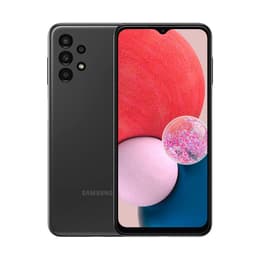
Galaxy A13
Galaxy A13
Starting at

Refurbished price:97.00

Versus €249.00 new

See options
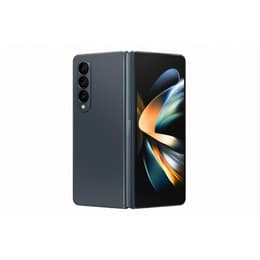
Galaxy Z Fold4
Galaxy Z Fold4
Starting at

Refurbished price:433.00

Versus €1,889.00 new

See options

Ratings

The Samsung Galaxy A13, released in March 2022, is a traditional smartphone designed for everyday use, while the Samsung Galaxy Z Fold4, launched in August 2022, is a foldable device offering a versatile, expansive screen experience. These two devices cater to distinct user needs, primarily differing in their form factor, performance capabilities, and overall user interaction. Both operate on the Android platform, providing access to a wide ecosystem of applications and services.

Scores

Durability

The expected practical lifespan and software support differ significantly between these two Samsung smartphones, reflecting their respective market segments.

  • Software Longevity: The Galaxy A13 typically receives two major Android OS updates and four years of security updates from its release. In contrast, the Galaxy Z Fold4 is eligible for up to four major Android OS updates and five years of security updates, extending its software support significantly longer.
  • Build and Repairability: The Galaxy A13 features a plastic frame and back with a Gorilla Glass 5 front, and has a repairability score of 8/10, indicating a relatively straightforward repair process. The Galaxy Z Fold4, with its aluminum frame and Gorilla Glass Victus+ protection, offers IPX8 water resistance, but its complex folding mechanism introduces unique durability considerations. While screen repairs for the Z Fold4 can be more involved, Samsung has made efforts to reduce repair costs for those with a Samsung Care+ plan.
  • Expected Lifespan: Users of the Galaxy A13 can expect a solid practical lifespan for essential functions, though performance may degrade over time. The Galaxy Z Fold4, with its premium build and extended software commitment, is designed for a longer high-performance lifespan, although the longevity of its folding screen mechanism is a key factor for long-term users.

Year of Release

2022

2022

Compatible with latest Update

No

Yes

OS

Android

Android

Foldable

No

Yes

Performance

The performance capabilities of the Galaxy A13 and Galaxy Z Fold4 are tailored to different user expectations and workloads.

  • Processing Power: The Galaxy A13 is equipped with a processor suitable for daily tasks such as web browsing, social media, and light applications. However, some users have reported that the device can experience occasional lag and app freezing after several months of use, particularly with more demanding tasks. The Galaxy Z Fold4 features a high-end processor designed to handle intensive applications, advanced multitasking, and graphically demanding games smoothly, providing a responsive user experience.
  • Multitasking and Storage: The Galaxy A13 offers various RAM configurations (3GB, 4GB, 6GB) and internal storage options (32GB, 64GB, 128GB), with the benefit of expandable storage via a microSD card. The Galaxy Z Fold4 comes with a substantial 12GB of RAM, enabling seamless switching between numerous applications and efficient handling of complex workflows. It offers larger internal storage options (256GB, 512GB, 1TB) but does not support expandable storage.
  • Battery Behavior: The Galaxy A13 houses a 5000 mAh battery, which typically provides strong battery life, often lasting a full day or more for moderate users. The Galaxy Z Fold4, with its 4400 mAh battery, is optimized to manage power across its dual displays and powerful components, generally offering a comfortable day of use for regular activities.

Memory (GB)

4 GB

12 GB

Screen quality

The display technologies and viewing experiences offered by these two devices represent distinct approaches to smartphone design.

  • Display Technology and Clarity: The Galaxy A13 features a 6.6-inch PLS TFT LCD with a resolution of 1080 x 2408 pixels, providing clear visuals for everyday content consumption. The Galaxy Z Fold4 boasts two Dynamic AMOLED 2X displays: a 7.6-inch foldable main screen with a resolution of 1812 x 2176 pixels and a 6.2-inch cover screen with 904 x 2316 pixels. These AMOLED panels deliver deep blacks, vibrant colors, and high contrast.
  • Brightness and Refresh Rate: The A13's 60Hz refresh rate is standard for smooth scrolling and video playback, and its brightness is adequate for indoor and typical outdoor use. The Z Fold4's displays both feature an adaptive 120Hz refresh rate, which provides a noticeably smoother experience for scrolling, gaming, and animations, and its higher brightness levels enhance visibility in various lighting conditions.
  • Viewing Experience: The Galaxy A13 offers a traditional, flat screen experience. The Galaxy Z Fold4's main display provides an expansive, tablet-like canvas ideal for productivity, media consumption, and split-screen multitasking, while the cover screen offers a more conventional smartphone experience when folded. The crease on the foldable display is still visible, which is a characteristic of this technology.

Resolution

1080 x 2408

1812 x 2176

Screen type

PLS LCD

Foldable Dynamic AMOLED 2X

Audiovisual

The camera systems of the Galaxy A13 and Galaxy Z Fold4 are designed to meet different photographic needs and expectations.

  • Rear Camera Capabilities: The Galaxy A13 includes a quad-camera setup with a 50MP main sensor, a 5MP ultrawide, and two 2MP sensors for macro and depth. Its main camera performs well in good lighting conditions, capturing decent detail and color. The Galaxy Z Fold4 features a triple-camera system, including a 50MP main sensor with optical image stabilization (OIS), a 12MP ultrawide, and a 10MP telephoto lens with 3x optical zoom. This setup delivers vibrant, detailed photos across various scenarios, with improved low-light performance and versatile zoom capabilities.
  • Front Camera and Video: The Galaxy A13 has an 8MP front camera, suitable for casual selfies and video calls. Video recording is available up to 1080p at 30 frames per second, without stabilization. The Galaxy Z Fold4 offers a 10MP camera on its cover display and a 4MP under-display camera on the main screen. Video recording capabilities are significantly more advanced, supporting up to 8K resolution at 24 frames per second.
  • Audio Experience: The Galaxy A13 features a single side-firing speaker. The Galaxy Z Fold4 provides a more immersive audio experience with dual stereo speakers, enhancing media consumption and call quality.

Main camera

50 megapixels

50 megapixels

Front camera

8 megapixels

4 megapixels

Miscellaneous

Beyond core specifications, several practical elements differentiate the user experience of the Galaxy A13 and Galaxy Z Fold4.

  • Connectivity and Ports: The Galaxy A13 supports 4G LTE networks, Wi-Fi 5, Bluetooth 5.0, and includes a USB-C 2.0 port along with a traditional 3.5mm headphone jack. The Galaxy Z Fold4 offers more advanced connectivity with 5G support, Wi-Fi 6E, and Bluetooth 5.2, utilizing a USB-C port for charging and data transfer, but it does not include a headphone jack.
  • Build Materials and Handling: The Galaxy A13 is constructed primarily from plastic, contributing to its lighter weight of 195g. Its dimensions make it a sizable, but standard, smartphone. The Galaxy Z Fold4 uses an aluminum frame and Gorilla Glass Victus+ for enhanced durability, and it boasts an IPX8 water resistance rating. Weighing 263g, it is a heavier device, and its folded dimensions are thicker than a traditional smartphone, while unfolded it offers a broad, thin profile.
  • Unique Features and Biometrics: Both devices feature a side-mounted fingerprint sensor for secure unlocking. The Galaxy Z Fold4 stands out with its S Pen support on the main display (S Pen sold separately) and Flex Mode, which allows the device to be partially folded for unique viewing and interaction angles, enhancing its versatility for productivity and media.

Weight

195 g

263 g

Screen size (in)

6.6

7.6

Network

4G

5G

SIM card

Dual Physical SIM

Dual Physical SIM + eSIM

Carrier compatibility

Unlocked

Unlocked

The Samsung Galaxy A13 and Galaxy Z Fold4 cater to fundamentally different user needs and preferences, evident in their design, performance, and feature sets. User feedback for the Galaxy A13 often praises its robust battery life and the capability of its main camera in well-lit environments, alongside its commitment to software updates for its category. However, common criticisms point to its performance potentially slowing over time, and the limitations of its secondary cameras and display quality.

Conversely, the Galaxy Z Fold4 is frequently lauded for its exceptional performance, advanced multitasking capabilities, and the versatility offered by its large, foldable display. Its improved camera system is also a significant highlight. Points of concern for users typically include the visible crease on the main display, its bulkier form factor when folded, and the absence of dust resistance.

Users prioritizing a straightforward, reliable smartphone for essential communication, web browsing, and light social media, coupled with extended battery life and a more traditional design, will find the Galaxy A13 to be a suitable option. For individuals who require a device that can transform from a compact smartphone to an expansive tablet for enhanced productivity, advanced multitasking, and a premium camera experience, the Galaxy Z Fold4 is designed to meet those demands. Both devices offer distinct advantages, making the choice dependent on individual priorities. For those considering either model, exploring quality-assured refurbished options can be an eco-friendly alternative to acquiring these devices.


See all articles

Our recent comparisons