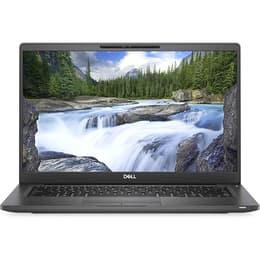
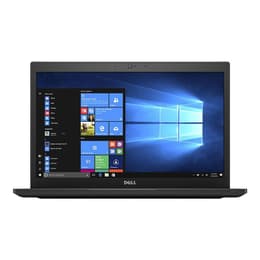


Dell Latitude 7400 14" Vs Dell Latitude 7490 14"

Dell Latitude 7400 14"
Starting at

Refurbished price:276.00

Versus €629.00 new

See options
Dell Latitude 7490 14"
Starting at

Refurbished price:307.00

Versus €636.00 new

See options

Ratings

The Dell Latitude 7400 14-inch (released in 2019) and the Dell Latitude 7490 14-inch (released in 2018) are business-oriented laptops designed for productivity and reliability. While both models share a focus on professional use, the Latitude 7400 introduces a more refined design and updated connectivity options, building upon the solid foundation of its predecessor. Both devices typically run on Windows operating systems, offering a familiar experience for most users.

Scores

Durability

These laptops, being business-class devices, were built with durability in mind, though their release timelines mean different expectations for ongoing software support and practical lifespan.

  • Release Timeline: The Latitude 7490 was released in 2018, making it slightly older than the Latitude 7400, which debuted in 2019. This difference in release year impacts the duration of official software and security updates from the manufacturer.
  • OS Support: Both models were initially shipped with Windows 10 Pro and are generally compatible with Windows 11. However, the newer 7400 may receive official driver and security updates for a slightly longer period, extending its viable operational life.
  • Repairability: Both Latitude models are known for their straightforward maintenance and ease of access to internal components, such as RAM and storage, which can be upgraded. This design choice contributes to a longer practical lifespan as components can be replaced or upgraded to maintain performance.

Year of Release

2019

2017

Last Os Compatibility

Yes

Yes

OS

Windows 11

Windows 11

Performance

Both the Latitude 7400 and 7490 are equipped with 8th generation processors, providing capable performance for typical business applications and multitasking.

  • Processor Capabilities: The Latitude 7400 generally features 8th Gen Intel Core processors (Whiskey Lake), while the 7490 also uses 8th Gen Intel Core processors (Kaby Lake R). For everyday tasks like web browsing, document editing, and video conferencing, both deliver smooth and responsive experiences. Users report that the 7490 handles performance-heavy apps well.
  • Storage Options: Both models support fast NVMe PCIe SSDs, which ensure quick boot times and rapid application loading. The 7400 offers storage configurations up to 1TB, while the 7490 also supports substantial SSD capacities.
  • Battery Behavior: The Latitude 7400 is noted for its excellent battery life, with some configurations offering extended usage that can last through a full workday. The Latitude 7490 also provides good battery life, with users reporting it can last nearly 9 hours on a single charge for mixed productivity use.

Memory (GB)

16 GB

8 GB

Processor

Core i7 - Gen 8 (U)

Core i5 - Gen 8 (U)

Graphic card

Integrated Graphics

Integrated Graphics

Screen quality

The display quality on both Latitude models is designed for productivity, offering clear visuals suitable for extended work sessions.

  • Display Technology and Resolution: Both laptops typically feature 14-inch Full HD (1920x1080) IPS anti-glare displays, providing sharp images and good viewing angles. Some configurations of the 7490 also offered HD (1366x768) TN panels.
  • Brightness Levels: The Latitude 7400's display can reach around 300 nits of brightness in some configurations, which is generally sufficient for indoor use and some outdoor conditions. However, some reviews indicate that certain 7400 panels might be dimmer, around 280 nits. The Latitude 7490 typically offers an average brightness of around 294 cd/m².
  • Special Features: The Latitude 7400 introduced options like a 'super low power' panel for enhanced battery efficiency and Dell SafeScreen for privacy, which narrows viewing angles.

Resolution

1920 x 1080

1920 x 1080

Screen type

IPS

IPS

Camera

Audiovisual

For business communication, both laptops include standard audiovisual components suitable for virtual meetings and basic multimedia consumption.

  • Camera System: Both the Latitude 7400 and 7490 are equipped with a 720p HD webcam, which is standard for video conferencing and online collaboration.
  • Microphone Quality: Both models include integrated microphones, providing clear audio capture for calls and recordings.
  • Speaker Output: The laptops feature integrated stereo speakers. User feedback for the 7490 suggests that the speakers are generally adequate for business use, though not exceptional for high-fidelity media consumption.

Miscellaneous

Beyond core performance, several practical elements differentiate these two business laptops, impacting their usability and connectivity.

  • Connectivity Options: The Latitude 7400 offers more modern wireless connectivity, including optional Wi-Fi 6 (802.11ax) and Bluetooth 5.0, alongside optional LTE mobile broadband. The Latitude 7490 typically features Wi-Fi 5 (802.11ac) and Bluetooth 4.2.
  • Port Types: A notable difference is the USB-C implementation. The Latitude 7400 consistently includes a Thunderbolt 3 port, offering versatile high-speed connectivity for external displays, docking stations, and peripherals. The Latitude 7490 also offered Thunderbolt 3 in some configurations, but often came with a USB Type-C port that supported DisplayPort functionality. The 7490 also commonly includes a built-in RJ-45 Ethernet port, which is less common on the 7400, sometimes requiring a dongle or specific configurations.
  • Weight and Dimensions: The Latitude 7400 is generally slightly lighter and more compact, starting at around 1.35 kg (3.0 lbs), compared to the 7490's starting weight of approximately 1.4 kg (3.1 lbs). The 7400 also features narrower display bezels, contributing to a more modern aesthetic.

Weight

1400 g

7500 g

Screen size

14

14

The Dell Latitude 7400 and 7490 both stand as reliable choices for business users, each with distinct advantages. Users frequently praise the Latitude 7490 for its robust build, comfortable keyboard, and consistent performance for office tasks. Its straightforward maintenance and upgradeability are also commonly highlighted as positive aspects. Some users note that the 7490's display brightness can be below average in certain configurations.

The Latitude 7400, being the newer model, often receives commendation for its improved design, including narrower bezels and a slightly lighter chassis. Its enhanced battery life and the inclusion of Thunderbolt 3 are also frequently cited as strong points. Criticisms for the 7400 sometimes point to the display brightness not always meeting expectations in all configurations and occasional fan noise.

Users prioritizing a slightly more modern design, potentially longer software support, and advanced connectivity like Thunderbolt 3 may find the Latitude 7400 well-suited to their needs. Those who value a built-in Ethernet port and a slightly more traditional, highly repairable design might lean toward the Latitude 7490. Both models offer solid performance for everyday business and productivity. Opting for a quality-assured refurbished option for either model can provide an eco-friendly alternative for acquiring these capable business laptops.
See all articles

Our recent comparisons







