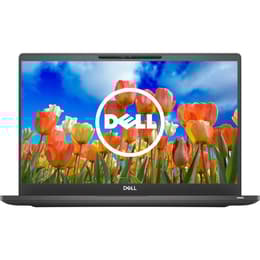
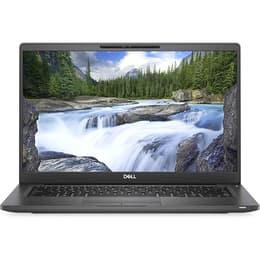


Dell Latitude 7300 13" Vs Dell Latitude 7400 14"

Dell Latitude 7300 13"
Starting at

Refurbished price:310.00

Versus €692.16 new

See options
Dell Latitude 7400 14"
Starting at

Refurbished price:276.00

Versus €629.00 new

See options

Ratings

The Dell Latitude 7300 13 and the Dell Latitude 7400 14 are business-oriented laptops released in 2019, designed for professionals seeking reliability and productivity. While both models share a foundation of robust build quality and similar internal components, their primary distinctions lie in their physical dimensions and display sizes. Both devices operate on the Windows platform, offering a consistent software experience tailored for professional use.

Scores

Durability

These laptops, both launched in 2019, share a similar expected practical lifespan and software support trajectory. Their design emphasizes durability for daily professional use.

  • Release Timeline: Both the Latitude 7300 13 and Latitude 7400 14 were introduced in 2019, meaning they benefit from comparable ongoing software support from Dell and Microsoft.
  • OS Support: As business-class machines, they are expected to receive Windows operating system updates for several years, ensuring continued security and feature enhancements.
  • Build Quality: Both models feature chassis options of aluminum or carbon-fiber and have passed MIL-STD 810G durability tests, indicating a high level of resistance to environmental stresses and physical impacts.
  • Repairability: User reviews and technical analyses suggest that both laptops are designed with accessibility in mind for internal components, allowing for potential upgrades to RAM and storage, which can extend their useful life.

Year of Release

2019

2019

OS

Windows 11

Windows 11

Performance

Both the Latitude 7300 13 and Latitude 7400 14 are equipped with similar core components, leading to comparable performance for typical business applications and multitasking.

  • Processor Capabilities: Both laptops utilize 8th generation Intel Core i5 or i7 processors, providing ample power for demanding office applications, web browsing with numerous tabs, and moderate data processing tasks.
  • Multitasking Responsiveness: Configurable with up to 32GB of DDR4 RAM across two slots, both devices handle extensive multitasking smoothly, allowing users to run multiple applications simultaneously without significant slowdowns.
  • Storage Speed: Both models come with NVMe PCIe SSD storage options, ranging from 128GB up to 1TB, ensuring fast boot times, quick application loading, and rapid file transfers.
  • Battery Behavior: The Latitude 7300 offers battery capacities of 42Wh, 60Wh, or 65Wh, providing around 5-6 hours of continuous use with smaller batteries and potentially up to 10 hours with larger capacities and power-efficient displays. The Latitude 7400, with 52Wh, 60Wh, or 78Wh options, generally delivers longer battery life, with some configurations achieving 10-12 hours in real-world usage and up to 15-18 hours with larger batteries and low-power displays.

Memory (GB)

16 GB

16 GB

Processor

Core i7 - Gen 8 (U)

Core i7 - Gen 8 (U)

Graphic card

Integrated Graphics

Integrated Graphics

Screen quality

The display experience on these two Latitude models is largely similar in terms of technology and resolution, with the main difference being the physical screen size.

  • Display Technology and Resolution: Both laptops offer various 13.3-inch (7300) and 14-inch (7400) display options, including HD (1366x768) and Full HD (1920x1080) panels. The Full HD options often feature IPS technology for wider viewing angles and better color reproduction.
  • Brightness Levels: Many configurations for both models feature displays with a peak brightness of around 300 nits, which is suitable for indoor office environments. Some reviews note that while adequate, brightness could be higher for outdoor use on the 7400.
  • Specialized Display Options: Both the 7300 and 7400 offer "super low power" Full HD panels designed to enhance battery efficiency, as well as optional privacy screens (Dell SafeScreen) for increased security in public settings.
  • Viewing Experience: The 13.3-inch screen of the 7300 is well-suited for portability and single-application focus, while the 14-inch screen of the 7400 provides slightly more screen real estate, which can be beneficial for viewing multiple windows or detailed content.

Resolution

1920 x 1080

1920 x 1080

Screen type

IPS

IPS

Audiovisual

The audio-visual components of the Latitude 7300 13 and Latitude 7400 14 are designed for professional communication and media consumption, offering similar capabilities.

  • Webcam Quality: Both laptops typically include a 720p HD webcam, suitable for video conferencing and online meetings. Some configurations offer an optional IR camera for facial recognition login.
  • Microphone Performance: Integrated microphones on both models are designed to capture clear audio for calls and voice commands in typical office environments.
  • Speaker Output: Both devices feature dual stereo speakers, providing clear audio for video calls, presentations, and casual media consumption.
  • Video Recording: The webcams support video recording at 720p resolution and 30 frames per second, which is standard for business laptops of their generation.

Miscellaneous

Beyond core performance and display, both Latitude models offer a comprehensive suite of features designed for business users, with minor differences in physical attributes.

  • Connectivity Options: Both laptops support Wi-Fi 5 (802.11ac) with options for Wi-Fi 6 and Bluetooth 5.0. They also offer optional Gigabit LTE for mobile broadband connectivity, crucial for professionals on the go.
  • Port Selection: Both models provide a versatile array of ports, including at least one Thunderbolt 3 (USB-C) port, two USB 3.1 Type-A ports, an HDMI 1.4a port, a microSD card reader, and a universal audio jack. Some configurations of the 7300 may include a Gigabit Ethernet port, while others might require a USB-C adapter.
  • Security Features: Common security elements include optional fingerprint readers integrated into the power button and optional IR cameras for Windows Hello facial recognition. Both also feature a Noble Wedge lock slot and optional Smart Card readers.
  • Physical Attributes: The Latitude 7300 13 is slightly more compact and lighter, starting around 1.24 kg (2.75 lbs) with dimensions of 306 x 207 x 17 mm. The Latitude 7400 14 is marginally larger and heavier, starting around 1.35 kg (3 lbs) with dimensions of 18.9 mm x 321 mm x 214 mm.

Weight

3000 g

1400 g

Screen size

13

14

User feedback for both the Dell Latitude 7300 13 and Latitude 7400 14 generally highlights their suitability as reliable business workhorses. Common praise points for both include their robust build quality, comfortable keyboards, and solid performance for everyday professional tasks. Many users appreciate the comprehensive port selection, reducing the need for adapters. The Latitude 7400 often receives commendation for its extended battery life, particularly with larger battery configurations and power-efficient displays, making it a strong choice for users who spend significant time away from power outlets.

However, some criticisms are also noted. For the Latitude 7300, the optional fingerprint reader has been described by some users as finicky. For the Latitude 7400, some users have mentioned that the display brightness, while adequate, could be improved for optimal outdoor visibility, and the fan can occasionally produce noticeable noise under heavy load.

Users prioritizing maximum portability and a slightly smaller footprint for frequent travel or tight workspaces may find the Latitude 7300 13 well-suited to their needs. Its compact design makes it easy to carry without sacrificing essential features. Conversely, users who value a larger screen for productivity, slightly longer battery endurance, and don't mind a marginal increase in weight will likely lean toward the Latitude 7400 14. Both models are excellent choices for professionals seeking a durable and capable laptop for office work, remote work, or academic pursuits.

For those considering these models, exploring quality-assured refurbished options can provide an eco-friendly alternative, offering the same professional-grade performance and features while contributing to sustainable consumption.


See all articles

Our recent comparisons






