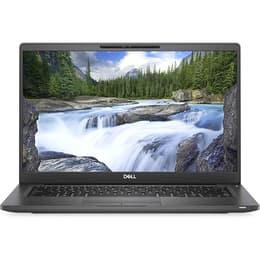


Dell Latitude 5490 14" Vs Dell Latitude 7400 14"

Dell Latitude 5490 14"
Starting at

Refurbished price:325.00

Versus €793.00 new

See options
Dell Latitude 7400 14"
Starting at

Refurbished price:276.00

Versus €629.00 new

See options

Ratings

The Dell Latitude 5490 and Dell Latitude 7400 are 14-inch business-oriented laptops, designed for productivity and reliability. The Latitude 5490, released around 2017-2018, served as a robust workhorse, while the Latitude 7400, introduced in 2019, brought refinements in design, display technology, and connectivity. Both models operate on the Windows platform, offering a familiar experience for business and general users. The primary distinctions lie in their overall portability, display characteristics, and the inclusion of more modern connectivity options in the newer model.

Scores

Durability

When considering the longevity of these devices, their release timelines and design philosophies offer different expectations for practical lifespan and software support.

  • Release Timeline: The Latitude 5490 was released around 2017-2018, making it an older model compared to the Latitude 7400, which debuted in 2019. This age difference means the 7400 will generally receive software updates and security patches for a longer period.
  • OS Support: Both laptops are capable of running Windows 11, ensuring access to current software and security features. However, the newer 7400 model is likely to maintain official support for future Windows versions for a longer duration.
  • Physical Durability: The Latitude 5490 is noted for its robust construction, having passed 14 different MIL-SPEC tests, indicating a high level of resistance to environmental stresses like drops and extreme temperatures. The Latitude 7400, while also durable with a premium build often featuring aluminum or carbon fiber, emphasizes a more refined and lighter design.

Year of Release

2017

2019

Last Os Compatibility

Yes

Yes

OS

Windows 11

Windows 11

Performance

Both Latitude models are equipped to handle typical business and productivity tasks, though the newer 7400 generally offers a more responsive experience due to its slightly more advanced internal components.

  • Processing Power: The Latitude 5490 typically features 7th or 8th generation Intel Core processors, providing solid performance for everyday applications and multitasking. The Latitude 7400, on the other hand, commonly utilizes later 8th generation Intel Core processors, often from the Whiskey Lake family, which can offer improved efficiency and slightly higher clock speeds for demanding workloads.
  • Multitasking and Storage: Both laptops support up to 32GB of RAM, allowing for smooth operation with multiple applications open simultaneously. The Latitude 7400 frequently comes with faster NVMe PCIe SSD storage options, contributing to quicker boot times and application loading compared to some configurations of the 5490 that might include traditional HDDs or slower SSDs.
  • Battery Performance: The Latitude 7400 generally offers extended battery life, with many configurations capable of lasting over 13 to 15 hours on a single charge under typical usage, and some reports indicating even longer durations. The Latitude 5490 also provides respectable battery performance, often achieving around 9 to 15 hours depending on the configuration and usage patterns.

Memory (GB)

8 GB

16 GB

Processor

Core i5 - Gen 8 (U)

Core i7 - Gen 8 (U)

Graphic card

Integrated Graphics

Integrated Graphics

Screen quality

The visual experience differs between these two models, with the Latitude 7400 generally offering a more vibrant and adaptable display.

  • Display Technology and Resolution: Both laptops typically feature 14-inch Full HD (1920x1080) displays, suitable for clear text and image presentation. However, the Latitude 7400 often comes with IPS panels, providing wider viewing angles and better color reproduction.
  • Brightness and Clarity: The Latitude 7400's display is generally brighter, often reaching 300-342 nits, which enhances visibility in various lighting conditions, including outdoors. The Latitude 5490's display typically offers lower brightness, around 178-220 nits, and some users have noted less impressive viewing angles and color accuracy.
  • Special Features: The Latitude 7400 offers optional features like a privacy screen (SafeScreen) for enhanced data security and touch-enabled panels, which are less common or not available on the 5490.

Resolution

1920 x 1080

1920 x 1080

Screen type

IPS

IPS

Camera

Audiovisual

For communication and multimedia, both laptops include standard features, but the audio experience presents a notable difference.

  • Camera Capabilities: Both the Latitude 5490 and 7400 are equipped with a 720p HD webcam, suitable for video conferencing and online meetings. The Latitude 7400 also includes an infrared (IR) camera option for facial recognition, enhancing login security and convenience.
  • Microphone Quality: Both models feature integrated microphones designed for clear voice capture during calls. The 5490 includes noise-reducing array microphones.
  • Speaker Output: The Latitude 5490's speakers are described as "quite good" for a laptop, offering considerable volume and balanced mids and highs, though lacking in deep bass. In contrast, the Latitude 7400's speakers are often noted for being "thin and not very loud," suggesting a less immersive audio experience for media consumption.

Miscellaneous

Beyond core performance, several practical elements contribute to the overall user experience and connectivity of these laptops.

  • Connectivity Options: The Latitude 7400 offers more modern connectivity, including at least one USB-C port with Thunderbolt 3 support, enabling faster data transfer, external display connections, and power delivery through a single port. It also supports Wi-Fi 6 in some configurations. The Latitude 5490 includes a USB-C port that supports DisplayPort but lacks Thunderbolt capabilities, and typically features Wi-Fi 5 (802.11ac).
  • Physical Ports: Both laptops provide a comprehensive selection of ports for business use. The 5490 includes HDMI, VGA, multiple USB-A ports, and Ethernet. The 7400 also offers HDMI, USB-A ports, and a microSD card reader, with optional LTE mobile broadband.
  • Design and Portability: The Latitude 7400 is generally lighter, weighing between 1.35 kg and 1.535 kg, and features a more compact design, making it more suitable for frequent travel. The Latitude 5490 is slightly heavier at around 1.72 kg.

Weight

1600 g

1400 g

Screen size

14

14

Users frequently praise the Dell Latitude 5490 for its robust build quality and reliable performance for everyday tasks, often highlighting its comfortable keyboard and decent battery life as strong points. Some common criticisms revolve around its display, which users describe as relatively dim with less vibrant colors and limited viewing angles. The speakers, while considered adequate for a business laptop, are not designed for high-fidelity audio.

The Dell Latitude 7400 receives commendation for its more premium design, lighter weight, and significantly longer battery life, making it a preferred choice for mobile professionals. Its brighter display and modern connectivity, including Thunderbolt 3, are also frequently cited as advantages. However, some users note that its speakers can sound thin and lack volume.

Users prioritizing a highly durable and cost-effective work machine for static office environments may find the Latitude 5490 well-suited to their needs. Those who require greater portability, a more vibrant display, and advanced connectivity for frequent travel or modern peripherals will likely lean toward the Latitude 7400. Both models offer a solid foundation for productivity, and choosing a quality-assured refurbished option for either can provide an eco-friendly alternative for budget-conscious users.

See all articles

Our recent comparisons






