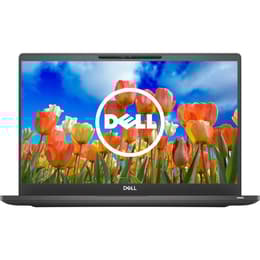


Dell Latitude 5490 14" Vs Dell Latitude 7300 13"

Dell Latitude 5490 14"
Starting at

Refurbished price:325.00

Versus €793.00 new

See options
Dell Latitude 7300 13"
Starting at

Refurbished price:310.00

Versus €692.16 new

See options

Ratings

The Dell Latitude 5490 14-inch, released around 2018, and the Dell Latitude 7300 13-inch, introduced in 2019, are both business-oriented laptops designed for productivity. While sharing the Windows operating system and a focus on corporate environments, they primarily differentiate themselves through screen size, portability, and some refinements in internal hardware and connectivity options. Both models aim to provide reliable performance for professional tasks.

Scores

Durability

When considering the longevity of these business laptops, several factors come into play, including their release timelines and the expected duration of software support.

  • Release Timeline: The Latitude 5490 was released around 2018, making it slightly older than the Latitude 7300, which debuted in 2019. This difference means the Latitude 7300 may receive official operating system updates for a slightly longer period.
  • Software Longevity: Both devices run on the Windows operating system, which typically receives updates for several years. The newer release of the Latitude 7300 generally translates to an extended window for critical security and feature updates, potentially offering a longer practical lifespan for users who prioritize the latest software.
  • Build and Repairability: Both Latitude models are built with durability in mind, often passing MIL-STD 810G tests for resilience against various environmental stresses. The Latitude series is generally known for its user-serviceable components, which can contribute to a longer lifespan through easier repairs and upgrades of parts like RAM and storage.

Year of Release

2017

2019

OS

Windows 11

Windows 11

Performance

The performance of these laptops is primarily driven by their internal components, impacting how smoothly they handle daily tasks and multitasking.

  • Processor Capabilities: The Latitude 5490 typically features 8th generation Intel Core processors. The Latitude 7300 also commonly uses 8th generation Intel Core processors, with some configurations offering slightly newer options. In practical terms, both are capable of handling common business applications, web browsing, and video conferencing with ease. The newer processor options in the 7300 might offer marginal improvements in efficiency or slightly faster processing for more demanding tasks.
  • Storage and Responsiveness: The Latitude 5490 was available with both traditional hard disk drives (HDD) and solid-state drives (SSD). The Latitude 7300, on the other hand, primarily features M.2 PCIe NVMe SSDs across its configurations. Systems equipped with SSDs generally offer significantly faster boot times, quicker application loading, and a more responsive overall user experience compared to those with HDDs.
  • Memory Options: Both laptops support up to 32GB of DDR4 RAM, often with two user-upgradable slots. This ample memory capacity allows for smooth multitasking, enabling users to run multiple applications simultaneously without significant slowdowns.

Memory (GB)

8 GB

16 GB

Processor

Core i5 - Gen 8 (U)

Core i7 - Gen 8 (U)

Graphic card

Integrated Graphics

Integrated Graphics

Screen quality

The visual experience on these laptops is influenced by their display technology, resolution, and brightness levels.

  • Display Size and Technology: The Dell Latitude 5490 features a 14-inch display, offering a slightly larger viewing area. It was available with various panel types, including TN and IPS, and resolutions ranging from HD (1366x768) to Full HD (1920x1080). The Dell Latitude 7300 comes with a more compact 13.3-inch display. Its standard configurations often include Full HD (1920x1080) IPS panels, providing consistent image quality and viewing angles.
  • Resolution and Clarity: While both can be configured with Full HD displays, the 7300 generally offers a more consistent Full HD experience across its range, which translates to sharper text and more detailed images for everyday productivity tasks. The 5490's base models might feature lower HD resolutions, which can result in less screen real estate and less crisp visuals.
  • Brightness and Features: The Latitude 5490 typically offers displays with around 220 nits of brightness. The Latitude 7300 often provides brighter displays, with options reaching 255-300 nits, and some configurations include a "super low power" Full HD panel designed for improved battery efficiency. The 7300 also had options for touchscreens and privacy filters, enhancing versatility and security for mobile professionals.

Resolution

1920 x 1080

1920 x 1080

Screen type

IPS

IPS

Audiovisual

For communication and media consumption, the audio and visual components of these laptops provide essential functionality for business users.

  • Webcam Quality: Both the Latitude 5490 and Latitude 7300 are equipped with 720p HD webcams, suitable for video conferencing and online meetings. The Latitude 7300 also offered configurations with an infrared camera for Windows Hello facial recognition and a physical privacy cover, adding a layer of security and convenience.
  • Microphone and Speakers: Both models feature integrated microphones designed for clear voice capture during calls and recordings. Their speaker systems are generally adequate for business use, such as conference calls and casual media playback, rather than high-fidelity audio experiences.
  • Video Recording: The 720p webcams on both devices support video recording at standard frame rates, sufficient for basic video communication needs. Neither laptop is designed for advanced video production or high-resolution streaming.

Miscellaneous

Beyond core performance, several practical elements contribute to the overall user experience and suitability for different work styles.

  • Connectivity Options: Both laptops offer essential wireless connectivity, including Wi-Fi and Bluetooth. The Latitude 7300 often includes newer Wi-Fi standards and features like ExpressConnect for optimized network selection. The 5490 includes an Ethernet port for wired network connections.
  • Port Selection: The Latitude 5490 provides a comprehensive array of ports, including multiple USB 3.1 Gen 1 (Type-A) ports, HDMI, VGA, and a USB-C port with DisplayPort Alt Mode. The Latitude 7300, while still offering USB-A and HDMI, notably includes a Thunderbolt 3 (USB-C) port, which provides faster data transfer speeds, power delivery, and support for external displays or eGPUs.
  • Portability and Build Materials: The Latitude 5490, with its 14-inch screen, starts at approximately 1.60 kg (3.52 lbs). The Latitude 7300 is designed for greater portability, featuring a 13.3-inch screen and a lighter starting weight of around 1.24 kg (2.75 lbs). The 7300 also offers more premium build materials, with options for aluminum or carbon-fiber chassis, contributing to a more refined feel.
  • Security Features: Both models incorporate business-grade security features. The 7300, for instance, often includes an optional fingerprint reader integrated into the power button and an infrared camera for facial recognition.

Weight

1600 g

3000 g

Screen size

14

13

The Dell Latitude 5490 14-inch and Dell Latitude 7300 13-inch cater to slightly different priorities within the business laptop segment. User feedback for the Latitude 5490 often highlights its robust and utilitarian design, a wide array of traditional ports, and its reliability as a workhorse for everyday office tasks. Some users might find its larger footprint and weight less ideal for frequent travel. The Latitude 7300, on the other hand, is frequently praised for its enhanced portability, more premium build quality, and modern connectivity options like Thunderbolt 3. Its smaller screen size might be a consideration for those who prefer more display real estate for extended work sessions.

Users prioritizing a larger screen, a comprehensive selection of legacy ports, and a sturdy, dependable device for a stationary or less mobile work setup may find the Latitude 5490 well-suited to their needs. Conversely, professionals who value maximum portability, a more refined aesthetic, and cutting-edge connectivity for on-the-go productivity will likely lean towards the Latitude 7300. Both models offer solid performance for business applications, making the choice largely dependent on individual preferences regarding size, weight, and specific port requirements. For those considering these models, exploring a quality-assured refurbished option can provide an eco-friendly alternative.


See all articles

Our recent comparisons